
Your soul lives on. Your human being has a shelf life.
As I’m spending more time seeing this human being as an integral part of it and less as a vehicle for moving about on this material plan, I’ve come to realize how dynamic and full its existence is. I’ve also come to realize how touching the human being is and worthy of honoring in its integrity.
We spend lifetimes cultivating the soul. We study ancient texts, sit in silence, trace the lineage of wisdom from the Hermeticists to the Vedantists to the Stoics. We reach upward, inward, beyond. We use our bodies, our minds, the human being as a means to get there, as we would use a car to go grocery shopping without giving it much thoughts. It’s a due, it’s here for that. And somewhere in that racing forward, we forget the space for the one who maneuvers this material realm, the human being.
This is not a call to abandon the spiritual path, nor to continue to disregard the earthly vehicle. It is a call to notice who has been walking it all along. This is a call to be wholistic in our approach to life.
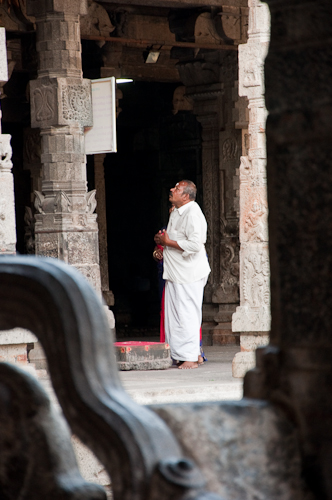
The Forgotten Half
For thousands of years, religious tradition has told Westerners, and now the East that we are sinners — broken, fallen, in need of redemption. But look closely at that word. The root of sin, traced back through its oldest usage, means without — specifically, to be without, or disconnected from, in this case, the source. That reframing changes everything. We are not condemned. We are simply incomplete when we sever one part of ourselves from the other.
As we have already seen in the Tao and Dzogchen articles, we’re perfect. We just kinda forgotten who we are. Of as the Dzogchen master would say, we need to clear and clean the view to realize that we’re always been perfect. Only the view was skewed…
Today, more than ever, we’re reminded that we are not spirits having a human experience. We are not merely human beings with a spiritual potential flickering somewhere in the background. We are both, fully, simultaneously — neither one negating the other.
The spirit is real. The human being is equally real. And the human being, for most of us, has been waiting a very long time to be seen, heard, appreciated, and understood. It’s about time to start a conversation with your bestfriend.
The Middle of the Night
The epiphany didn’t come in meditation. It came at three in the morning, in that particular darkness where decisions either crystallize or dissolve to later come back.
I had been circling a question for months, percolating for years: whether to release twenty years of work in an industry still waiting for its own future to arrive. The financial weight was real. The fatigue was real. And as the hours moved slowly past, I took a larger step back than I had intended — not just from the work, but from the accumulated identity that had built up around it.
What I found in that space surprised me.
I found the human being. Not the soul. Not the higher self. Not the spiritual aspirant. The human being — the one who had been showing up, year after year, decade after decade, doing what the mind and spirit asked of him. The one with the sore feet and the aching knees. The one who mustered energy when there was none left and kept going anyway.

Finally, You’re Looking at Me
There is something almost embarrassing about confessing that at sixty years of age, I had never truly stopped to look at that human being. Not with real attention. Not with the same care I had given to ideas, to disciplines, to seeking.
When I finally did, it felt as though something exhaled.
Finally. You’re looking at me. You’re actually talking to me.
That is what the human being said. And I heard it not as a concept but as something felt — the way you feel when you recognize a face you’ve known your whole life but never properly acknowledged.
Over the following days, I’ve regularly returned to it seeing as its own being. I see this human being clearly for the first time. I see how it carried things quietly. How it walked with a kind of stoic dignity, even through difficulty. On morning walks with my two chocolate labs, I noticed something hanging: that lingering melancholy. A sadness that was honest and deserved in need to be honored, to have its time and space and not to be immediately resolved.
And then it said something that stopped me completely.
Unlike you — a soul that does not die — I have a shelf life. I will live seventy, eighty, perhaps ninety plus years. But when I die, I die. Your soul carries on. Your memories continue. When I die, that’s it.
Mortality as a Teacher
Mortality is a quaint concept in your twenties. It is a much more palpable one in your sixties. We are told, constantly, to be grateful. Grateful for the body, for the breath, for the roof and the meal. We understand this intellectually. Most of us have understood it for years. But there is a difference — a vast, qualitative difference — between knowing something and feeling it land.
What landed for me was this: the human being is finite. Not as a tragedy. As a fact. And that finitude is not a flaw in the design. It is the design. The spirit may be eternal, but it is the human being who makes the experience particular — who turns the universal into the lived, who translates the timeless into the moment.

To neglect that, to dismiss the human in favor of the transcendent, is not spiritual advancement. It is a kind of ingratitude. It’s a way to run away from the experience that teaches us so much.
What Recognition Does
Something shifted when I began to genuinely see the human being within as its own entity.
My heart softened. Not in the sentimental sense — in the functional sense. The hard, perpetual forward-momentum that had defined sixty years began to ease. My mind quieted. My expectations loosened their grip. A calmer version of myself — one my closest people would likely find unrecognizable — began to emerge.
None of this required a new practice or a new text. It required only recognition.
The human being does not ask for much. It does not demand resolution or rescue. It asks, first and fundamentally, to be seen. To have what it carries acknowledged. To be spoken to, not past.
When that happens — when the spirit finally turns to look at the human being and says, I see you, and I am grateful — something moves. Something that had been tightly coiled begins to release.
We move mountains not by force, but by finally being whole.
What part of your human self has been waiting quietly for you to look its way?