
By Nicolas Zart | TheWholisticCenter.com
The Bhagavad Gita calls it vikṣepa — the scattering of the mind. The Stoics called it phantasia — the impression that hijacks reason before reason can respond. The Desert Fathers of early Christianity called it logismoi — the intrusive thoughts that pull a monk from prayer before he realizes he has left. Every serious contemplative tradition in human history identified the same enemy, and none of them blamed the individual for having it. They blamed the conditions that cultivate it.
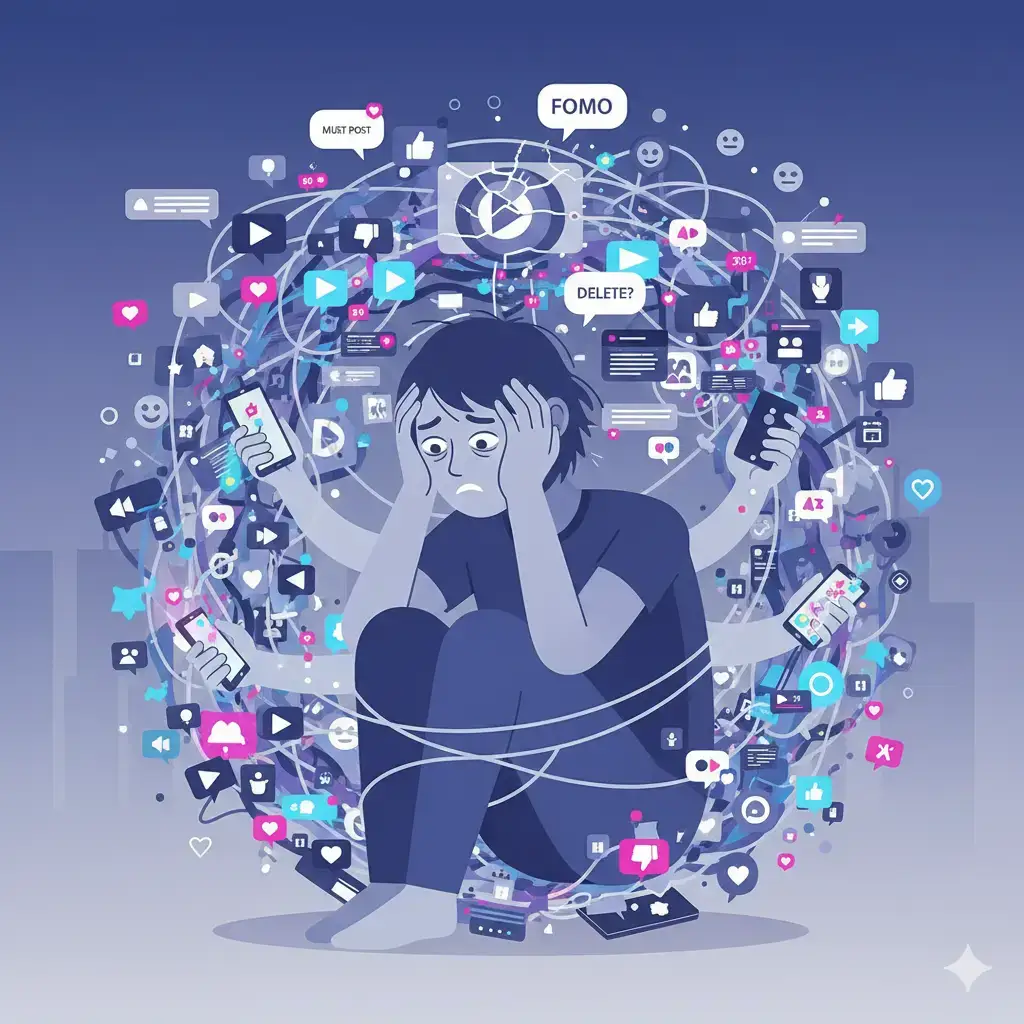
We have built, in the past two decades, the most sophisticated distraction-cultivation system in human history. And we did it while calling it connection. It started out with a great idea, but we snoozed. We forgot to see how it could be used for us, personally, as a tool. In the meantime, a few figured out how to harness it to feed on your patterns. And many became billionaires in the process on top of unsuspecting users.
The Mechanism Has a Name
There’s nothing wrong with making money. Quiet the opposite in fact. There is a fine line making money while taking care of the overall system and making money on the back of others. One is elegant, the other is a modern form of slavery.
Behavioral economists call this system the attention economy. The product being bought and sold is not content, not news, not social connection. It is the sustained direction of a human mind. Advertisers have always purchased eyeballs, but the smartphone created something new: a device that travels everywhere, that most people check within minutes of waking, and that delivers stimulation calibrated — by engineers whose salaries depend on it — to be just rewarding enough to return to but never quite satisfying enough to stop. If you want to watch a documentary that will creep you out, watch The Social Dilemma (Netflix, 2020, directed by Jeff Orlowski). You’ll never look the same way at your smartphone, smart TV, or any other “smart” devices you have around you.

B.F. Skinner demonstrated this with pigeons in the 1950s. A pigeon that receives a reward every time it pecks a lever quickly learns and then stops caring. But a pigeon that receives a reward sometimes, unpredictably, will peck obsessively. This is variable reward reinforcement, and it is the explicit design logic behind the infinite scroll, the notification badge, and the like button. The engineers who built these systems have said so in public, in interviews, and in congressional testimony.
This is not an accident. It is infrastructure.
The Hype Cycle Is Part of the Infrastructure
Every generation of digital technology arrives with the same announcement: this one will change everything. Each and every new iteration of Artificial intelligence (AI), which could be better explained as augment intelligence or augmented computer power, uses that same pattern. Originally, the internet would democratize knowledge. And it did, for a while. Social media would democratize voice, again, for a while. Smartphones would connect the lonely and liberate the oppressed. that lasted less longer then the previous promises. In each case there was genuine truth in the promise — and in each case the mechanism of monetization quietly hollowed it out. This happened because most people never spent enough time actively thinking about to use this tool until they were used by these tools.
AI is the current iteration. The promise is real. The tools are genuinely capable of things that would have seemed magical a decade ago. But who diligently works mastering this tool, leaving someone else to figure it out, eventually to be used by these tools? History is littered with examples of what happens when we let others figure things out and expecting billionaires to save them. The Messiah culture we grew up in is well and alive.
Watch the cadence: the announcement, the breathless coverage, the consumer adoption, the revelation of harms, the regulatory lag, the next announcement. It can sometimes feel like a Ponzi scheme, and often time is. The cycle itself keeps attention perpetually forward-facing, perpetually excited, perpetually consuming the new thing before the implications of the last thing have been examined. Anything but to look within and ask the simplest of questions, how does this serve me? How can I use this for what I truly want?
Ancient India gave us a useful word for this: Maya — not illusion exactly, but the tendency of the mind to mistake the map for the territory, the symbol for the substance, the feeling of progress for progress itself. The next big thing is a feeling. The feeling is the product. It’s like Socrates’ Cave allusion. It still works millennia later.
What Sustained Attention Actually Looks Like
In 2011, a mid-sized city in Colorado voted to build its own municipal fiber network after two failed attempts, against a big cable industry that outspent them by hundreds of thousands of dollars. The vote passed with 60 percent. The city built the network. It’s no wonder that by 2026, that network was ranked the best internet provider in the country. I certainly have never ranked my providers as best of anything, except to get my money quickly and be slow giving back anything they owe me. But it’s business, or so I hear. Come again? Absolutely not. It’s the way we let it become. A service meant to help us has turned into one we work for the benefit of a handful. Quite a contradiction that flies in the face of common sense.
That story required something the attention economy actively destroys: the ability of ordinary people to pay sustained, boring, civic attention to a municipal bond process across multiple election cycles. No viral moment. No outrage. Just steady focus over years on a technical question with a practical answer.
The contemplative traditions understood this capacity as a trainable skill, not a personality trait. Marcus Aurelius did not consider himself naturally focused. He wrote the Meditations as a daily practice of returning — noticing where the mind had scattered and bringing it back. The Zen tradition built entire monasteries around the same exercise. The Vedic rishis developed elaborate systems of practice not because stillness was natural but because the world was always trying to scatter the mind, and they knew it.
What is new is not distraction. What is new is the scale and precision of its engineering. The essence is the same. The tool is different and a tad more refined.
The Ancient Counter-Program
There is a reason every wisdom tradition we have inherited placed silence, solitude, and slowness at the center of its practice. These weren’t meant as ends in themselves. They were the sina qua non conditions for something far more important — the kind of seeing that is only possible when the noise stops long enough for what is real to become visible. That Gnosis we talked about previously.
The Tao Te Ching, written roughly 2,500 years ago, opens with a warning about language itself: the name that can be named is not the eternal name. The mythical figure Lao Tzu was not making a mystical point. He was making an epistemological one. Words, categories, and the stories we tell ourselves about the world are not the world. The mind that mistakes them for the world is a mind that can be captured — by ideology, by advertising, by the next big thing. Many ancient civilizations never used written words to teach or pass down wisdom. This was done one-on-one or in small groups, experiential, and direct gnosis. Some civilization left no written trace as its roots were handed down by word-of-mouth.
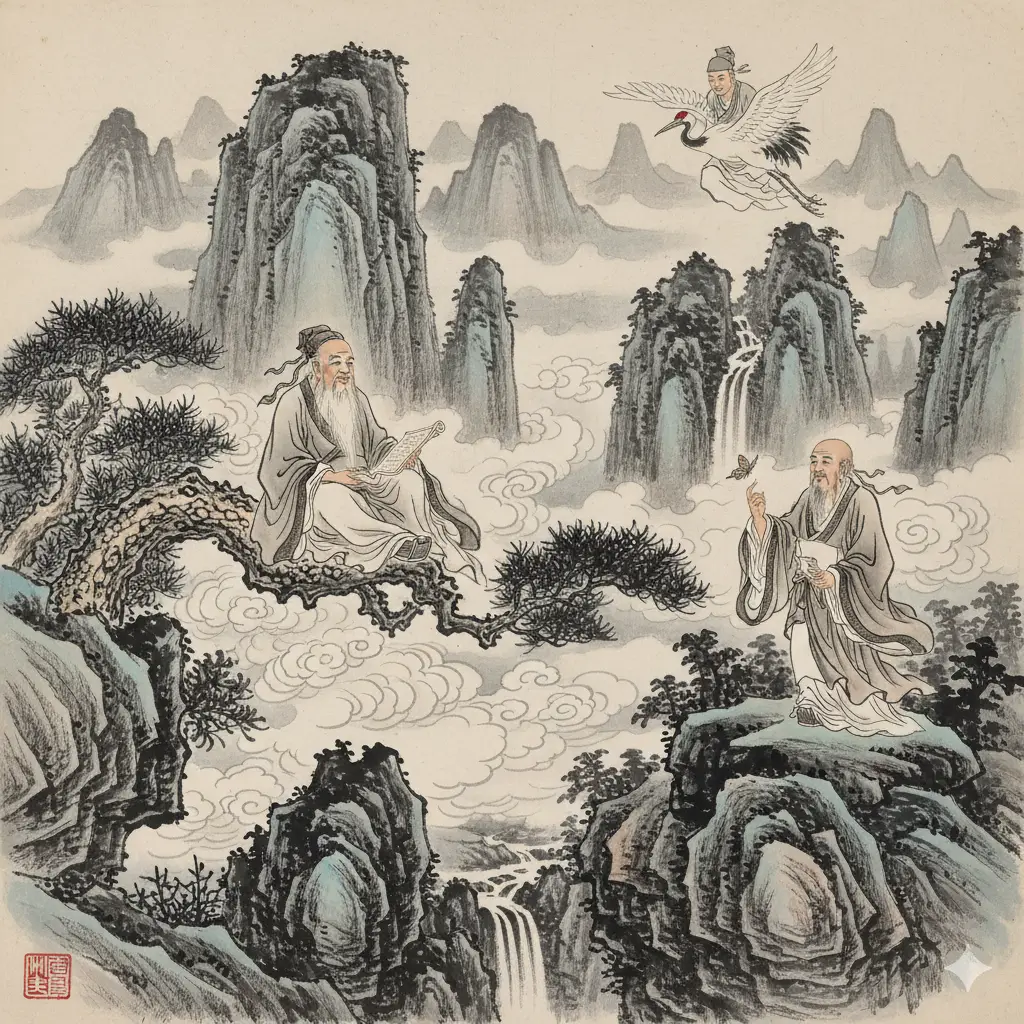
Kautilya, the Indian statesman and philosopher who wrote the Arthashastra around 300 BCE, observed that a king who could not sit alone with his own thoughts was a king who could be manipulated by anyone who supplied him with stimulation. He prescribed daily periods of silence and reflection not as spiritual practice but as statecraft — because the leader who cannot think clearly in stillness cannot act wisely in chaos.
This is the counter-program. It is not a rejection of technology or a retreat into nostalgia. It is the ancient insistence that the quality of your attention determines the quality of your life — and that attention, like muscle, weakens without training and strengthens with use.
What To Do With This
The attention economy is not going to reform itself, at least, not without your help and concentration. And the solution is ever simpler than you might think.
The engineers who design it are not malicious; they are responding to incentives the same way any organism responds to its environment. The advertisers are not villains; they are purchasing what is for sale. The system is coherent and self-reinforcing, and it will continue to be until either regulation changes its incentives or enough people individually withdraw enough attention to make it unprofitable and ask the simplest of questions, how can this serve me, and not the other way around.
Neither of those outcomes is certain. What is certain is the option available to every individual right now, which the traditions have always pointed toward: the choice, made daily and often against resistance, to direct your own attention rather than lease it out. That’s freedom. You work for it. It’s not given out for free. And it’s a whole lot less of work than you think on top of making you feel more complete, more in integrity, and more of yourself showing up anywhere you go. It’s a beautiful feeling.

The Gita calls this abhyāsa — practice, persistent and unglamorous. Not the grand gesture of renunciation, but the small daily choice of where to look. Before the phone. Before the feed. Before the next thing that promises to be the thing that finally satisfies.
The pigeons kept pecking because no one told them the lever was the trap.
We have been told.
Nicolas Zart has spent twenty years at the intersection of technology, mobility, and human experience. TheWholisticCenter.com explores ancient wisdom for a distracted world.
Let us know, what has worked for you? What have you found from ancient and modern wisdom systems that can give our lives more meaning. We’d love to hear from you.