
By Nicolas Zart | TheWholisticCenter.com
Every civilization that has ever existed has ended. It’s the renewable cycle that can be observed. While some societies continue, albeit diminished from their peak, others are gone with little to no trace.
This is not a pessimistic observation — it is simply the most documented fact in the human record. And within that record, a pattern repeats with such consistency across cultures and centuries that it deserves careful examination: in the final phase of great institutional orders, a particular kind of actor emerges. Not the builders who raised the civilization, not the reformers who tried to save it, but a third type — opportunists who arrive precisely when the rules no longer hold, and who understand intuitively that the transition moment is the moment of maximum extraction.
The Chinese called the moment luan — chaos, the interregnum between orders. The Romans had no single word for it but lived it repeatedly. The French Revolutionary period produced a government whose very name became synonymous with corruption. The Soviet collapse generated a class of men whose wealth remains incomprehensible in scale. India’s ancient texts described the phenomenon millennia before any of these events occurred. It’s as old as society.
What follows is a study of those moments — and the men who knew how to read them.
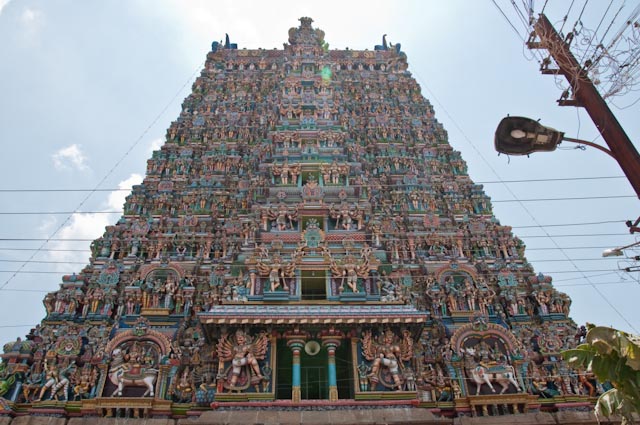
Rome: The Anatomy of an Interregnum
The Roman Republic did not collapse in a day. It degraded across roughly a century, from the time of the Gracchi brothers in the 130s BCE to the formal consolidation of Augustus‘ power in 27 BCE. During that century, the institutions that had governed Roman public life — the Senate, the tribunate, the consulship — remained nominally intact while their actual authority steadily hollowed out.
What filled the vacuum was money and military loyalty, and the men who understood this earliest accumulated both with extraordinary speed.
Lucius Cornelius Sulla marched his legions on Rome in 88 BCE — an act so far outside acceptable Roman behavior that his own officers initially refused to follow him. He did it again in 83 BCE. Between these events and after them, he used the legal instrument of the proscription to publish lists of enemies whose property could be seized by anyone who killed them. Thousands died. Their lands and assets transferred to Sulla’s allies. The mechanism was legal. The Republic’s forms were observed. The substance was plunder conducted through institutional channels.
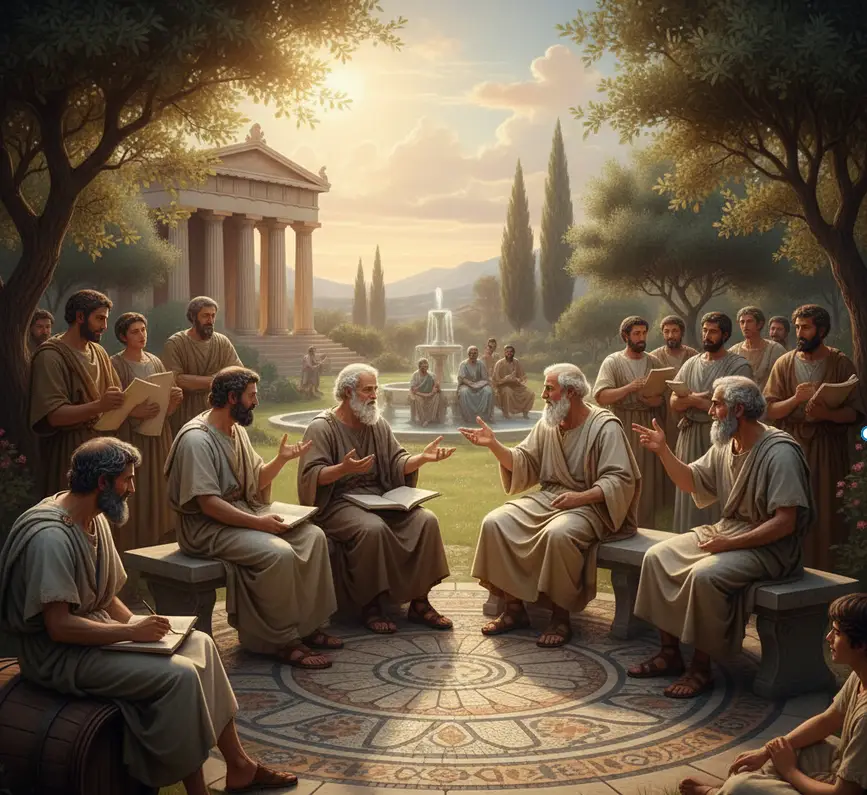
What Sulla demonstrated — and what his successors, including Julius Caesar and eventually Augustus, refined — was that the forms of legitimate governance could be maintained while the substance was redirected entirely. The Senate continued to meet. Magistrates continued to be elected. The vocabulary of the Republic persisted for decades after the Republic itself had ceased to function as a check on concentrated power.
The historian Sallust, writing during this period, identified the core problem precisely: avaritia — greed — was not a personal failing but a systemic one. When the norms that constrain greed collapse, he wrote, the men who were already inclined toward it do not restrain themselves out of virtue. They accelerate.
France: The Directors and the Art of the Temporary
The French Directory, which governed France from 1795 to 1799, is among the most instructive and least studied governments in Western history. It followed the Terror, which had consumed its own architects, and preceded Napoleon, who would consume the Directory itself. It existed in the space between — and the men who ran it knew it.
The five Directors who held executive power were not ideologues. They were survivors. Barras, the most powerful of them, had voted for the execution of Louis XVI, survived Thermidor, and would survive Napoleon’s coup with his fortune intact and his head on his shoulders. He achieved this by treating the government not as an institution to be built but as a position to be exploited before the next convulsion.

The Directory period saw spectacular corruption: war contracts awarded to friends, public lands sold at fractions of their value to political allies, the state’s financial instruments manipulated for personal gain. None of this was secret. Much of it was technically legal under the Directory’s own rules. The Directors understood that legitimacy was temporarily suspended — that France had not yet found its next stable form — and they acted accordingly.
Stendhal would later describe this period as one in which “everyone understood that the man who did not take was a fool.” The social contract had been suspended, and in its absence a simpler contract operated: take what you can before someone else does.
Napoleon’s coup of 18 Brumaire in 1799 ended the Directory not by defeating it morally but by replacing its extraction with a more orderly and productive system. The Directors had been, in effect, holding the space between orders. When the new order arrived, they largely accommodated it.
Russia: Speed and Scale
What happened in Russia between 1991 and the early 2000s may be the most compressed and documented case of transitional extraction in modern history.
The Soviet state had accumulated, over seven decades, enormous assets: industrial enterprises, mineral rights, real estate, communications infrastructure. The legal framework for private ownership of these assets did not exist in any stable form during the transition years. What existed instead was a brief, extraordinary window during which the rules governing ownership were being written — and during which proximity to the rule-writers determined who would own what.

The men who became known as oligarchs were not, for the most part, the most capable businessmen in Russia. They were the men who understood earliest that the transition moment was the acquisition moment. Loans-for-shares schemes allowed well-connected individuals to acquire controlling stakes in vast industrial enterprises for fractions of their value, using loans drawn from state banks that the borrowers themselves partially controlled. The legal forms were observed. Contracts were signed. Courts, when functioning, validated the transactions.
By the mid-1990s, a small number of individuals controlled a disproportionate share of the Russian economy. Estimates vary, but several analyses suggested that by 1996, seven men controlled roughly half of Russia’s GDP. This was not the outcome of market competition in any conventional sense. It was the outcome of knowing where to stand when the rules were being rewritten.
China and India: The Ancient Observers
What makes the Chinese and Indian intellectual traditions remarkable is that they identified this pattern not as a modern pathology but as a permanent feature of human governance — one that required structural, not merely moral, solutions.
Kautilya, the minister and philosopher who served the Maurya emperor Chandragupta around 300 BCE, devoted substantial sections of the Arthashastra to what he called matsya nyaya — the law of the fish, in which the large consume the small in the absence of a king’s order. This was not, for Kautilya, a moral failure. It was a predictable physical reality, like water running downhill. The work of governance was to construct channels that directed it usefully.

His prescriptions for preventing transitional extraction were specific: civil servants should be rotated frequently so that no one had time to build a personal network of corruption; salaries should be sufficient that the cost-benefit of corruption was unfavorable; multiple overlapping systems of inspection should make concealment difficult. He understood that virtue could not be relied upon and that systems had to be designed for the venial, not the virtuous.
The Chinese concept of the Mandate of Heaven — Tianming — described a similar dynamic. The mandate was held by a dynasty as long as it governed competently and justly. When it failed, the mandate withdrew — signaled by floods, famines, military defeats, and popular unrest — and a new claimant could legitimately take it.
The interregnum between mandates was understood by all parties to be a period of maximum danger and maximum opportunity simultaneously. The historical chronicles of dynasty after dynasty document the same phenomenon: during the transition, the men closest to the old order’s resources moved quickly to capture what they could before the new order’s rules were established.
The I Ching, consulted by Chinese rulers and strategists for millennia, contains a hexagram specifically addressing transition — Ting, the cauldron — which warns that the vessel that holds nourishment for all must be handled carefully in the fire of change, because what is held in trust for the people can be spilled by a careless hand.
The Pattern
Across five civilizations, spanning 2,500 years, the pattern resolves to a few consistent elements.
First, the transition moment — when the old rules have lost force and the new rules have not yet been written — is recognized most quickly not by the best people but by the most opportunistic ones. Second, the extraction that occurs during this window uses the forms of legitimacy: legal instruments, official titles, signed contracts. The vocabulary of order is preserved while the substance of order is suspended. Third, the window closes — either because a new order asserts itself and establishes new rules, or because extraction has consumed enough of the base that collapse completes.
Kautilya’s insight was the deepest: the solution is not to hope that better men will be present at the transition. The solution is to design systems robust enough that the transition itself does not create a window.
It is said that when Rome collapse, well-learned and educated men did’t march in the street demanding a better life. They went back to their homes and tended to their gardens, fountains, doors, and everything but.
Every civilization that failed to do so left behind the same record. The men who arrived at the end knew exactly what they were doing. The tragedy, in each case, is that so did everyone watching — and the watching, by itself, changed nothing.
Nicolas Zart explores the intersection of ancient wisdom and contemporary experience at TheWholisticCenter.com.