
These articles are part of the build your own spiritual cocktail series. We present these ancient wisdom for you to pick and chose what fits, disregarding what doesn’t. And as with any good cocktails, tweak as you wish and update the recipe to find what fits. Eventually throughout life, you realize you need less and less ingredients. And this article grew so big due to its inherent complexity, I had to cut it in two. If you have corrections or wish to add to these articles, please contact us.
In part 1 of this article on Tibetan Buddhism, we looked into its history, how Buddhism was introduced and had to coexist with the local rituals and practices called Bon. Today, we continue with the various Buddhist schools in Tibet and the various types of lamas, and their roles.
The Four Major Schools: Unity in Diversity
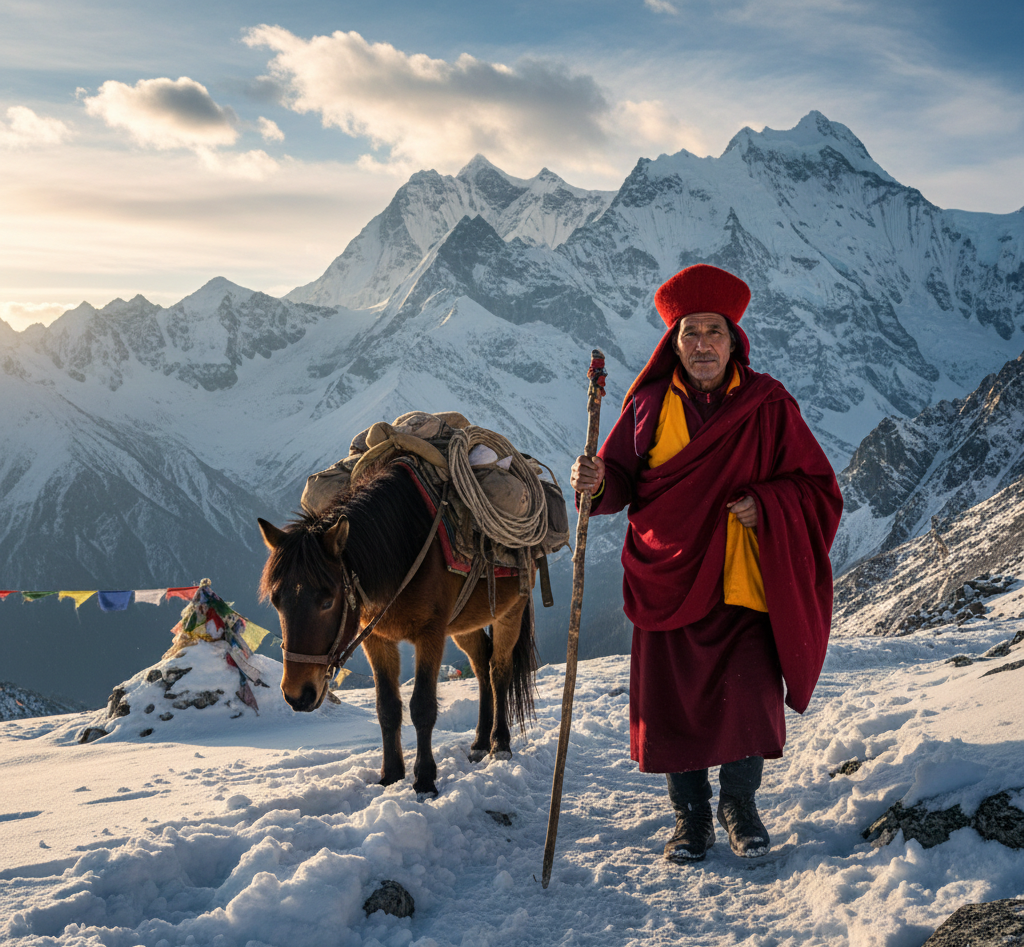
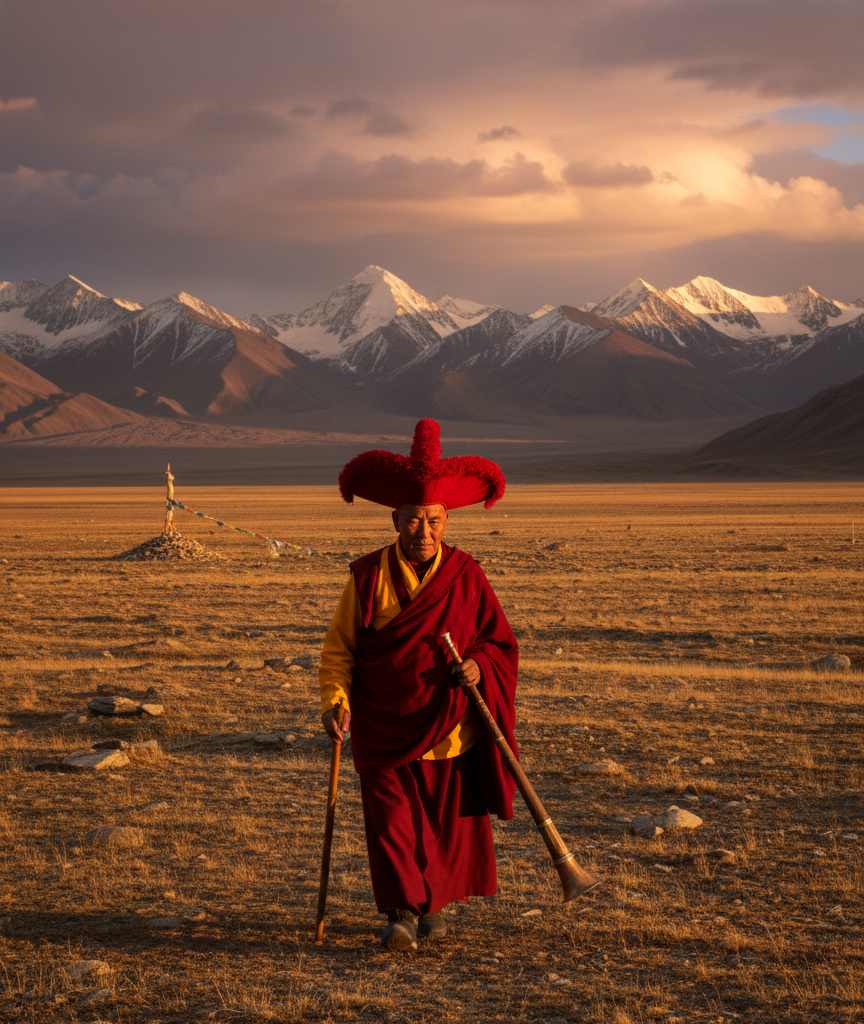
Tibet’s spiritual culture is very rich and sometimes difficult to grasp for Westerners. Tibetan Buddhism developed four major schools, each with distinct emphases yet sharing core teachings. These schools are sometimes referred to by their ceremonial hat colors – a visible symbol of their historical development and philosophical emphasis.
The “Red Hat” Schools (Older Traditions):
Nyingma (“Ancient Ones”): The oldest school, founded in the 8th century during the first translation period. Padmasambhava is central to this lineage. The Nyingma path includes nine levels (yanas), culminating in Dzogchen. As Mingyur Rinpoche explains, “The main emphasis of Nyingmapa is practice, with the most important part of practice being the view.” The Nyingma preserves the most Bon-influenced practices and recognizes ngagpa (non-monastic tantric practitioners) who specialize in rituals for lay communities. Nyingma monks wear red hats during ceremonies.
The Nine Vehicles: A Personal Discovery
I discovered Dzogchen in the 1980s at a time when resources were few and all was on books. What struck me immediately was how went directly to the source, perfection. After that, gravitated toward the Nyingma tradition which organizes the entire Buddhist path somewhat differently.
The nine vehicles (yanas) are like rungs on a ladder. Each are appropriate for different capacities and at different stages of development. The nine successive vehicles can be broken down into three groups:
Three Outer Vehicles (Sutrayana): These are the “causal” vehicles, working with cause and effect over many lifetimes:
- Shravaka (Hearer Vehicle) – Following the Four Noble Truths to become an arhat
- Pratyekabuddha (Solitary Realizer) – Achieving liberation through understanding dependent origination, without a teacher
- Bodhisattva (The Great Vehicle/Mahayana) – Seeking enlightenment to benefit all beings
Three Outer Tantras: Working with ritual, deity visualization, and transformation:
- Kriya Tantra – Emphasis on external ritual purity and action
- Upa/Charya Tantra – Balancing external action with internal meditation
- Yoga Tantra – Emphasis on internal meditation and deity yoga.
Finally, the Three Inner Tantras (The pinnacle of Vajrayana):
- Mahayoga – Transformation through elaborate deity visualization and mantra
- Anuyoga – Working with energy channels, winds, and completion stage practices
- Atiyoga/Dzogchen – Direct recognition of pure awareness (rigpa)
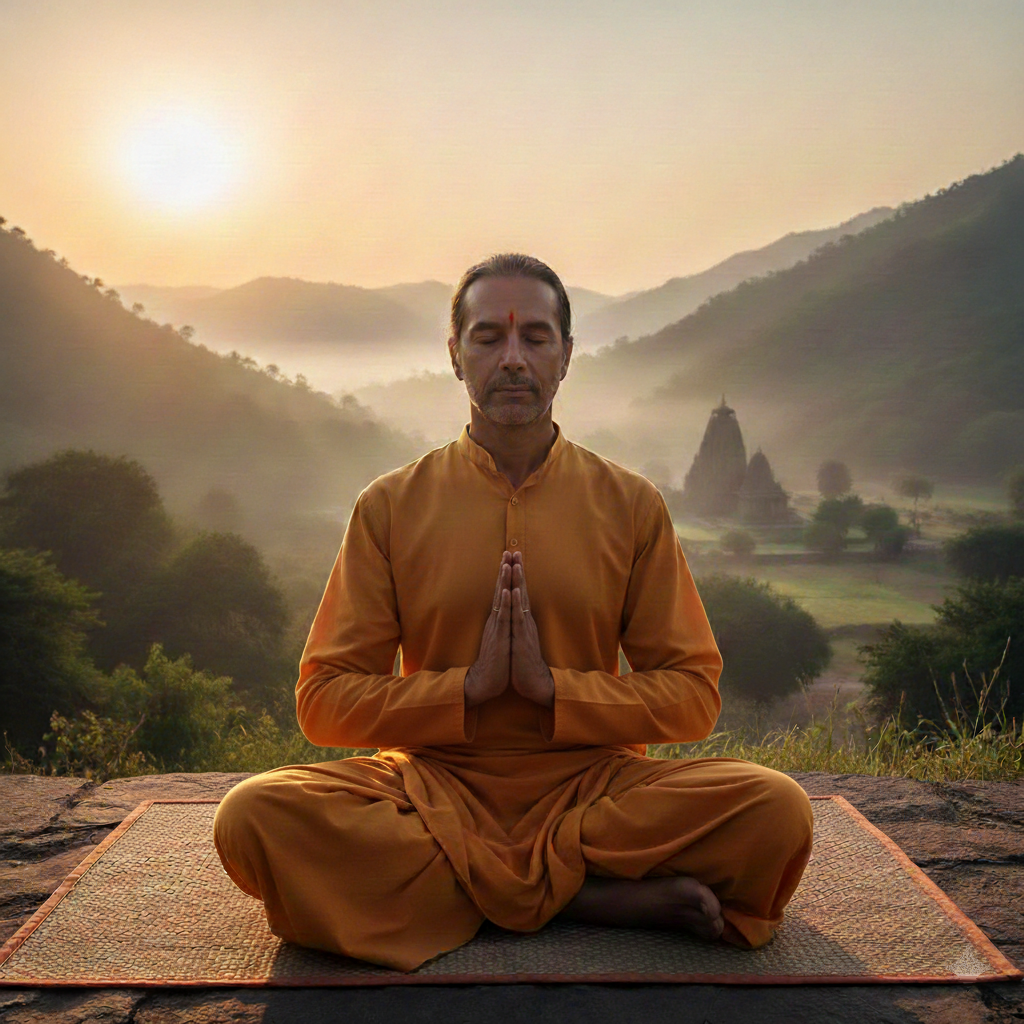
What captivated me about Mahayana and the higher vehicles was this radical shift in view. In the lower vehicles, you work to purify obscurations over countless lifetimes, gradually becoming enlightened. The Sutrayana path might take three hundred thousand lifetimes to complete – like riding a bicycle a very long distance. Perhaps this is why we find ourselves here with that deep inner feeling of being ready to “go home”.
But in Mahayana, and especially in the highest vehicles of Vajrayana, the view changes completely: you are already perfect. Your true nature is already enlightened. In fact, it has always been and cannot be made perfect. It already is. The obscurations are like clouds covering the sun – they don’t change the sun’s nature. You just need to recognize what’s always been there. Like cleaning the mirror or crystal, such is our perception of the Universe, which needs to be as clear as possible.
As the ninth yana teaches, Atiyoga (Dzogchen) is unique in that it’s a vehicle based on “pure awareness”m what the Tibetans call rigpa, contrary to ordinary consciousness (sem). The path isn’t about building or achieving anything. It’s about recognizing the awakened nature you’ve possessed all along.
This understanding – that enlightenment is recognition, not transformation revolutionized my spiritual practice and made me feel I stumbled again on something that was deep within. You don’t need to become perfect. You need to see that you already are and just the view needs cleaning. The obscurations are temporary and removable, like dust on a mirror. The mirror’s reflective nature never changed. This is a difficult thing to do in our judeo-christian societies that emphasize sin and working our way out of this miserable state.
Kagyu (“Oral Lineage”): Emerged in the 11th century through Marpa the Translator, his student Milarepa, and Gampopa. The name reflects how teachings pass orally from teacher to student, like whispered secrets. Kagyu specializes in Mahamudra meditation and the Six Yogas of Naropa. The emphasis is on meditation practice focused on seeing your true nature directly. The head of Kagyu is the Karmapa, considered an enlightened being. Kagyu monks also wear red ceremonial hats.
Sakya (“Grey Earth”): Founded in 1073 by Khon Konchok Gyelpo at Sakya Monastery. The name comes from the pale grey landscape near Shigatse. Sakya emphasizes scholarly study combined with practice, particularly the Lamdre system—”The Path and Its Fruit.” Leadership passes through the Khön family lineage. In Sakyapa, the main emphasis is on development and completion stages of tantric practice. Sakya monks wear red hats as well.
The “Yellow Hat” School (Reform Movement):
Gelug (“Virtuous Tradition”): The newest and largest school, founded by Je Tsongkhapa (1357-1419) as a reform movement. By the late 14th century, older schools were experiencing moral decline—monks sought wealth and power, abused discipline. Commoners would pay lamas to exorcise and foretell the future, which eventually led to abuse. Tsongkhapa restored strict monastic practice (Vinaya) and emphasized rigorous study alongside meditation. The Dalai Lama is always Gelugpa, though the official head is the Ganden Tripa. Gelug focuses on classical Indian texts, particularly Madhyamaka philosophy, and uses the Lam Rim (“Stages of the Path”) system. The Dalai Lama has been taught the intricacies of Dzogchen and wrote a brief book on it. This is similar in turn to the Christian protestant movement that sought to get back to a more fundamental Christianity.
The yellow hat was deliberately chosen by Tsongkhapa to visually distinguish his reformed approach from the older “red hat” schools. The color symbolized a return to original Buddhist discipline and purity, traditionally yellow and ocre. This wasn’t mere fashion—it represented a philosophical and practical difference: the yellow hats emphasized gradual practice through rigorous study and strict monastic rules, while the red hat schools maintained stronger emphasis on direct tantric practice and oral transmission.
Still, all four schools are legitimate expressions of Tibetan Buddhism, sharing far more similarities than differences. The hat colors simply mark historical development, not superiority or orthodoxy.
Different Perspectives, Same Goal
While these schools differ in emphasis, they’re about 80% identical in practice and philosophy. The differences are fascinating:
Gelug explains teachings from an ordinary being’s perspective. Sakya explains from the viewpoint of advanced practitioners on the path. Kagyu and Nyingma explain from an enlightened being’s perspective. Same truth, different angles.
Gradual vs sudden. Gelug and Sakya present gradual paths proceeding in stages. Kagyu and Nyingma often present the path as it occurs for rare practitioners “for whom everything happens at once.”
Mind’s nature. When discussing whether mind is “permanent” or “impermanent,” Gelug says impermanent (because awareness changes each moment), while Kagyu and Nyingma say permanent (because mind’s nature never changes). Both are correct from their perspectives.
All four traditions share the Mulasarvastivada lineage of monastic vows, use similar ritual practices (tormas, chanting, instruments), and require ngondro preliminaries (100,000 repetitions of prostrations, mantras, etc.). They differ mainly in when students do retreats and how they explain subtle philosophical points.
Interestingly enough, and true to the philosophy at The Wholistic Center, the 19th-century Rimé movement promoted studying all traditions rather than sectarian division, recognizing that each school offers valid paths to the same goal.
Tantric emphasis. Tibetan Buddhism developed sophisticated tantric practices—deity yoga, energy work with channels and winds, visualizations—transforming consciousness through symbolic means. In this aspect, it differs greatly from its original Indian Buddhism.
Treasure texts (terma). Both Bon and Buddhist lineages include texts said to be hidden by ancient masters and later discovered. Padmasambhava buried Dzogchen texts as terma, discovered centuries later when the time was right.
Rainbow body realization. Advanced practitioners in both Bon and Nyingma traditions are said to achieve “rainbow body” and “light body”—dissolving the physical body into light at death through complete Dzogchen realization. This includes 24 Bon masters from Zhang Zhung tradition, as well as Buddhist masters like Padmasambhava. Stories abound of great lamas upon sensing time to move on would sit in the lotus position and depending on their state of advancement, their body would either become a rainbow of colors or pure white color, leaving behind the corpse in the case of the rainbow body, or nothing in the case of the light body.
Four major schools plus Bon. Tibetan Buddhism includes Nyingma, Kagyu, Sakya, and Gelug schools, each with distinct teachings and practices, plus Bon as a related tradition. The 19th-century Rimé movement promoted studying all traditions rather than sectarian division.
Bon and Buddhism Today
The relationship between Bon and Tibetan Buddhism remains complex. Bon has its own monasteries, texts, and lineages, with practitioners in Tibet, India, Nepal, and worldwide. Its main monastery in exile is Menri in Dolanji, India.
Bon uses different terminology than Buddhism for similar concepts, and its deities have unique names and iconography. Yet Bon monks can receive Geshe degrees from Gelug monasteries, showing deep compatibility.
Most importantly, both traditions share Dzogchen as their highest teaching. Whether these Dzogchen lineages share common origins or developed independently remains debated. What’s clear is that both point to the same direct recognition of mind’s nature.
Lessons for Modern Seekers
Tibetan Buddhism’s synthesis of indigenous and imported wisdom offers important lessons:
Integration over conquest. Rather than destroying local traditions, Buddhism adapted and absorbed them, creating something richer than either alone.
Multiple valid paths. The existence of different schools and traditions—including Bon—demonstrates that there are many authentic routes to realization.
Direct recognition available now. Dzogchen’s teaching that enlightenment is recognizing what you already are, not becoming something new, offers hope that awakening isn’t impossibly distant.
Body and earth as sacred. Unlike purely transcendent spirituality, Tibetan Buddhism (especially through Bon influence) honors physical reality, local spirits, and environmental relationships.
As explored in Buddhism’s core teachings, the path ultimately points to direct experience. Like Shintoism’s kami and Sila’s breath, Tibetan Buddhism recognizes spirit pervading all existence.
And as the pathless path reminds us, your journey is uniquely yours. Whether through Bon or Buddhism, Dzogchen or gradual practices, the destination is recognizing the awakened nature you’ve possessed all along.
The great perfection was never lost. It simply waits for you to notice it.
Continue Your Journey
This article is also featured on The Wholistic Center Podcast, where we explore how ancient wisdom traditions inform modern spiritual practice.
Explore related wisdom:
- Buddhism: What a Prince’s Search for Truth Teaches Us – Core Buddhist teachings
- Sila: Greenland’s Ancient Life Force – Indigenous understanding of universal spirit
- Shintoism: Japan’s Ancient Way of the Kami – Recognizing spirit in nature
- The Wordless Thought Exercise – Accessing awareness before concepts
- Taoism: What Ancient China’s Way of Water Teaches Us – The flow of natural wisdom
Visit The Wholistic Center to discover more ancient wisdom traditions and their modern applications.