These articles are part of the build your own spiritual cocktail series. We present these ancient wisdom for you to pick and chose what fits, disregarding what doesn’t. And as with any good cocktails, tweak as you wish and update the recipe to find what fits. Eventually throughout life, you realize you need less and less ingredients. And this article grew so big due to its inherent complexity, I had to cut it in two. If you have corrections or wish to add to these articles, please contact us.
Let’s talk about a unique flavor of Buddhism, Tibetan Buddhism.
When Buddhism arrived in Tibet in the 7th and in the 8th centuries CE, it encountered a thriving spiritual tradition eventually called Bon. This system is based on shamanic practices, rituals, and cosmology that is weaved within Tibetan culture to this day.
What happened next created something unique in the Buddhist world: Tibetan Buddhism, which blends Indian Buddhist philosophy with indigenous Tibetan spirituality. This unique variations of Buddhism teachings and practices are found nowhere else. At the heart of this fusion lies the culmination called Dzogchen—”The Great Perfection”—a radical path to enlightenment that probably may be Tibet’s greatest spiritual gift to the world.
The Land Before Buddhism
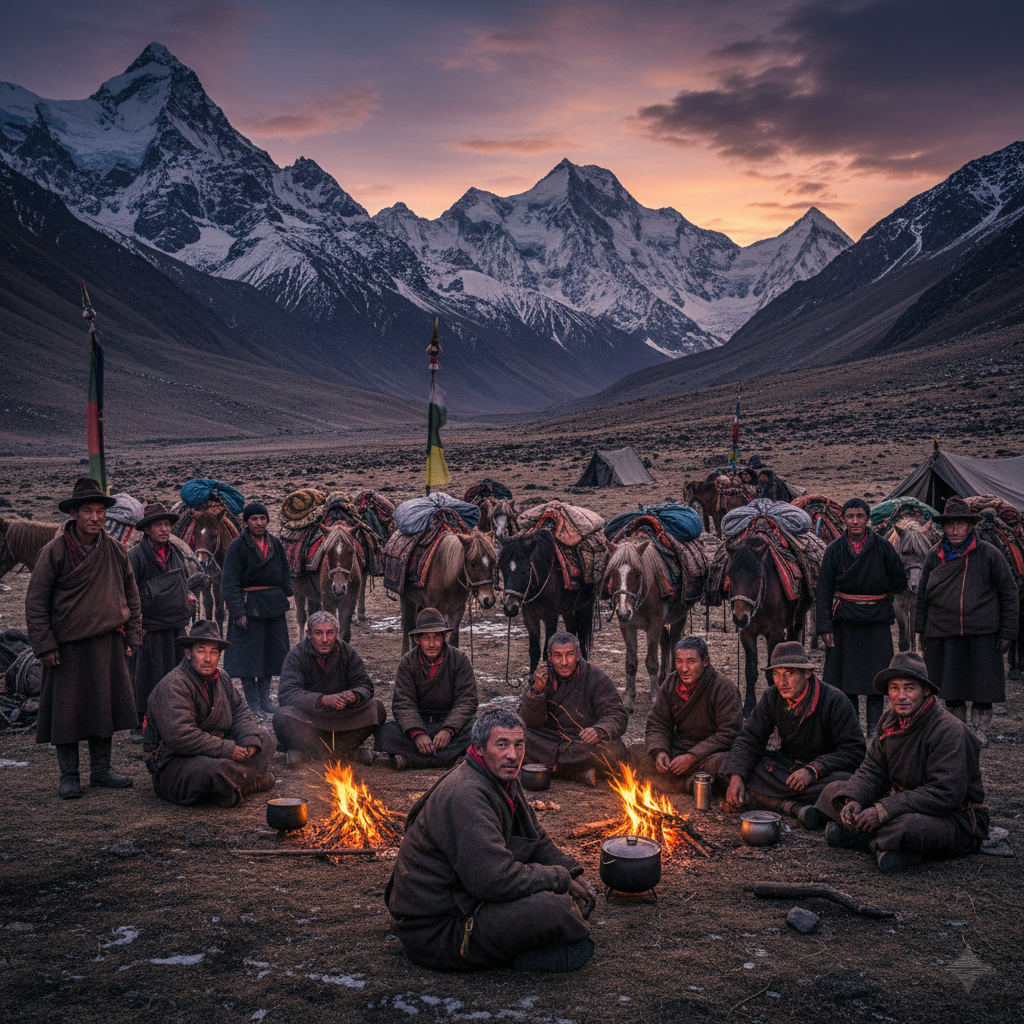
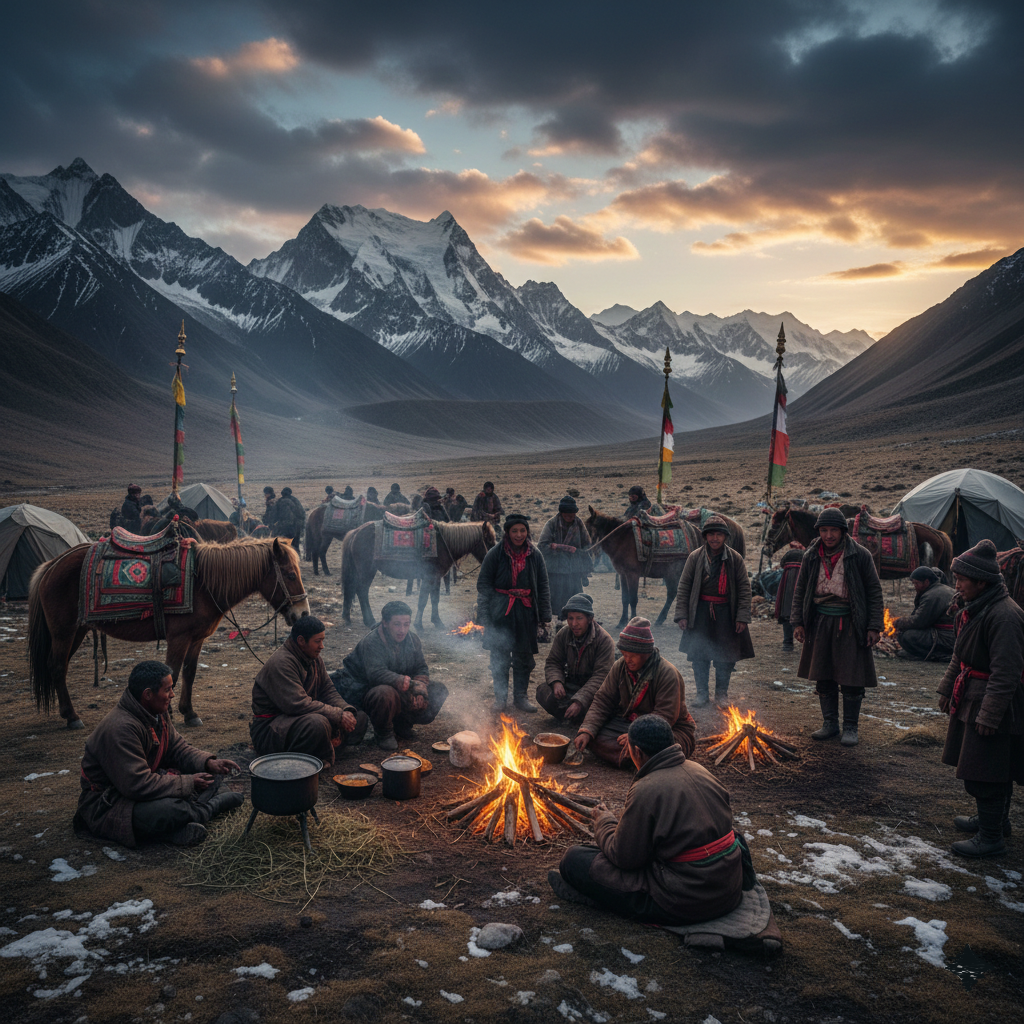
Before organized Bon, Tibet was home to indigenous shamanic practices – nature spirit worship, ancestor veneration, rituals performed by priests called shen, and complex burial ceremonies. These weren’t yet codified into a formal religious system with texts and monasteries. They were scattered local traditions, each region honoring its own protective spirits and sacred sites. Tibet was a country rich with traditions and unique sub-cultures nestled inside its vast territory, now part of China.
If you want to find out more about what the country felt like 130 years ago, I suggest reading Alexandra David-Neel books on her travel to Tibet. She was one of the first modern foreigner to travel in the country and onto the forbidden parts of it. And yes, she was a woman on top of it!
Bon is also called Yungdrung Bon, meaning “Eternal Bon”. It emerged as an organized religion, it is believed, in response to Buddhism’s arrival. According to Bon tradition, the teachings were brought by an enlightened being named Tonpa Shenrab from a land called Olmo Lungring, potentially dating as far back as 18,000 BCE. Olmo Lungring is thought to have been in Central Asia west of Tibet. But historical evidence suggests that organized Bon developed as a self-conscious religious system partly to compete with Buddhism. The truth perhaps lies somewhere in the middle. But who cares when the message far exceeds the importance of the messenger, most of the time. This is closely reminiscent of other place where Buddhism came and adopted to local traditions, such as Shintoism in Japan.
When Buddhism entered Tibet, practitioners of indigenous traditions recognized clear differences between their practices and the foreign faith. However, over time, they formalized Bon as a distinct tradition – creating written texts, but embraced or mirrored the incoming Buddhist structures. Much like Buddhism, they established monastic institutions and developing philosophical frameworks. Bon preserves ancient indigenous practices and absorbed Buddhist concepts.
As mentioned above, this pattern mirrors what happened in Japan, where indigenous animistic practices formalized into Shinto partly in response to Buddhism’s arrival. In both cases, rather than Buddhism erasing indigenous spirituality, the local tradition organized itself more formally, absorbed Buddhist elements, and profoundly influenced how Buddhism evolved as it spread eastward. The result in both Tibet and Japan was something unique that existed neither in India nor China – a genuine synthesis creating new forms of spiritual practice. It shows how nimble and adaptive Buddhism is.
However the key difference between both countries is that in Japan, Shinto and Buddhism coexisted more cooperatively. Most people today practice both openly. In Tibet, there was greater political and religious tension initially, with Bon positioning itself as the traditional competing tradition. The overall Tibetan culture, although vast and varied shared a common thread deeply rooted into superstition and traditional values. Yet ultimately, both paths led to deep mutual influence with plenty of variations for the budding Buddhist in you.
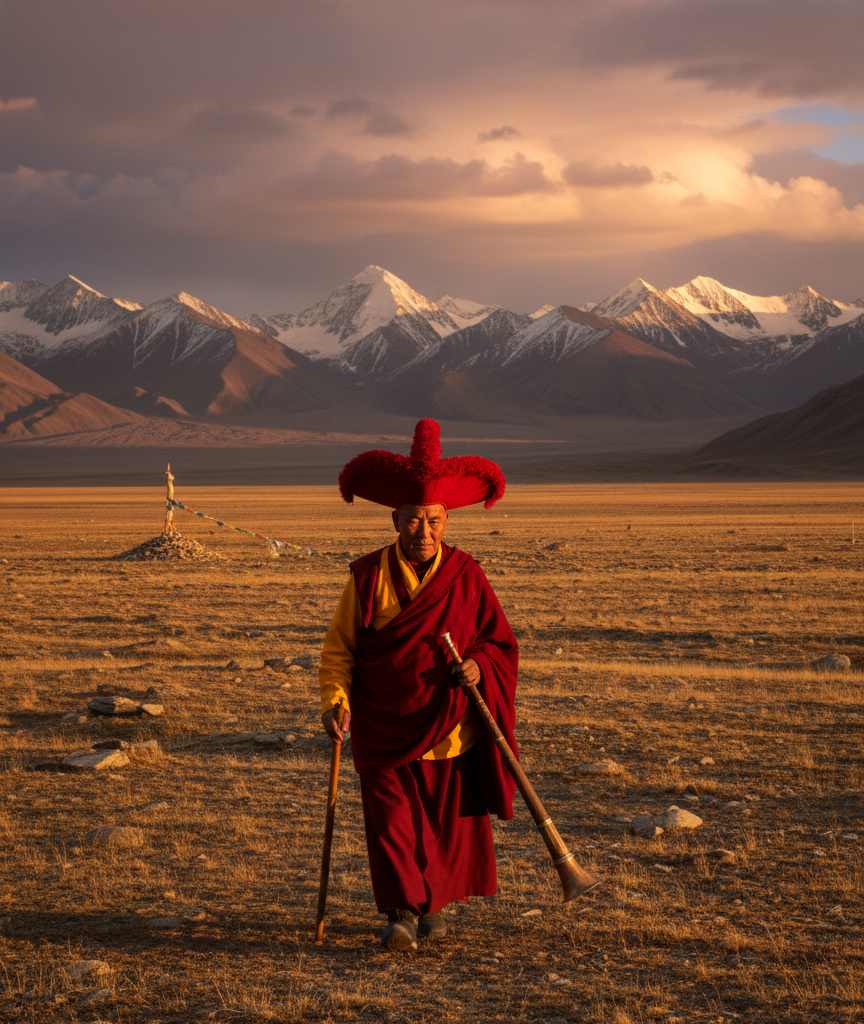
Unlike Buddhism’s focus on transcending the world, no worshiping of objects or entities, Bon emphasized harmonizing with the local environment and its deities, somewhat as Shintoism does. Bon priests (bonpo) perform exorcisms, burial rites, divinations, and rituals to work with local spirits and forces. The sun, moon, sky, and natural elements were honored as alive and conscious. In this aspect, it is closely related to Shamanism and takes its root there. We will talk about Shamanism later on this site. This also reflects the Inuit’s concept of Sila, we covered here.
Don’;t dismiss Bon as primitive superstition. It has a very sophisticated spiritual ecology – understanding that humans exist within webs of relationship with visible and invisible forces that shape reality. This is shared with many ancient systems that still thrive today, if not are carried in our world view to date.
Buddhism’s Turbulent Arrival
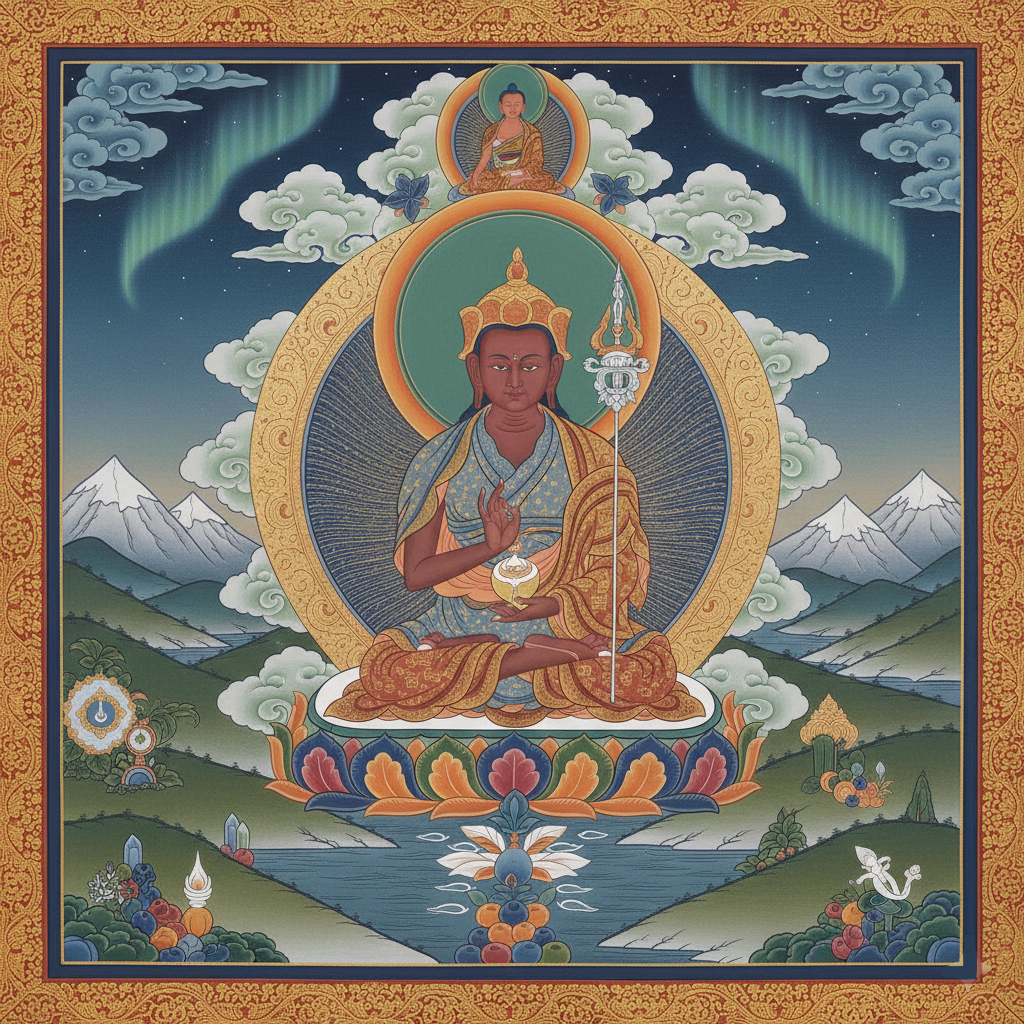
In the 8th century, King Trisong Detsen invited Indian Buddhist masters to Tibet. The scholarly monk Shantarakshita came first. According to legend, local spirits resisted, causing storms and obstacles. The king then invited Padmasambhava, the powerful and beloved tantric master known as Guru Rinpoche (“Precious Teacher”), to pacify these forces.
Rather than destroying Bon, Padmasambhava is said to have bound its deities and spirits as protectors of Buddhism. This wasn’t conquest—it was integration. The indigenous forces weren’t eliminated but transformed, becoming guardians of the new teaching. This is remionisc3ent of Bon that seeks to tame the wild entities and demons for the benefit of all.
The first Buddhist monastery, Samye, was established in 779 CE. There, Chinese, Indian, and Zhang-zhung translators worked together, creating a unique synthesis. Buddhism became Tibet’s state religion not just through royal decree but through genuine fusion with indigenous wisdom. According to some scholars, Tibet then struck a truce with China after some of its unruly population would barrel down the steep Tibetan plateaus to pillages the richer lower Chinese lands. Tibet would lay down its arms, fully embrace Buddhism, and teach it to the local countries. In exchange, China vowed to protect Tibet.
Yet political and spiritual tensions remained. What appeared as religious conflict between Buddhists and Bonpos was often actually political struggle between factions at court. The state even kept Bon burial rituals while promoting Buddhism, showing the complexity of the relationship.
Dzogchen: The Great Perfection
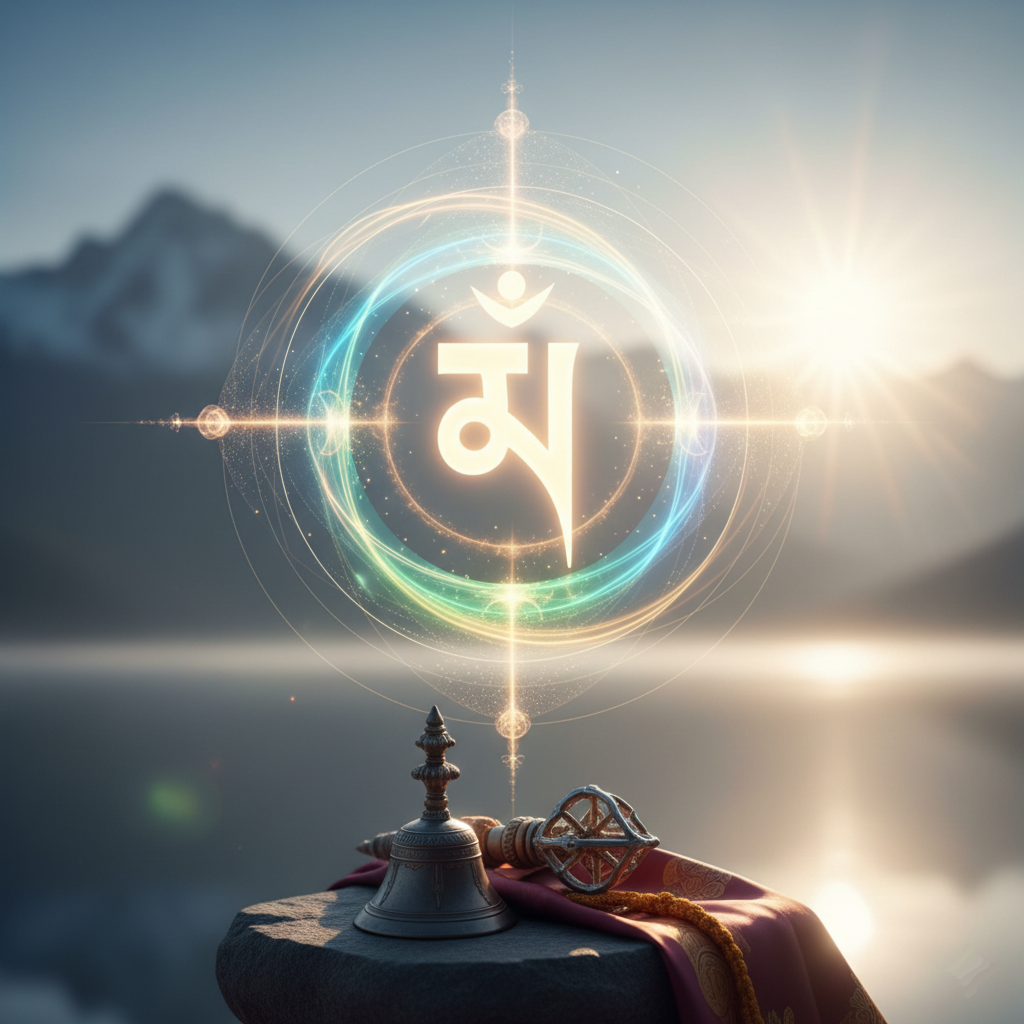
At the intersection of Bon and Buddhism emerged Dzogchen—”The Great Completion” or “Great Perfection.” This teaching system exists in both Bon and Buddhist (particularly Nyingma) lineages, raising fascinating questions about its origins.
Dzogchen appeared during Buddhism’s first dissemination in Tibet, around the 7th to 9th centuries. While it draws on Indian Buddhist sources, it has strong older Tibetan essence to it. There might be potential connections to Chinese Chan Buddhism, tantric Shaivism, Taoism, and indigenous Tibetan shamanism. Its precise origins remain mysterious. What makes Dzogchen radical is its directness. Unlike gradual Buddhist paths involving elaborate practices over lifetimes, Dzogchen points directly to the nature of mind itself, which is and has always been perfect. It calls it rigpa, or “pure awareness.”
The teaching is simple yet profound: your mind is already perfect and enlightened. You don’t need to become something else. You need to recognize what you’ve always been. Your view is a little skewed after years and decades of growing up in society, accepting what was taught with little to no inner reflection. The practice often mentions the analogy of a mirror and crystal, as that of the mind to make it as clear as possible to stay in this original state of perfection.
Early Dzogchen rejected normative tantric practices, focusing instead on technique-free immersion in the bare immediacy of one’s own deepest levels of awareness. Scholar Christopher Hatchell explains, since “all beings and all appearances are themselves the singular enlightened gnosis,” there’s nothing to do but recognize this inherent awakened mind, relax, and let go. How delightfully simple and liberating from the negative sinful approach of other systems!
It was a welcome relief for me after studying the more orthodox systems of liberation with a focus on heavy work, mediation, and other practices. Dzogchen felt simple, precise, and to the point. This also connects to what we explore in wordless thinking—accessing awareness before concepts. Like Taoism’s Wu Wei, it’s about recognition rather than achievement.
What Makes Tibetan Buddhism Unique
Several features distinguish Tibetan Buddhism from other Buddhist traditions:
Integration of indigenous wisdom. Unlike traditions that rejected local practices, Tibetan Buddhism incorporated Bon elements, creating something genuinely new. This mirrors what happened in Japan, where Shintoism and Buddhism blended so thoroughly that most Japanese practice both simultaneously. In Tibet as in Japan, the indigenous tradition (Bon/Shinto) didn’t disappear—it transformed and enriched the Buddhist tradition that absorbed it.
Today, Bon and Buddhism share so many similarities that some scholars see Bon as “essentially a variant of Tibetan Buddhism.” Bon has its own monasteries, texts, and lineages, yet Bon monks can receive Geshe degrees from Gelug monasteries. Most importantly, both traditions share Dzogchen as their highest teaching.
A lama is a spiritual teacher or master in Tibetan Buddhism. The word literally means “superior one” or “highest principle.” Not all Buddhist monks are lamas, but to become one, a person usually needs years of advanced study and practice. Lamas guide students in meditation, teach Buddhist philosophy, and perform religious ceremonies. Think of “lama” as similar to “professor” – it’s an earned title showing expertise. Various schools require lamas to go on pilgrimage, engage in ascetic retreats, and various other forms of mediation and exercises.
The Dalai Lama is considered the spiritual leader of Tibetan Buddhism, particularly in the Gelug school. Tibetan Buddhists believe the Dalai Lama is a tulku, which means a reincarnated enlightened being who chooses to be reborn to help others. Each Dalai Lama is believed to be the rebirth of the previous one. The search of the reincarnated future lama is an extraordinary adventure taken by several monks throughout Tibet. Today, this time honored tradition is endangered as the Chinese government sees the future Dalai Lama different than the exiled Tibetan spiritual government in Dharamshala does.
The current Dalai Lama (the 14th) is probably the most famous Buddhist figure in the world and could be the last one, at least in a traditional sense. Beyond spiritual duties, the Dalai Lama historically served as Tibet’s political leader until 2011, when the current Dalai Lama retired from political responsibilities. He’s seen as an embodiment of compassion.
The Panchen Lama is the second-highest spiritual authority in Tibetan Buddhism’s Gelug school. Like the Dalai Lama, the Panchen Lama is also considered a tulku – a reincarnated spiritual master. Here’s where it gets interesting: the Panchen Lama and Dalai Lama have a unique relationship. Traditionally, when one dies, the other helps identify the reincarnation of the deceased lama. The Panchen Lama focuses more on teaching and scholarship, while the Dalai Lama has taken on more governmental and public-facing roles.
There many different types of lamas and we invite those who can explain them better to step forward, but remember that here at The Wholistic Center there are no leaders, no experts, no gurus. We are students and researchers. The main difference between lamas in Tibet are their scope and roles. All Dalai Lamas and Panchen Lamas are lamas, but most lamas are neither. It’s like how all presidents are citizens, but most citizens aren’t presidents. The Dalai Lama and Panchen Lama are specific lineages of reincarnated teachers with special importance in Tibetan Buddhism, while lamas in general are the many respected teachers throughout Tibet and the Tibetan Buddhist world.
Stay tuned for part 2 where we will look at the different Tibetan Buddhist schools and the differences between the lamas.
Continue Your Journey
This article is also featured on The Wholistic Center Podcast, where we explore how ancient wisdom traditions inform modern spiritual practice.
Explore related wisdom:
- Buddhism: What a Prince’s Search for Truth Teaches Us – Core Buddhist teachings
- Sila: Greenland’s Ancient Life Force – Indigenous understanding of universal spirit
- Shintoism: Japan’s Ancient Way of the Kami – Recognizing spirit in nature
- The Wordless Thought Exercise – Accessing awareness before concepts
- Taoism: What Ancient China’s Way of Water Teaches Us – The flow of natural wisdom
- Any Alexandra David-Neel books on her travel to Tibet.
Visit The Wholistic Center to discover more ancient wisdom traditions and their modern applications.