
A reflection for those on the path
There is a recurring pattern in the modern wellness landscape that deserves a closer look. And it’s nothing new — it’s as old as time itself.
A teacher emerges. They are articulate, charismatic, often genuinely gifted. They synthesize fragments of ancient wisdom — breathwork, meditation, energy practices — and package them for a Western audience hungry for transformation. They’ve learned about it in record time and condensed it for quick results. The crowds applaud and grow. The retreats fill. The testimonials multiply. Who would turn down the possibility of bypassing years of learning and awakening when you can pole-vault past the pain without digging in to find the solutions?

The problem is that ancient wise people warned about going too fast, sometimes, with dire consequences. The tell-tale signs become obvious. The teacher that was meant to lead you inward begins leading you toward them.
Again, this is not new. Every spiritual tradition has grappled with it. I’ve often wondered if I am not a reincarnation of one of those Himalayan anchorites who would come down from retreat to be welcomed by a needing and awaiting crowd — one that hangs on any nugget of wisdom.
What is new today is the scale of this esoteric trend. TED stages multiply. Where do you start your search for these teachers? On social media. Million-follower social media accounts grow exponentially. Multi-thousand-dollar retreats are streamed globally to an eager society. The reach amplifies both the good and the harm. And the trend continues, away from within, focusing on the outside — perpetuating the lifelong conditioning that the savior is coming, somewhere just beyond ourselves.
The Dangers of Ancient Tools Used Without Appropriate Training
Some of the techniques circulating in popular wellness culture are genuinely old. Pranayama. Bandhas. Kundalini. Chakra work. Taoist exercises and more. Specific breathwork practices designed to move energy through the cerebrospinal fluid and activate dormant energetic pathways. The remarkable results are on social media everywhere. Deliverance at last!
But what we rarely hear about are the decades of practice required under the tutelage of a disciplined master, itself, no walk in the park. Even the great Bruce Lee was humbled, repeatedly, by a much older and frail looking Wing Chun master.
These methods are real. They work. That is precisely why they require care — and decades of training.
Consider this: certain Tibetan lamas spend decades learning to guide what is known as the conscious exit of awareness from the body. This is an ancient practice from the Bön tradition, passed down through the Nyingma Tibetan Buddhist lineage. It is used with great care — specifically and only — to ease a dying person’s transition to their next life. That training is undertaken within a lineage, under strict supervision, with full understanding of the consequences of getting it wrong, death. It is not a weekend workshop technique. The practicing lamas risks his own soul escaping his body in the process. They learns to direct it toward the dying person at extraordinary personal risk, through a dedication of training that spans not months or years, but decades.
When compressed versions of these practices reach the West, they are appealing. Taught to hundreds or thousands of people simultaneously — in ballrooms, without individual assessment or dedicated apprenticeship, without lineage accountability — the results have been predictable all along. The warnings were always there. Kundalini syndrome. Panic attacks. Trauma activation. Energetic instability that can persist for months or years. Something well-known form the ancient masters, a nervous system already overstimulated does not need more force. It needs grounding. It needs an awareness that turns within to find its resolution. A teacher may lift the veil, but you do the work — and that work happens inside.
The Dangers of Looking Outside for Solutions
Social media is full of accounts from people who have spent significant time and money with well-known Western and Eastern teachers. The group experiences were intense — involuntary shaking, emotional flooding, a sense of breakthrough that later gave way to persistent anxiety, dissociation, and an inability to feel settled in one’s own body. They were told this was part of the process and encouraged to push through, but not how. Most had no idea what to expect except the anticipation of a very public and visible breakdown, a very Western expectations of breakthroughs. And throughout, the lineage is rarely named. The length, depth, and quality of training is briefly glossed over.
Across support communities, similar stories surface: genuine moments of expansion followed by prolonged destabilization. The common thread is not malice. Most of these teachers believe in what they do. The thread is incompleteness. Half the wisdom tradition without the other half. The formless without the form. The awakening without the integration. The spiritual ego is one of the most pernicious forces in a human being, and it often catches even sincere practitioners by surprise — not suddenly, but through years of slow, quiet deception.
I was initiated into Kriya Yoga. But my initiation came through a well-established lineage. Paramahansa Hariharananda had been initiated by the same teacher who initiated Sri Yukteswar, Lahiri Mahasaya, who, in turn, initiated the well known Paramahansa Yogananda. Paramahansa Hariharananda’s disciple, Paramahansa Prajnanananda, initiated me. It took time. It would take many decades to move through the levels. This was not a seminar where you walked away with a certificate to teach. I understood that from decades of practicing martial arts. I did it for the love of it, driven by an instinctual need. But I never wanted to teach. That is a dangerous path, riding the stormy pitfalls of ego.
The Structural Problem: Power and Suggestibility
There is a more dangerous issue beneath the physiological risks.
Guided meditation, when done well, quiets the analytical mind and opens access to deeper layers of experience. Those experiences are within. A genuine teacher doesn’t hand you the answers — they point to the only place where answers can actually be found. If they don’t, they are no longer a teacher. They become a leader, usually drawing on an unconscious energetic disempowerment of their students. To me, that is nothing less than energetic captivity.
This morning’s Enneagram newsletter reminds us of the importance of working on all three aspects of a being: “One way to work on yourself is by being present in the body. Another way is by expanding the heart. A third way is by quieting the mind. The wise person finds a way to work on all three at the same time. (Understanding the Enneagram, 327)”
Our eagerness to heal and learn is also an openness to suggestibility. In the hands of a teacher who, consciously or not, is building dependence rather than capacity, your center of gravity quietly migrates from within to them.
Pay attention to the signs. Does the teacher point you back to yourself, or back to them? Do they ask questions and let you do the work, or do they hand you conclusions? Does their teaching increase your trust in your own perception — or your need for their next course, their next retreat, their next framework? Is credit given to a lineage, a tradition, the teachers who came before, and the decades spent in guided study? Or is the impression cultivated that this person alone cracked the code? So many have claimed to. Few lasting traces remain.
Personally, my tell-tale sign is the cockiness and arrogance on their faces or in their answers. It shows up as a way to hush you up by implying that they know so much more. Oftentimes, it masks lack of knowledge. It’s a little subtle to see, but it’s there. Question everything. These are not cynical questions. They are discernment questions. The great traditions built them in deliberately.
Some Souls Return to Lead. Others Return to Harvest.
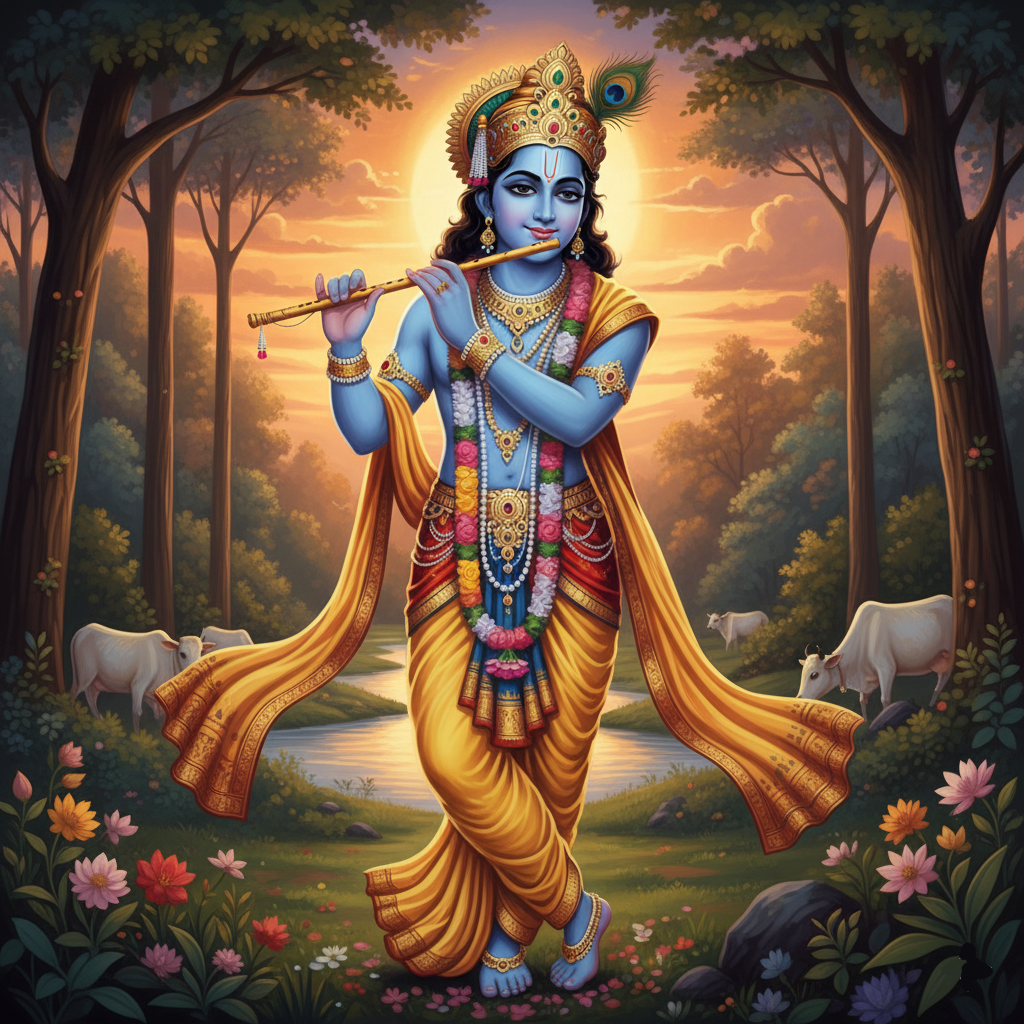
From a broader metaphysical view, and in a subtle twist, charismatic teachers who gather followers at scale are not a random occurrence. There is something to be learned here, of not to be careful who you allow inside your personal space. Some are here to transmit something genuinely real. Although imperfect, they can be sincere. Others lean toward the energy of followership itself — the adulation, the field of devoted attention that a thousand people direct toward one point, the bypassing of established norms and patient learning. There is a certain air of cockiness in the faces they plaster over social media, mimicking the true knowledge of well-learned masters. Shortcuts exist, but they are few and far between.
This makes them human, and in some cases, unconscious of their own patterns despite believing otherwise. Discernment is your responsibility before you place your trust — and your wellbeing — in anyone’s hands. Trust is built slowly. It is not given away.
The question to ask of any teacher, any method, any retreat is simple: Am I leaving this more rooted in myself, or more dependent on something outside myself? And if so, how long does that last? I have often found that certain methods left me with excitement that dwindled to nothing a few months later.
Finding Your Wholistic Center
The Wholistic Center exists with a specific intention: not to position itself as a destination, but as a gathering place — a repository of ancient knowledge and wisdom left for us, and a bridge back to your own knowing. Perhaps the best way to describe it is through the Dzogchen tools of the crystal and the mirror. Clearing a crystal requires enough light. Cleaning a mirror is the ongoing practice. We may already be whole, but we are also emerging from decades of societal conditioning that has shaped us to look outward for solutions — and to fear what lies within. That interior space is, in fact, your closest and most reliable friend.
The most dangerous moment in a spiritual journey is when someone in pain encounters a charismatic figure who offers certainty. Pain makes us vulnerable to certainty. And certainty, in the hands of an incomplete teacher, is a very comfortable cage. Humans excel at avoiding pain. We are far less practiced at finding lasting peace.
The path here has no external stage. There is only one way in, and that way is within. Ask yourself: What do I already know? What does my body say? What has always been true for me, underneath everything I was taught to override?
A Simple Caution Before You Book That Retreat
Before engaging with any new age teacher, healer, or transformational program — especially high-intensity ones — consider the following:
- Research beyond the testimonials. Look for the experiences that didn’t work. It’s tempting to trust out of desperation. But they are usually there, in forums and support groups rather than official channels.
- Ask whether the teacher credits a lineage or tradition. Genuine training leaves traces.
- Ask whether techniques are adapted to individual readiness, or applied uniformly to an entire room.
- Notice whether the community around the teacher encourages critical thinking or subtly discourages it.
- If you carry pre-existing trauma, a sensitive nervous system, or unresolved energetic dysregulation, seek individual guidance before group energy intensives.
- Notice who you think about more after the experience — yourself, or the teacher.
- Use AI as a research tool: look into a teacher’s reputation, history, and controversies. Ask it to verify its own findings and list sources.
I noticed early enough that true knowledge is often hidden — and for good reason. Ancient wisdom was handed through word-of-mouth, not in a written way. This happened much later in human evolution. Hermetic philosophy taught us that hermetic means something sealed, something that does not leak outside. My greatest teachers were those who didn’t seek to teach. They didn’t even look like teachers and were not asking to be. They had an uncanny quality of being fully present without beckoning anyone toward them. They didn’t need followers. They were complete in themselves. They simply knew. They simply were. You would find yourself in their lives, and it became your choice — quietly, and mostly on their terms — whether and how to partake.
The Wholistic Center is here to support your return to yourself, to get back that inner compass. If you have navigated a difficult experience with a modality or teacher and are finding your footing again, we welcome that conversation. The work of integration, grounding, and reclaiming your own inner authority is among the most important work any of us can do.