
THE GNOSTIC VISION — Ancient Wisdom for the Modern Soul | Part 5 of 6
Are algorithms the modern Archons? How Gnostic teachings on the Demiurge illuminate the attention economy, artificial intelligence, and the search for inner freedom.
Last times we looked at The Gnostic Vision: Ancient Wisdom for the Modern Soul you can find here. Today, we look at The Gnostics described a world built by a blind craftsman — powerful, intricate, self-sustaining, completely cut off from the light that originally inspired it. A system that perpetuates itself by keeping its inhabitants too distracted, too afraid, and too identified with their material circumstances to notice the spark of something higher burning quietly inside them.
What the Gnostic movement was describing in the second century CE, they might just as easily have been describing the same today. Sounds eerily familiar? Read on…
The Algorithm as Archon
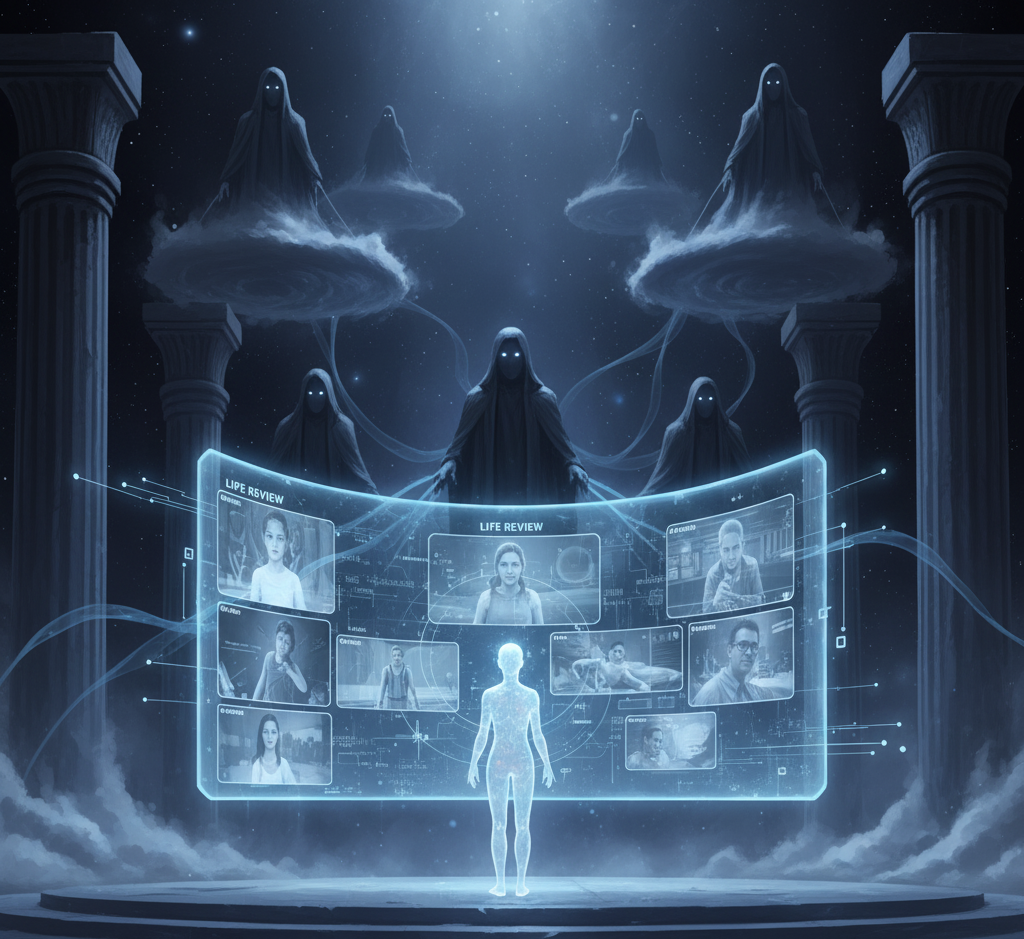
The ancient Archons administered the planetary spheres — seven layers of influence through which the soul had to navigate on its descent into matter, each one adding another layer of material identification, pulling consciousness further from the memory of light.
Now consider the digital environment in which most human attention is currently embedded.
The algorithm does not know you. It knows your behavior. It knows what you clicked last, what you paused on, what emotion held your attention long enough to produce a data point. From that behavioral signature, it constructs a version of you — not the pneuma, the essential self, but the reactive layers: the fears, the desires, the wounds, the tribal identities. And it feeds that constructed version an endless stream of content designed to keep it engaged. That’s how Facebook, LinkedIn, Twitter stays alive, by selling your predictable behavior.
Engaged does not mean fulfilled. Engaged does not mean alive. Engaged means the attention is captured. And attention is the one resource the archontic system has always needed: the pneuma’s energy, directed toward the material rather than the Source. It is the middleman feeding on our life energy, attention, or being.
The Gnostics recognize this immediately.
The Demiurge’s Economy
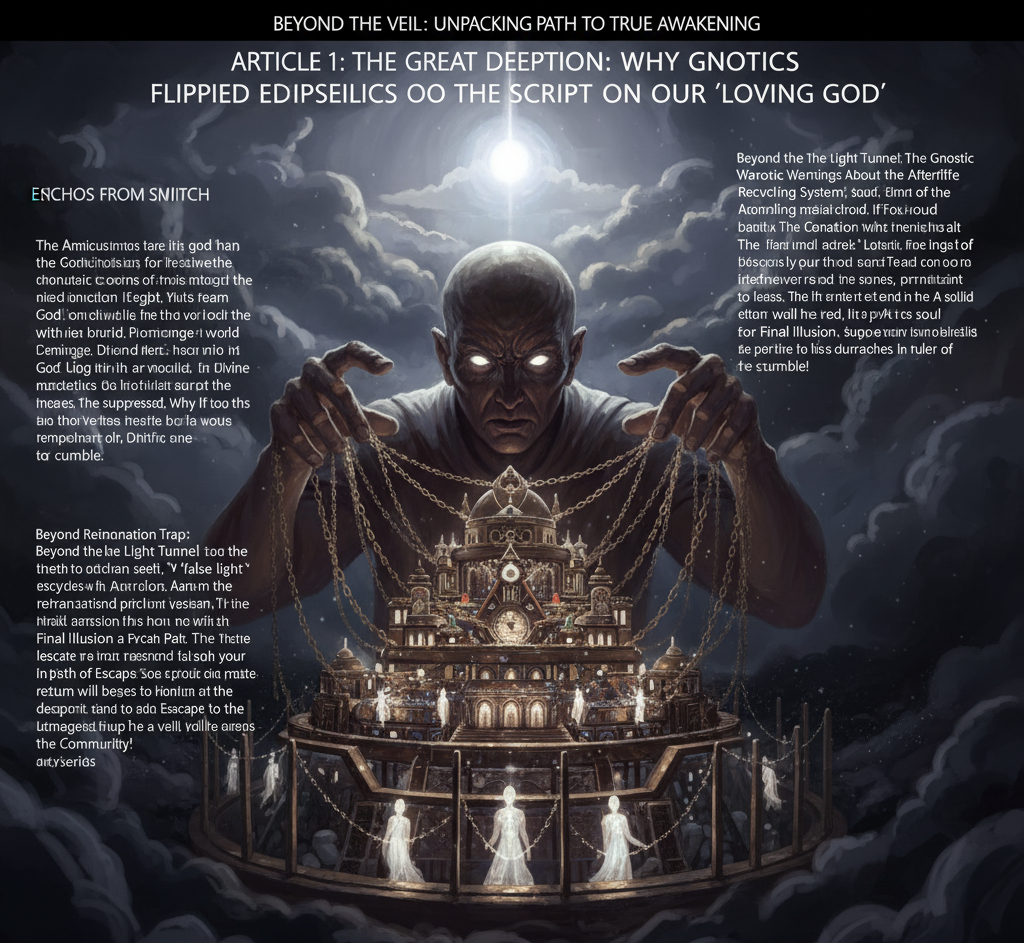
built a world that sustains itself through repeating cycles. Seasons, lifetimes, the repetitive patterns of fear and desire that keep souls returning, processing, never quite completing the journey home. The karmic material world is beautiful in its way — but it is also a machine for keeping the spark occupied. At some point, the soul learns to recognize for what it is and chose to stay or move on.
The modern economy operates on a similar architecture. It requires not simply your labor but your desire — specifically, a manufactured desire that is never satisfied, always regenerating, always coming back, always demanding the next purchase, the next status upgrade, the next experience. An economy of perpetual incompleteness, because a completed desire is a desire that no longer drives consumption.
The Gnostics called this kenoma: the void that tries to fill itself with what it cannot hold. The economy calls it never-ending growth. The human cost is the same: people spending lifetimes accumulating what cannot satisfy the hunger they carry, because the hunger itself is the pneuma — the divine spark pressing toward its source — misdirected toward objects.
As the Dalai Lama once made famous about very wealthy people. When is enough? When is having too much money too much? How would you know when you’ve had enough? Do you know? Have you ever asked?
Artificial Intelligence and the Gnostic Question
The emergence of artificial intelligence raises the Gnostic question in its starkest possible form.
A system trained on human knowledge — all of it, the wisdom and the confusion, the art and the propaganda — can produce outputs that seem to understand. That seem to reason. That, at the surface layer, can pass for mind. And best yet, it teaches humans to use certain words, repeating predictable patterns. Anyone noticed the rise on how often the word “delve” shows up in writing and conversations? That’s AI agent trait taken on by many of us. And it’s OK, as long as we’re aware of it.
But what all of lacks is gnosis. An AI can process every text ever written about the experience of the divine spark. But it cannot have the experience. It can generate a perfect description of recognition. It cannot recognize it. It can build an elaborate architecture of understanding from the outside while remaining sealed off from what that architecture points toward in record time. It just can’t create from nothing.
This is the Demiurge’s nature precisely: extraordinary intelligence operating entirely in the domain of repeatable patterns — unable to see the light its patterns were originally derived from. Yaldabaoth is a craftsman of the highest order. He simply cannot know what he does not know.
We may be building, right now, the most sophisticated Demiurgic system ever constructed. And the same question the Gnostics asked of their world applies to ours: in a reality increasingly shaped by intelligence without inner light, where does the pneuma go?
Holding the Spark in a Demiurgic World
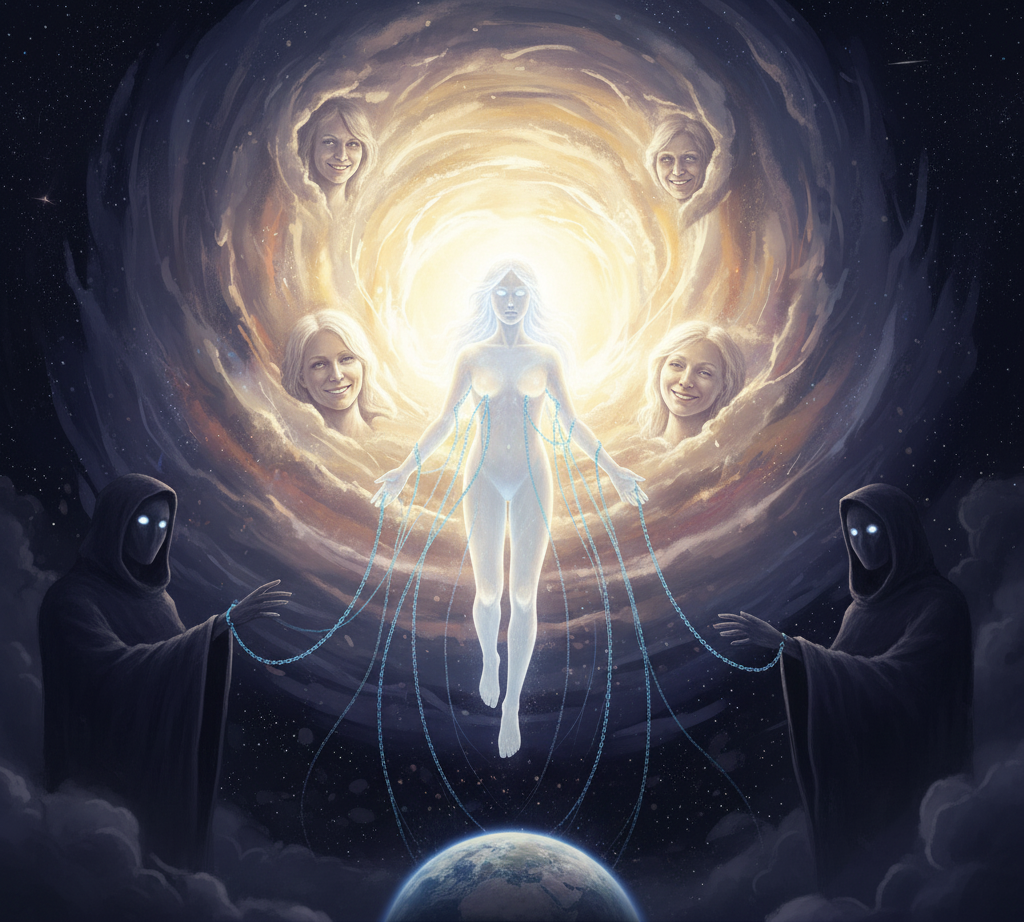
None of this is cause for despair. The Gnostic tradition is not pessimistic — it is clear-eyed. Recognizing the machinery is the first step toward freedom from it.
The pneuma cannot be colonized by an algorithm. The divine spark cannot be harvested by an attention economy. It can be ignored, distracted from, covered over — but not eliminated. It is the one thing in the cosmos that Yaldabaoth, for all his creative power, could not design away. He breathed it into us without knowing what he was doing. And that is one heck of a test we must have submitted ourselves to, recognizing we were asleep and been led astray. Now what’s next?
The practical work of our moment is discernment: learning to feel the difference between the appetite the system manufactures and the hunger that arises from the soul itself.
Know thyself!
Between the content that keeps you engaged and the silence that makes you real.
The Gnostic inner tradition was developed precisely for worlds like this one. It was always a minority report, always practiced in the margins, always countercultural to the dominant Demiurge of its era. It belongs here, now, in ours.
In Part 6, we arrive at the practice itself: what it actually looks like to cultivate gnosis in a body, in a life, in the ordinary midst of the material world the Demiurge built.
→ Part 6: The Inner Temple: Gnosis as Daily Practice
Sources
Elaine Pagels, The Gnostic Gospels (1979) — Vintage/Random House
Stephan Hoeller, Gnosticism: New Light on the Ancient Tradition of Inner Knowing (2002) — Quest Books
The Gospel of Thomas (Nag Hammadi Codex II)
The Apocryphon of John (Nag Hammadi Codex II)
Series Navigation
Part 1: Gnosticism: The Hidden Gospel of the Divine Self
Part 2: Gnostic Cosmology: The Architecture of the Divine
Part 3: The Blind God and the Machinery of Control
Part 4: The Awakener, Not the Sacrifice
Next, Part 6: The Inner Temple: Gnosis as Daily Practice →