
By Nicolas Zart | TheWholisticCenter.com
There is a cave beneath Rome. And beneath Londinium. And beneath the legionary outpost at Carnuntum on the Danube. Carved into the rock that looks it was built to mimic it, mithraea subterranean chambers were where initiates gathered for two thousand years before Christianity. There, they brought bread and wine. They shared a ritual meal. They faced east, toward a light they could not yet see. Many of these acts are still carried on throughout various wisdom systems over the planet.
These people were worshipping Mithra. And they were doing it a very long time before anyone commanded them to.

The Oldest Light
Mithra outdates the Roman empire. He is among the oldest named deities in human record. He appears in both the Rigveda — the foundational text of the Vedic tradition — and the Avesta, the sacred scripture of ancient Iran. And this goes back to more than three thousand years ago. His name derives from the Proto-Indo-Iranian word for contract or covenant. It was not in the legal sense, but rather in the older sense, as a bond of mutual trust between people, and between people and the world they inhabited.
In the Iranian tradition, Mithra was the guardian of that bond. He oversaw agreements kept and broken. He was associated with the sun not as a distant authority in the sky, but as the light that makes the world legible. This is the light that reveals what is true and what is concealed. He was, in the oldest layers of the tradition, less a god above than a principle alongside but the force that holds relationships together, that makes human life possible.
This is a different kind of divine than the one most of us inherited.

The Cave and the Meal
Mithra traveled westward, carried by soldiers, merchants, and slaves through Babylon, Anatolia, and eventually into the Roman Empire. The tradition transformed within each cross of borders. By the first century CE, what scholars now call Roman Mithraism, became a mystery cult practiced exclusively in underground or cave-like temples. It was open only to initiates, organized around seven grades of initiation corresponding to the seven planets.
The practices were unique. Initiates shared communal meals of bread and wine, reminiscent to what would become of of Christianity’s foundations. They underwent trials of courage and endurance. They gathered facing the east wall, where a great carved relief — the tauroctony — depicted Mithra slaying a bull, from whose blood grain and grapes were said to spring. Life from sacrifice. Light from darkness. The eternal cycle rendered in stone and the parallels will strike most scholars of ancient philosophies and religions.
The scholar David Ulansey has argued that the tauroctony encodes a sophisticated astronomical understanding — the precession of the equinoxes, the slow celestial shift that was one of the great intellectual discoveries of the ancient world. What is certain is that Mithraism was complex. It was a system of understanding the cosmos, the self, the relationship between human beings and time, and much more. It asked nothing of you but participation.
Zoroaster’s Refinement
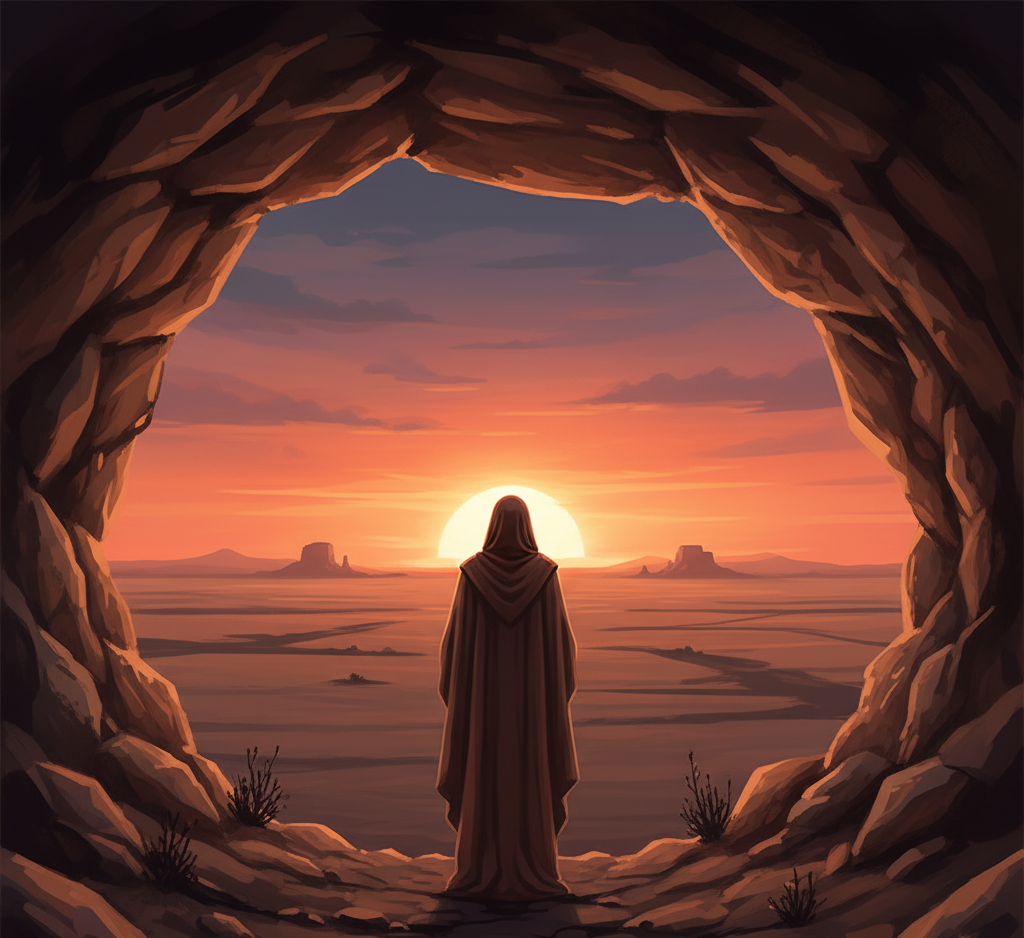
Before Mithraism reached Rome, the Iranian tradition had already undergone one great transformation. Zoroaster — Zarathustra in his own language estimated to have lived sometime between 1500 and 600 BCE. That dating remains one of the great unresolved questions of religious history. What is less disputed is what he did. He took the old, polytheistic Iranian tradition, with Mithra at its center, and refined it into something new.
Zoroaster’s vision was dualistic and moral. The universe was a struggle between Ahura Mazda — the Wise Lord, the principle of truth and light and Angra Mainyu, the principle of destruction and falsehood. Human beings were not passive inhabitants of this struggle. They were participants, choosing through their thoughts, words, and deeds which force they strengthened. The Avestan word Asha — truth, order, righteousness — became the organizing principle of a life well lived.
This was still, at its root, a human message. Choice, responsibility, the moral weight of ordinary decisions. Mithra remained in the tradition as a yazata, an angelic being worthy of worship. However now, it was specifically associated with contracts, with the keeping of promises, with the light of the sun as cosmic truth made visible.
For Zoroaster’s moral framework, once institutionalized by priests and codified by kings, it began to harden. What had been a living ethical vision became a legal structure. The insight became the law. The flame became the lamp.
The Long Migration West
What happened next is one of the most consequential and least examined stories in Western history. The Iranian religious tradition — including its Mithraic elements — entered Babylon when the Persian Empire absorbed Mesopotamia in the sixth century BCE. There, it encountered Judaism in exile. The influence ran in both directions with scholars continuing to debate its depth and specificity.
The period of Babylonian exile transformed Israelite religion in ways that scholarship is still tracing. The figure of the adversary — ha-satan in Hebrew — becomes more prominent after this period. The apocalyptic literature that would later shape Christianity and Islam has clear Persian structural parallels. The language of covenant, of a binding agreement between God and a chosen people, carries the ancient resonance of Mithra’s own name.
When these traditions moved further west, when Jewish apocalypticism and its transformation, into early Christianity encountered the Roman world. They met a culture already saturated with mystery religion. Bread and wine shared in an underground chamber. A savior born of light. Death and resurrection. The imagery was ancient.
The early church fathers knew this. Tertullian, writing in the second century CE, explained away the resemblances between Christian practice and Mithraic ritual as the work of the devil, who had maliciously anticipated the true sacraments with pagan counterfeits. The resemblances were, he insisted, coincidental and diabolical. The argument has not aged well.
When Light Became Law
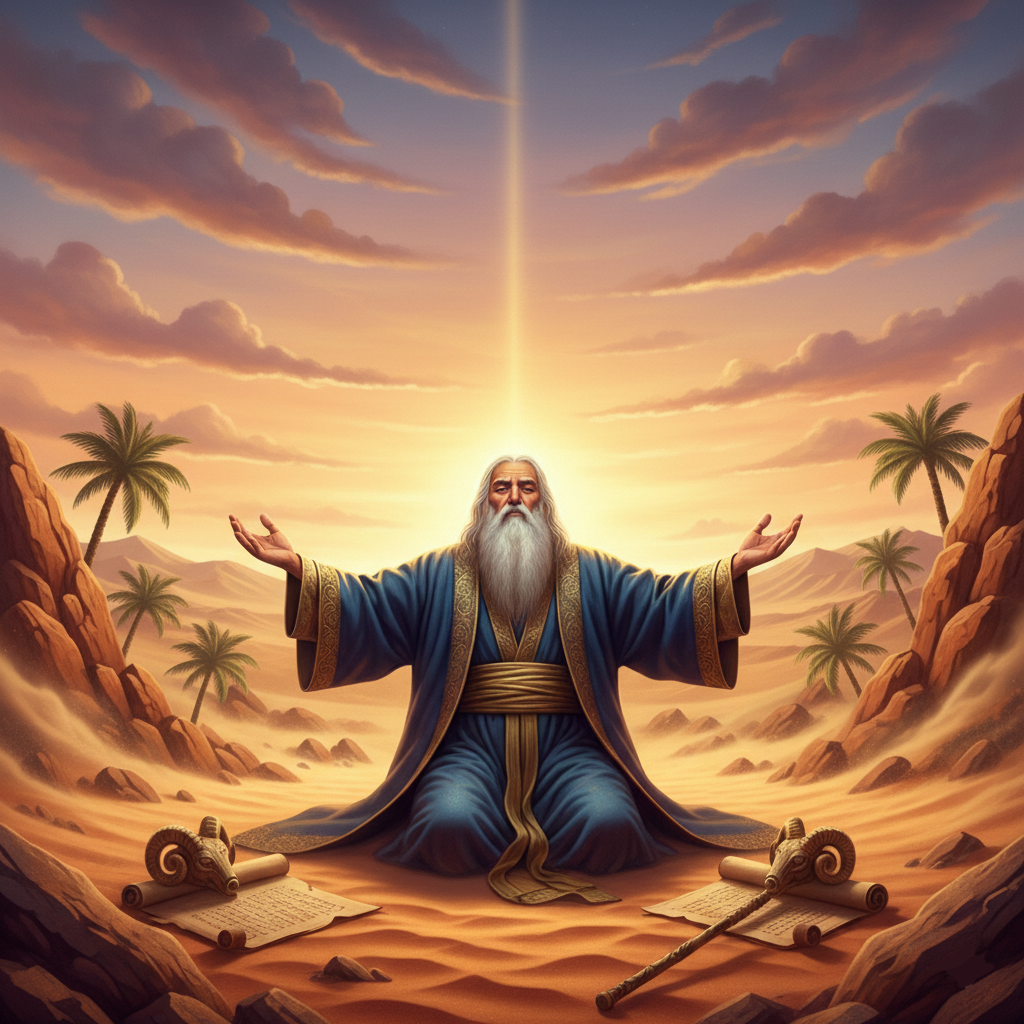
When Rome adopted Christianity as its official religion in the fourth century, something that had begun as a persecuted mystery tradition — underground, participatory, structured around lived experience — became the administrative framework of an empire.
The covenant became canon law. The shared meal became a sacrament administered by an ordained priesthood. The inner experience of light became doctrinal revelation, guarded by councils and enforced by emperors. What had been an invitation became a command.
Most every tradition undergoes some version of this arc when it achieves institutional power. The question the arc raises is not whether it was inevitable, but what was lost in the transformation, and whether it can be recovered.
Mithra began as a principle of mutual bond. Of agreements held between equals. Of light that illuminates rather than commands. His earliest worshippers gathered in caves not because they were hiding, but because the underground chamber was the womb of the world — the place where seeds wait for spring, where the mystery of return plays out in darkness before the light. Even today, secret societies initiates new members in dark places.
When they brought bread and wine, it was not because a priest told them to. It was because those were the gifts of the earth itself — the grain and the grape, the most direct translation of sunlight into nourishment that the ancient world knew.
They were, in the oldest sense, participating in the world. Not obeying it.
What the Cave Still Holds
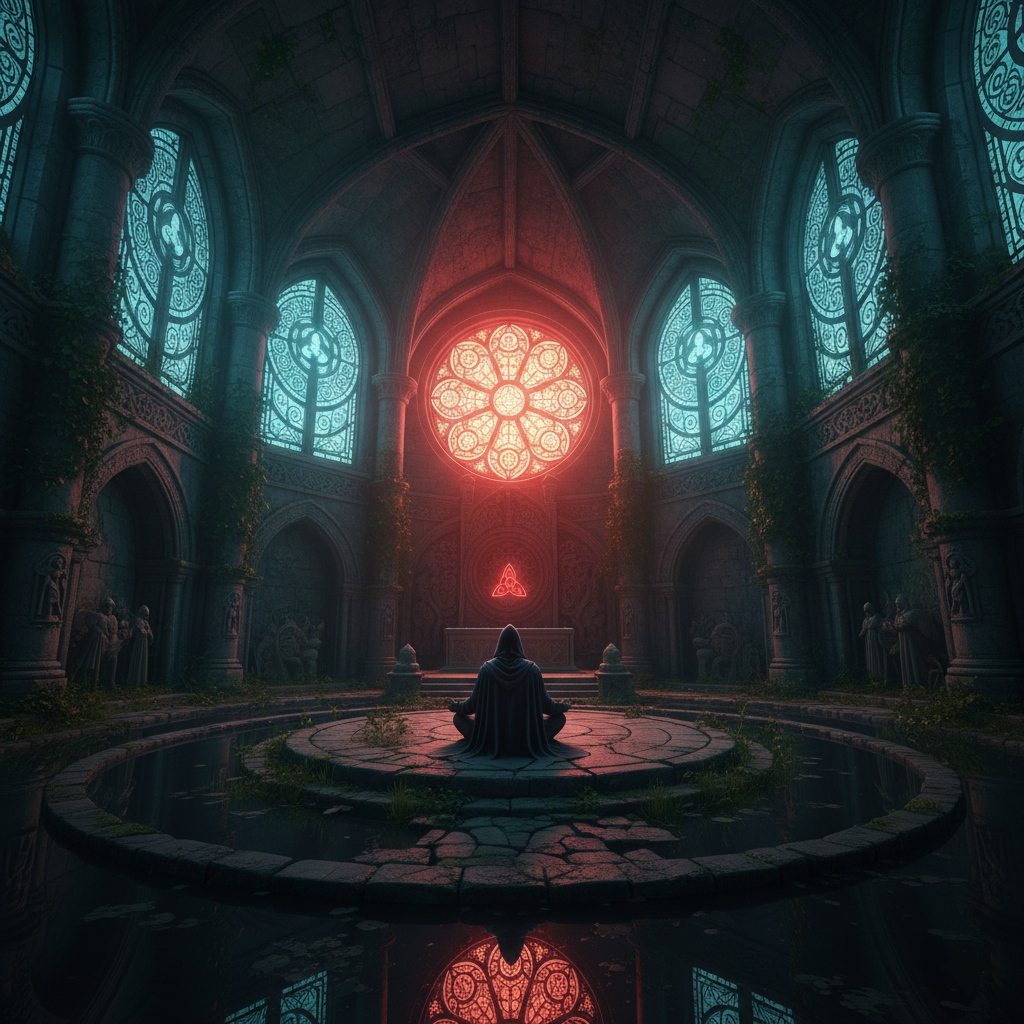
The mithraea beneath Rome are open to visitors now. You can descend below the Church of San Clemente — itself built over a fourth-century basilica, which was itself built over a first-century Mithraic temple. This stands in the original cave. The altar is still there. The stone benches where initiates shared their meal are still there. Above it, the church bells ring on the hour.
The ancient wisdom traditions that TheWholisticCenter.com draws from — Taoism, Vedic philosophy, Stoicism, the mystics of every tradition — are united by something the Mithraic tradition understood from the beginning. The deepest spiritual experience is participatory, not simply observational. It requires showing up, not just believing. It requires tapping within our sources, like Gnosticism taught us. It means finding that original and adopting the middle road attitude, as Taoism and the various forms of Buddhism still teach today. It happens in community, not in isolation anymore, through calm centering.
The light Mithra represents did not disappear when the empire standardized the faith. Modern religions never negated it nor replaced it. The essence is the same. The wrapper is different. It went further deep withing, underground of sorts. It persisted in the mystics, the contemplatives, the traditions that kept pointing inward rather than upward. It persists now, in every practice that asks you to enter the darkness and wait for what the darkness holds.
The cave is still there. The meal is still being shared.
You are still invited.
Nicolas Zart explores the intersection of ancient wisdom and contemporary life at TheWholisticCenter.com. He and Virginia are based near Savannah, Georgia.