Part 1: Hinduism’s Origins, History & Sacred Texts
These articles are part of the build your own spiritual cocktail series. We present these ancient wisdom for you to pick and chose what fits, disregarding what doesn’t. And as with any good cocktails, tweak as you wish and update the recipe to find what fits. Eventually throughout life, you realize you need less and less ingredients. And this article grew so big due to its inherent complexity. I had to cut it in two. If you have corrections or wish to add to these articles, please contact us.
If you thought that yoga was complex, wait till you read about Hinduism, considered to be the oldest surviving religion in the world.
On Our Way To Sarnath

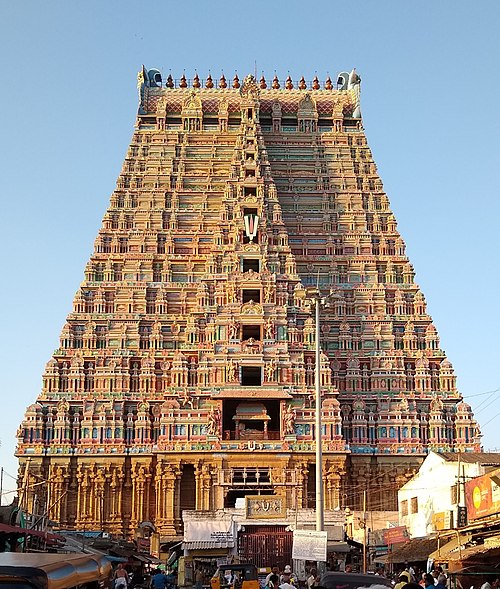
We visited India and had a chance to go deep into many temples. The deities etched on temples that reach to the sly are breathtaking. You’re in another world. Gone are the pretty churches and big cathedral, hello a sea of vibrant colors and diversity that mimic life.
Hinduism defies simple categorization. It is not merely a religion in the Western sense—with a single founder, a fixed creed, or a central authority. It’s a vast, living tapestry of spiritual wisdom, philosophical inquiry, devotional practices, and cultural traditions. It evolved well over more than 4,000 years and has over one billion adherents worldwide, primarily in India and Nepal. IN a nutshell, Hinduism represents humanity’s oldest continuously practiced spiritual tradition staggers the mind.
But old doesn’t mean devoid of vitality. Hinduism breathes with contemporary relevance while anchoring timeless wisdom. Its practitioners call it Sanatana Dharma, the Eternal Way or Eternal Order. Its teachings transcend historical epochs and speak to universal human questions: Who am I? What is the nature of reality? How should I live? What happens after death?
This two-part exploration dives into the depths of this extraordinary and rich spiritual tradition. Part 1 examines Hinduism’s ancient origins, historical development, and sacred textual foundation. Part 2 will explore its gods, philosophical concepts, spiritual practices, and contemporary expressions.
The Challenge of Definition
Before embarking on our journey through Hinduism’s history, we need to know what exactly is Hinduism.
The term itself originated not from within the tradition but from outsiders. Early travelers to the Indian subcontinent—Greeks and Persians around the 6th century BCE—referred to the people living beyond the Indus River as “Hindu” (Greek: Indoi). Hindu is a geographical designation and for centuries, it meant someone from that region, regardless of their beliefs or practices.
In the 16th century during Muslim rule in India, the term “Hindu” got its religious significance. Muslims used “Hindu” to distinguish non-Muslims, and gradually the inhabitants of the subcontinent began using the term to identify themselves religiously. British colonizers in the 19th century solidified “Hinduism” as the name for the diverse religious traditions of India, imposing a unity that had not have existed before.
However traditionally, practitioners have preferred calling it Sanatana Dharma (Eternal Dharma), Vedic Dharma (the way of the Vedas), and other types of Dharma. The term dharma can have many meanings comes from the Sanskrit dhr-. It means to hold or to support associated with the law that sustains things, society, and to the Universe at large. Commonly, it refers to an individual’s moral responsibilities or duties. All of these terms emphasize the timeless, revelatory nature of the teachings rather than geographical or ethnic identifications.
By now it should be obvious that Hinduism is not a monolithic faith. It is a synthesis, a vast umbrella encompassing myriad beliefs, practices, deities, philosophies, and paths. It has no single founder like Buddha, Jesus, or Muhammad. It has no central religious authority like the Pope. It emerged organically over millennia through the interweaving of diverse Indian spiritual traditions. It synthesizes ancient Vedic religion brought by Indo-Aryan peoples with the indigenous traditions of the Indus Valley Civilization, southern Dravidian cultures, and countless local tribal religions across the vast Indian subcontinent. Does this sound familiar? See our article on Shintoism and the two articles on Tibetan Buddhism part 1 and part 2.
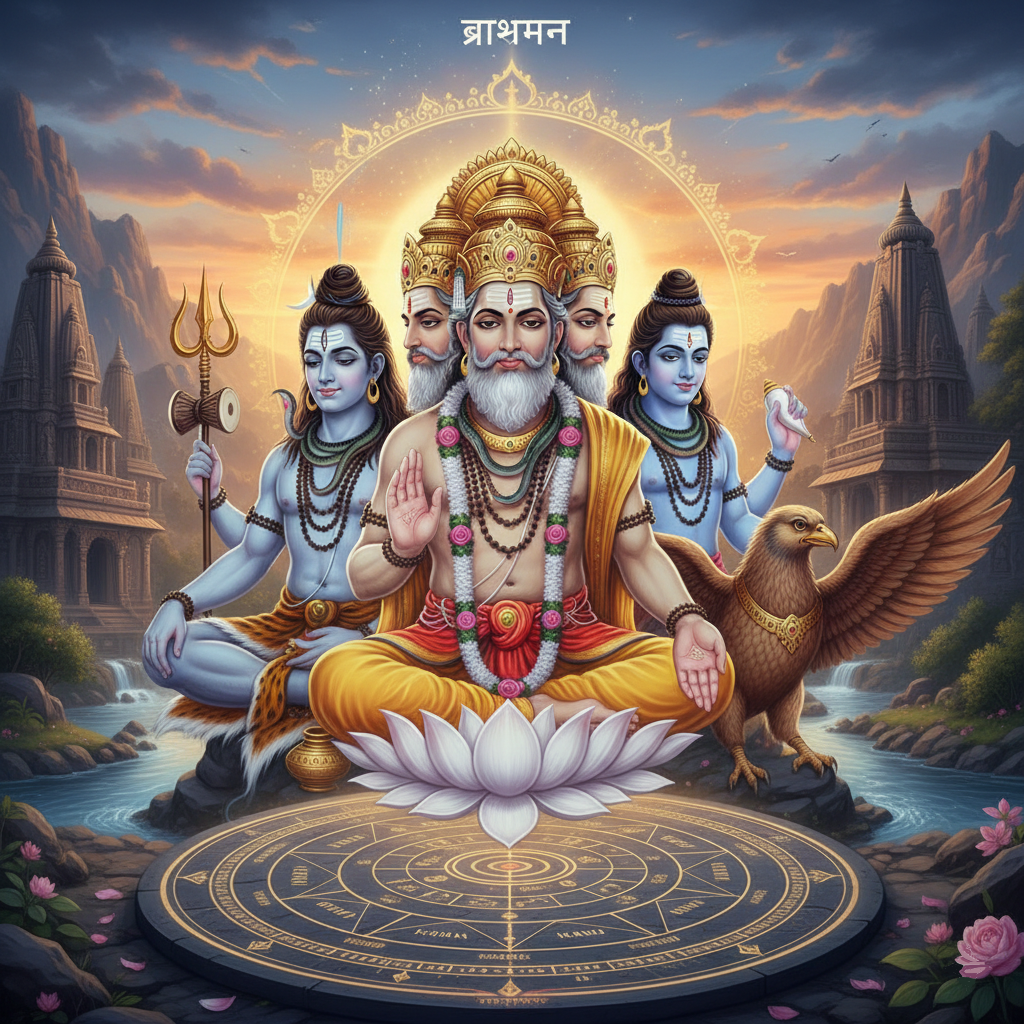
Diversity is Hinduism’s strength. It welcomes multiple paths to the divine, honors different conceptions of ultimate reality, and celebrates the understanding that truth has many facets. A Hindu may worship Vishnu, Shiva, the Divine Mother, or any of thousands of deities. A Hindu may be a strict monist believing all is one, a dualist seeing God and soul as eternally separate, or something in between. A Hindu may pursue liberation through devotion, action, knowledge, or meditation. All are valid expressions of Sanatana Dharma. And this is key to Hinduism. Personally, what attracts me the most to Hinduisms is how it Hinduism articulates the single Godhead, call it the source of all things, the All, God, Monad, the single Godhead, however you do, into three primary forms, and then into many more. Hinduism reflects the Christian made in his own image and myriad of differentiated aspects of the source of life.
Ancient Roots: The Indus Valley Civilization
Hinduism’s origins lays in one of humanity’s earliest urban civilizations: the Indus Valley (or Harappan) Civilization. It flourished from approximately 3300 to 1300 BCE, reaching its zenith between 2600 and 1900 BCE.
Stretching across what is now Pakistan and northwestern India, this Bronze Age civilization was contemporaneous with ancient Egypt and Mesopotamia but covered a far larger geographical area. It stretches nearly one million square kilometers. This artery of sort was and still is, well-traveled. We know know it as part of the silk route where spice traders went from the furthest stretches of the East to Europe. This also brought philosophies from one to the other, as well as technologies we still use today.
Major cities like Mohenjo-daro and Paragraph reveal remarkable urban planning. Brick streets laid out in grid patterns, sophisticated drainage and sewage systems, standardized weights and measures, multi-story buildings, public baths, and evidence of extensive trade networks reaching far.
The Indus Valley cities suggest a highly organized, centralized society with advanced metallurgy, agriculture, and craftsmanship. Yet one of history’s great frustrations is that we cannot completely read their writing system. Thousands of inscribed seals have been discovered, but the Indus script remains undeciphered, leaving the civilization’s language, beliefs, and social structures largely mysterious.
To give you an idea of how advanced they were, this more recent artifact still bewilder science to this day. No one knows exactly how it was made nor how well these ancient people understood technology that well. The famous Iron Pillar of Delhi in New Delhi stands 7.2m (23 ft), weighs 6+ ton wrought and is an iron pillar that has resisted rust for over1,600 years. And this is despite Delhi’s harsh climate. It was made during the Gupta Empire (~400 CE, 4th–5th century), originally erected elsewhere. And it doesn’t rust. Dues to its High phosphorus content which forms a protective crystalline iron(III) hydrogen phosphate hydrate layer, it resists rust.
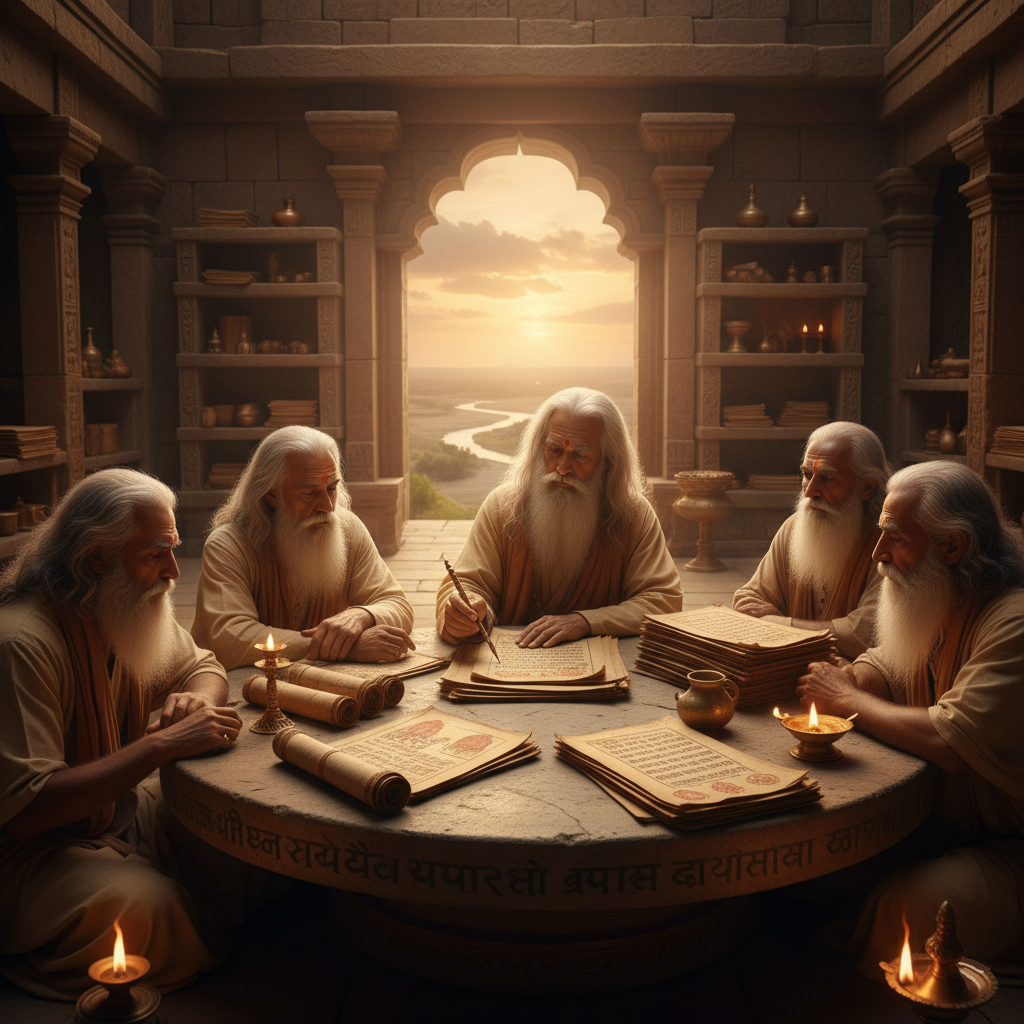
Sadly, and a testament to the impact on our changing climate. recent rust spots can be seen from pollution. As my native American friend says, native people lived in North America without disturbing the environment for millennia and it took the newcomers to not only pollute the land’s water, air, and soil, but the entire planet in 250 years. A sad record to behold, hence why we look into what ancient wisdom can teach us today.
Religious Practices of the Harappans
Despite the lack of textual records, archaeological evidence hints at religious practices that may have influenced later Hinduism. There several elements:
Terra-cotta Figurines: Small female figurines found in abundance may represent a fertility goddess or Mother Goddess, similar to those found throughout ancient Mesopotamia and the Mediterranean. The worship of the Divine Feminine remains central to Hinduism today.
The “Proto-Shiva” Seal: One famous seal (numbered 420) shows a figure seated in what appears to be a yogic posture, surrounded by animals including an elephant, tiger, rhinoceros, and buffalo. The figure seems to have horns or a horned headdress and possibly three faces. Early scholars like Sir John Marshall identified this as Pashupati (“Lord of Animals”), an epithet of Shiva, suggesting continuity with later Hindu practice.
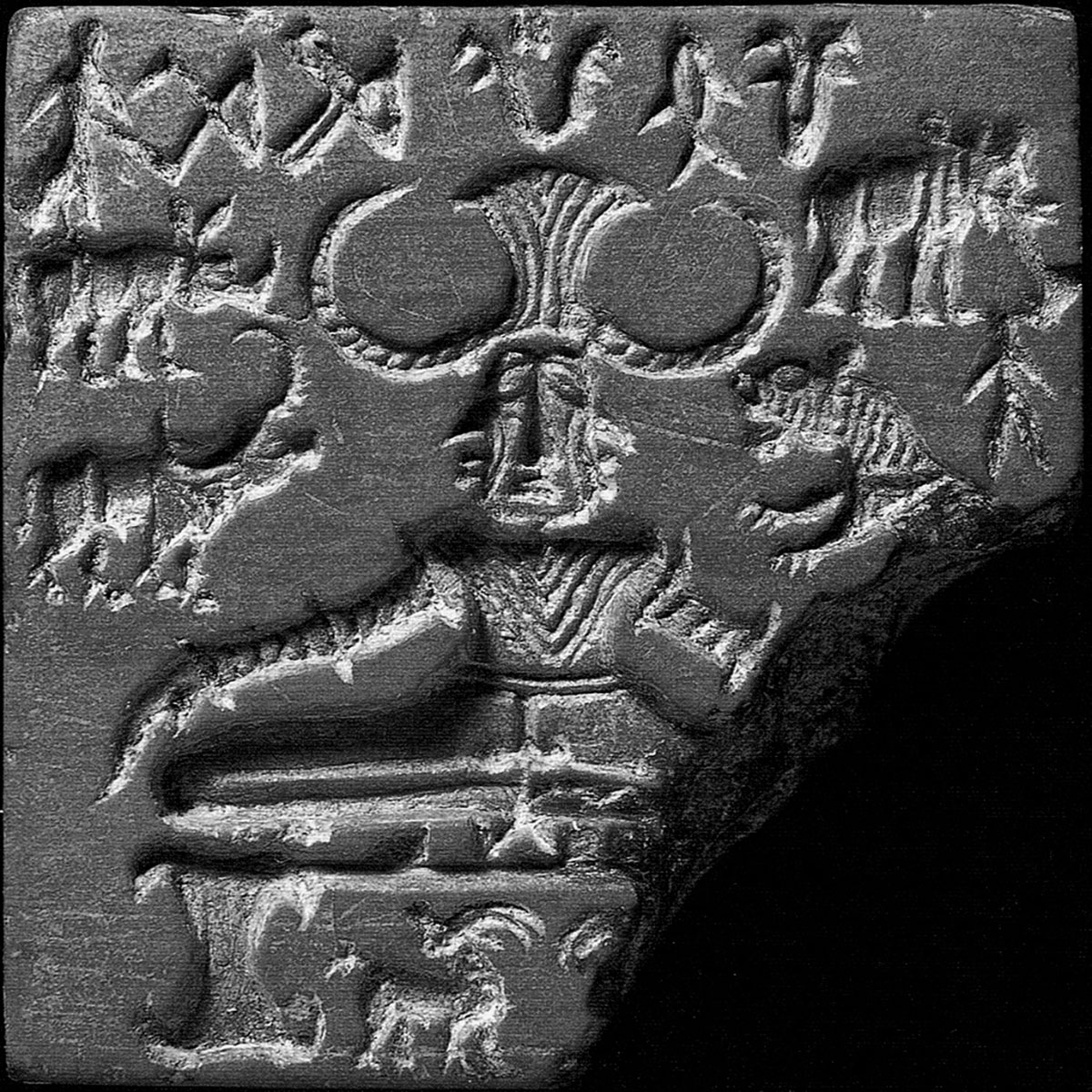

However, this identification is controversial. Modern scholars like Jonathan Mark Kenoyer caution that without deciphering the script, we cannot know what the figure represented to the Harappans. The similarities may be coincidental, or meanings may have radically differed despite visual resemblance.
Ritual Bathing: The Great Bath at Mohenjo-daro, a large, well-constructed pool accessed by steps, suggests ritual purification ceremonies. Ritual bathing remains central to Hindu practice, particularly at sacred rivers like the Ganges.
Sacred Animals and Trees: Bulls appear frequently on seals, often before altar-like structures. The pipal tree (Ficus religious) also appears in Harappan art and remains sacred in Hinduism today. Sacred animals and plants are ubiquitous features of Hindu worship.
Possible Linga Worship: Some scholars, including Marshall, interpreted certain conical stone objects as abstract representations of the linga (phallus), symbolizing Shiva’s creative power. However, this interpretation is disputed. H.D. Sankalia noted these stones were typically found in streets and drains—hardly appropriate locations for sacred objects. Doris Srinivasan argued that ancient linga representations were realistic rather than abstract, contradicting the Harappan evidence.
Eminent scholar Asks Parpola has devoted decades to investigating connections between the Indus Valley Civilization and later Hinduism. While acknowledging the speculative nature of such connections, Parpola argues for cultural continuity, that elements of Harappan religion survived the civilization’s collapse and re-emerged in later Hindu practices, particularly after the Vedic period.
Indologist Wendy Doniger, reviewing Parpola’s work, writes that she’s increasingly persuaded that Indus Valley culture survived its cities’ destruction and that later Hindu imagery may derive from these ancient sources, though she remains skeptical about completely reconstructing Harappan religion.
As you can see, scholars are still trying to decipher this ancient society with more or less success.
The decline of the Indus Valley Civilization around 1900-1800 BCE is hotly debated. Climate change, shifts in river patterns, declining trade, or gradual migration may all have played roles. What is certain is that as this urban civilization faded, a new cultural and religious force was entering the Indian subcontinent from the northwest.
The Vedic Period and the Indo-Aryans
Between approximately 1900 and 1500 BCE, groups identifying themselves as Arya (meaning “noble” or “free people”) migrated into the Indian subcontinent from Central Asia. These Indo-Aryans were pastoralists and warriors speaking an early form of Sanskrit, an ancient and sacred language belonging to the Indo-European family that includes Greek, Latin, Persian, and most European languages.
Unlike its 20th century vulgarization, Arya was a class designation, not a race. No Aryan invasion brought civilization to India. The Indo-Aryans were one group among many contributing to the rich cultural synthesis that became Hinduism.
The Vedic Religion
The Indo-Aryans brought with them a sophisticated religious tradition centered on elaborate fire sacrifices (yajna) conducted by priests. Their sacred hymns, prayers, and ritual formulas were preserved through meticulous oral transmission from generation to generation and eventually became codified as the Vedas (“knowledge”).
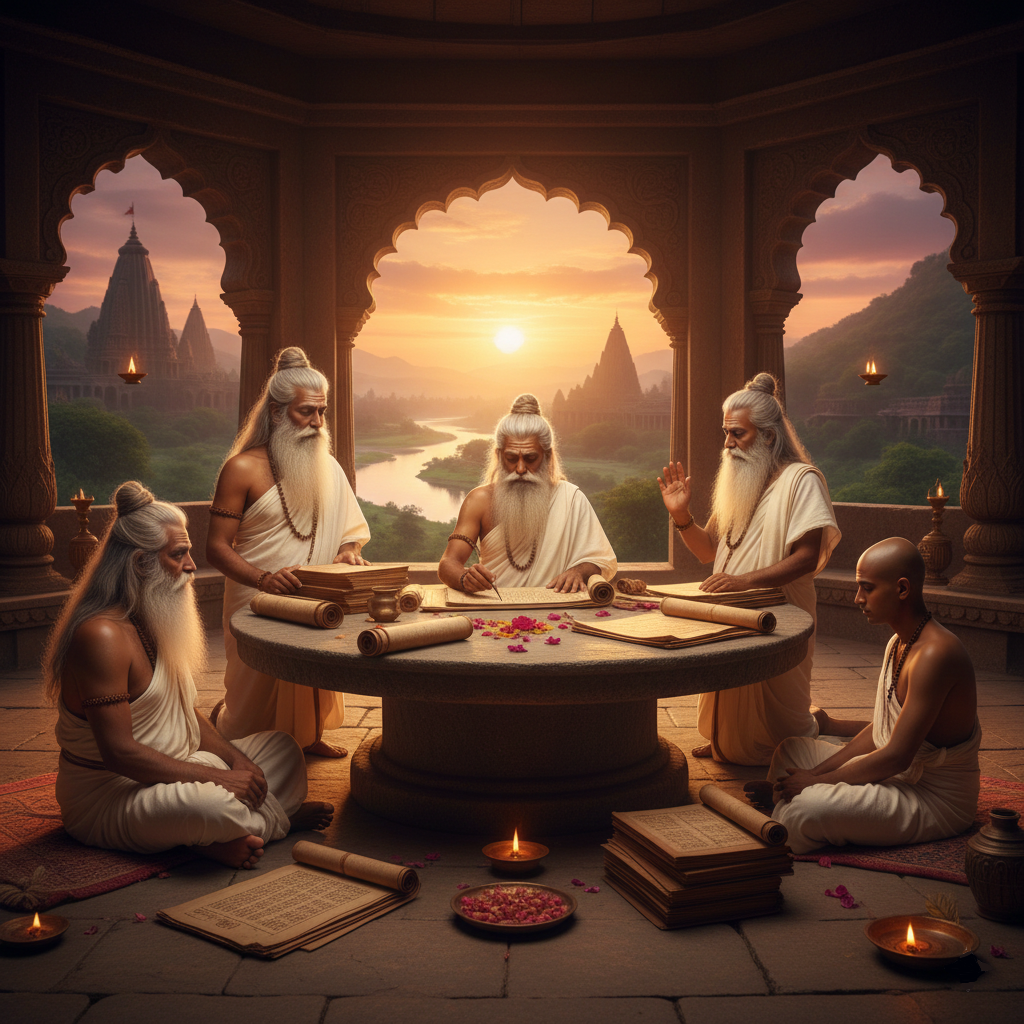
Vedic religion was polytheistic, venerating numerous natural forces personified as deities:
- Indra: King of the gods, warrior deity associated with storms, lightning, and rain
- Agni: The fire god, mediator between humans and the divine
- Varuna: Guardian of cosmic order (rita) and moral law
- Surya: The sun god
- Vayu: The wind god
- Soma: Deity of the sacred intoxicating plant used in rituals
Interestingly, many early Vedic gods share linguistic and conceptual roots with deities from other Indo-European cultures. The Vedic sky god Dyaus Pita is cognate with the Greek Zeus Pater and Roman Jupiter. This shared heritage reflects the common Proto-Indo-European origins of these widely dispersed peoples further supporting how these civilizations traveled and influenced one another.
The Vedic worldview centered on rita—the cosmic order, the natural law governing both physical phenomena and moral conduct. Sacrifices maintained rita, ensuring cosmic harmony, agricultural fertility, victory in battle, and prosperity. The priesthood (Brahmins) held crucial roles as intermediaries who knew the precise ritual formulas and procedures.
Notably, many of the most prominent Vedic gods—Indra, Agni, Varuna—receded into minor roles in later Hinduism, while gods barely mentioned in early Vedic texts—Vishnu, Rudra (later Shiva), and goddesses like Durga—would become central. This transformation illustrates Hinduism’s profound evolution.
The Hindu Synthesis
Between approximately 500 BCE and 300 CE, during what scholars call the period of “second urbanization,” a remarkable religious synthesis occurred. The Vedic tradition merged with indigenous non-Vedic traditions, Dravidian practices from South India, renunciant (shramana) movements like early Buddhism and Jainism, folk religions, tribal traditions, and devotional bhakti movements. Think about how Shintoism developed and merged with Buddhism, same at the ancient Tibetan Bon and Buddhism.
This synthesis produced what we now recognize as classical Hinduism. The great epics—the Mahabharata and Ramayana—were composed. The Puranas, vast compendia of mythology and religious lore, took shape. The philosophical Upanishads transformed ritual religion into metaphysical inquiry. Devotional worship of personal deities flourished. The concepts of karma, samsara (rebirth), dharma (duty/righteousness), and moksha (liberation) became central.

Scholar John Koller notes that to understand early Hindu thought, we must turn to the Vedas, particularly the Upanishads, for they represent the philosophical foundation. Yet we must also recognize that Hinduism absorbed and concealed much more from non-Vedic sources than it reveals.
The Sacred Texts: A Vast Literary Ocean
Hindu scripture is among the most voluminous religious literature in human history. Imagine reading the Mahabharata with the longest epic poem in the world, with over 100,000 verses (about 1.8 million words). Unlike religions with a single foundational text (the Bible, the Quran), Hinduism possesses a vast library spanning thousands of years, multiple languages, and diverse genres. Thankfully, there are plenty of movies and series you can watch that captures many parts of the Mahabharata, even on Netflix!
The Hindu texts are traditionally classified into two categories:
Shruti (“that which is heard”): Texts considered eternal divine revelation, transmitted directly to ancient sages (rishis) in states of deep meditation. Shruti is authorless and timeless—eternal truths heard by seers and then memorized and transmitted orally with extraordinary precision. Shruti comprises the four Vedas and the Upanishads.
Smriti (“that which is remembered”): Texts attributed to human authors, considered authoritative but secondary to Shruti. Smriti includes the epics (Mahabharata and Ramayana), the Puranas, the dharma shastras (law codes), and numerous philosophical commentaries and devotional works.
The Four Vedas: Hinduism’s Oldest Scriptures
The Vedas are considered the world’s oldest surviving religious texts, with the oldest hymns possibly dating to 1500-1200 BCE. It believed that the oral tradition extends earlier. Four Vedas are subdivided into layers of texts with different functions:
1. Rigveda (“Veda of Verses”)
The oldest and most important Veda, consisting of 1,028 hymns (suktas) containing 10,600 verses organized into ten books (mandalas). The Rigveda hymns are beautiful Sanskrit poetry addressed to various deities, praising their powers and requesting blessings.
Sample themes include creation hymns questioning the universe’s origins, funeral hymns, marriage hymns, prayers for prosperity, victory, and health, and philosophical speculation about existence.
The Nasadiya Sukta (Hymn of Creation) is a good example of the Rigveda’s philosophical depth. It questions what existed before creation and suggesting that even the gods may not know the ultimate origin of existence. This is remarkable agnostic speculation for such an ancient text that we find in other philosophies and religions throughout the world as we’ll see later..
2. Samaveda (“Veda of Melodies”)
The Samaveda consists of verses, most borrowed from the Rigveda, arranged for chanting during soma sacrifices. It focuses on melody and musicality, preserving the musical notation for Vedic chants. Many consider the Samaveda the origin of Indian classical music.
3. Yajurveda (“Veda of Ritual Formulas”)
A priest’s manual containing prose formulas (yajus) and instructions for performing sacrifices. The Yajurveda exists in multiple recensions divided into “White” (clear, well-organized) and “Black” (less organized, mixed with explanations).
4. Atharvaveda (“Veda of Atharvan”)
The Atharvaveda differs markedly from the other three, containing hymns, spells, incantations, and charms for various practical purposes: healing diseases, protection from enemies and evil spirits, love magic, prosperity, and success. It reflects folk religion and magical practices, later incorporated into the Vedic tradition.
I’m sad to admit I have only read the Rig Veda and endeavor to find the time to read more. So many books to read!
The Structure of Each Veda
Each of the four Vedas contains four types of texts, representing increasingly abstract and philosophical layers:

Samhitas: The core collection of hymns, mantras, and liturgical formulas.
Brahmanas: Prose texts explaining the rituals, their meanings, and their proper performance. They provide the theological and symbolic interpretation of sacrifices.
Aranyakas (“Forest Books”): Transitional texts, partly ritualistic but increasingly philosophical, meant for study by hermits in forest retreats. They begin questioning the value of external ritual.
Upanishads: The philosophical culmination of Vedic literature, representing a radical shift from ritual to inner spiritual inquiry. We’ll explore these separately due to their immense importance.
The Upanishads: The Philosophical Heart
The Upanishads (the word means “sitting down near,” referring to students sitting near a teacher) represent one of humanity’s greatest philosophical achievements. Composed between approximately 800 and 200 BCE, these texts mark the transition from ritual religion to philosophical inquiry, meditation, and mysticism.

While over 200 texts claim to be Upanishads, scholars recognize 10-13 as the principal or major Upanishads:
- Isha
- Kena
- Katha
- Prashna
- Mundaka
- Mandukya
- Taittiriya
- Aitareya
- Chandogya
- Brihadaranyaka
- Shvetashvatara
- Kaushitaki
- Maitrayaniya
These texts take the form of dialogues between teachers and students, conversations exploring the nature of ultimate reality, the self, consciousness, knowledge, death, and liberation. These discussions sometimes include women as teachers and students, such as the female sages Gargi and Maitreyi.
Key Upanishadic Concepts

The Upanishads introduced or developed several concepts that became foundational to Hindu philosophy:
Brahman: The ultimate, absolute reality—the ground of all existence, infinite, eternal, unchanging, beyond description. Brahman is not a personal god but the supreme consciousness underlying and pervading all reality. It is not to be confused with Brahma.
Atman: The true Self, the innermost essence of each individual. The Upanishads’ revolutionary teaching is that Atman is identical to Brahman. The famous mahatmas (great statements) express this:
- “Tat tvam asi” (That thou art)
- “Ayam atma brahma” (This Self is Brahman)
- “Aham brahmasmi” (I am Brahman)
- “Prajnanam brahma” (Consciousness is Brahman)
Maya: The illusion or appearance that makes the world seem separate from Brahman. Maya is not exactly “falsehood” but rather the power that makes the one appear as many.
Karma and Samsara: The law of action and consequence binding souls to the cycle of birth, death, and rebirth.
Moksha: Liberation from samsara through the realization of one’s identity with Brahman—the ultimate goal of human existence.
What’s remarkable about the Upanishads is that they shifted emphasis from external ritual to internal spiritual realization. Salvation comes not from perfect sacrifices but from knowledge (jnana)—the direct, experiential understanding of one’s divine nature.
The Chandogya Upanishad contains the famous teaching of Uddalaka to his son Shvetaketu about the subtle essence pervading all things. The Brihadaranyaka Upanishad preserves the dialogues of the sage Yajnavalkya, who teaches that the Self cannot be known as an object but is the eternal subject, the witness of all experience.
The Upanishads profoundly influenced not only Hindu philosophy but also Buddhism, Jainism, and later, Western thinkers. Schopenhauer called the Upanishads “the consolation of my life and will be the consolation of my death.”
The Bhagavad Gita: Hinduism’s Most Beloved Text
While technically part of the Mahabharata epic (thus classified as Smriti), the Bhagavad Gita (“Song of God”) functions as Shruti-like scripture due to its supreme religious authority. Composed between the 5th and 2nd centuries BCE, this 700-verse philosophical poem is arguably Hinduism’s most influential text.

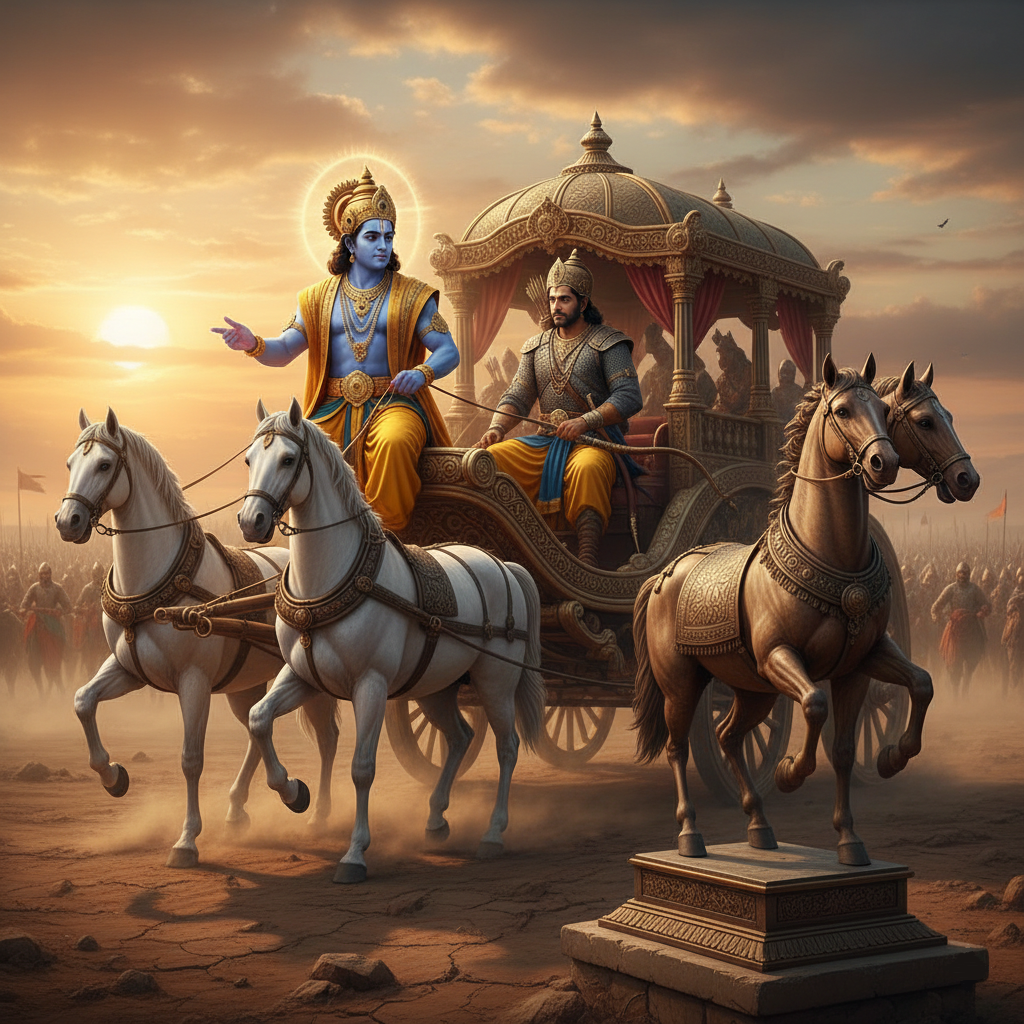
The Gita is set on the battlefield of Kurukshetra, just before a great war between two branches of a royal family—the Pandavas and Kauravas. The warrior prince Arjuna, facing his relatives, teachers, and friends arrayed in the opposing army, is overwhelmed by moral despair. How can killing one’s own kin ever be righteous? He refuses to fight.
His charioteer, who is the god Krishna in human form, responds with a profound discourse on duty (dharma), action (karma), devotion (bhakti), knowledge (jnana), yoga, the nature of the Self, and the path to liberation.
The Gita’s Synthesis
The Bhagavad Gita’s genius lies in its integration of multiple philosophical streams:
Upanishadic Philosophy: The Gita teaches that the true Self (Atman) is eternal, beyond birth and death. Bodies are like clothes the soul changes from life to life. Realizing one’s divine nature brings liberation.
Sankhya-Yoga Philosophy: The Gita adopts Sankhya’s dualistic analysis distinguishing purusha (consciousness) from prakriti (matter/nature) and Yoga’s meditation techniques.
Karma Yoga (Path of Action): Revolutionary teaching: one can attain liberation through action itself if performed without attachment to results, as an offering to God. One need not renounce the world—one can live actively while internally detached.
Bhakti (Devotion): Krishna reveals himself as the Supreme Person, worthy of love and devotion. The Gita strongly emphasizes bhakti, accessible to all regardless of caste or learning.
Jnana (Knowledge): Self-knowledge and understanding of reality’s true nature remain essential.
The Gita resolves the tension between the householder’s active life and the renunciant’s contemplative path, asserting both can lead to moksha. What matters is the spirit of action—performing one’s dharma as service to the divine without ego-attachment or desire for rewards.
Chapter 11 contains the Vishvarupa Darshana, Krishna’s revelation of his cosmic form—simultaneously beautiful and terrifying, containing all of existence. This mystical vision of divine totality is among world literature’s most powerful passages.
The Gita’s teachings have inspired countless spiritual seekers, from medieval Indian saints to modern figures like Gandhi, who called it his “spiritual dictionary.” Swami Vivekananda, Aurobindo Ghose, and countless others drew profound inspiration from its message of integrated spirituality.
The Epics: Ramayana and Mahabharata
Beyond their role as scripture, the two great Hindu epics are living cultural forces, shaping Indian art, drama, dance, festivals, and moral imagination for over two millennia.
The Mahabharata
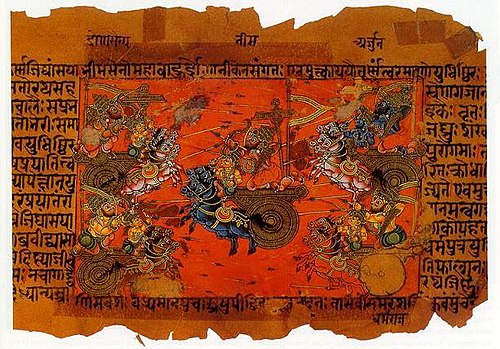
Attributed to the sage Vyasa, the Mahabharata is the world’s longest epic poem—over 100,000 verses making it roughly ten times the length of the Iliad and Odyssey combined. Scholars believe it was composed between the 3rd century BCE and 3rd century CE, though the core story may be older.

The plot centers on the rivalry between the Pandava and Kaurava cousins for the throne of Hastinapura, culminating in the catastrophic Kurukshetra War. But the Mahabharata is far more than a war story—it’s an encyclopedia of Hindu culture, containing innumerable subplots, philosophical discourses, myths, legends, and ethical discussions.
The epic explores complex moral questions: What is dharma when duties conflict? How should power be exercised? What are the limits of loyalty? How do we balance personal desires and social obligations?
Characters like Yudhishthira (devoted to truth), Bhima (strength), Arjuna (warrior excellence), Karna (tragic nobility), Draupadi (complex female protagonist), and Krishna (divine guide) are archetypes explored endlessly in Indian culture.
The Mahabharata includes the Bhagavad Gita as a small section but also contains many other important texts, including the Anugita, Vishnu Sahasranama (thousand names of Vishnu), and various legal and ethical treatises.
Its famous verse states: “What is found here may be found elsewhere; what is not found here will not be found anywhere else.”
The Ramayana

Attributed to the sage Valmiki, the Ramayana (“Rama’s Journey”) is shorter than the Mahabharata—approximately 24,000 verses—and composed somewhat earlier, perhaps between 500 and 100 BCE.

The Ramayana tells the story of Prince Rama, seventh avatar of Vishnu, whose wife Sita is abducted by the demon king Ravana. With the help of his devoted brother Lakshmana and the monkey-god Hanuman, Rama rescues Sita and defeats Ravana.
While more straightforward than the Mahabharata, the Ramayana explores themes of ideal kingship, marital fidelity, brotherly love, loyalty, and the triumph of dharma over adharma (unrighteousness). Rama becomes the exemplar of the perfect man—the ideal king, husband, son, and brother.
Regional versions of the Ramayana proliferated across India and Southeast Asia. Tulsidas’s 16th-century Hindi version, the Ramcharitmanas, is beloved across North India and recited during the annual Ramlila festival reenactments.
The Puranas: Mythology and Devotion

The 18 Mahapuranas (“Great Puranas”) and numerous Upapuranas (“Minor Puranas”) were composed from approximately 300 CE onward, continuing to be produced into medieval times. These vast compendia contain cosmology, genealogies of gods and kings, pilgrimage guides, temple rituals, and above all, myths about the gods.

The Puranas made sophisticated Upanishadic philosophy accessible to ordinary people through vivid storytelling. They popularized the worship of Vishnu, Shiva, and the Goddess (Devi/Shakti) and described their many forms, incarnations, and exploits.
Important Puranas include:
- Bhagavata Purana: Devoted to Krishna, contains beautiful accounts of his childhood and youth
- Vishnu Purana: Focuses on Vishnu’s avatars and preserving cosmic order
- Shiva Purana: Glorifies Shiva and explains Shaivite theology
- Devi Bhagavata Purana: Centers on the Divine Mother in her many forms
- Markandeya Purana: Contains the Devi Mahatmya, the great hymn to the Goddess as supreme power
The Puranas represent the full flowering of bhakti devotionalism and the concept of God with attributes (saguna Brahman) alongside the formless absolute (nirguna Brahman) of the Upanishads.
Dharma Shastras: Law and Ethics

Texts like the Laws of Manu (Manusmriti), composed between 200 BCE and 200 CE, codified social law, ethics, and the duties of the four varnas (social classes) and four ashramas (life stages). While these texts contain wisdom about ethical living and social harmony, they also reflect patriarchal and caste-based hierarchies that many modern Hindus critique or reject.
Philosophical Sutras and Commentaries
Hindu philosophy produced numerous systematic philosophical schools (darshanas), each with its foundational sutras and extensive commentaries:
- Brahma Sutras: Systematizes Upanishadic teachings on Brahman
- Yoga Sutras of Patanjali: We explored these in depth in our yoga article
- Nyaya Sutras: Logic and epistemology
- Vaisheshika Sutras: Atomic theory and metaphysics
- Sankhya: Dualistic philosophy of consciousness and matter
- Mimamsa: Vedic ritual interpretation
Adi Shankara’s commentaries on the Upanishads, Brahma Sutras, and Bhagavad Gita established Advaita Vedanta (non-dualistic philosophy) as a dominant Hindu philosophical school in the 8th century CE.
Conclusion: A Living Tradition
Hope you made it so far. Sometimes the first read of these complex and intricate topics can be daunting. But a reread and further rereads make it digestible. That is the sincere hope I have.
As we conclude Part 1, we’ve traced Hinduism from its possible roots in the mysterious Indus Valley Civilization through the Vedic period and the great synthesis that produced classical Hinduism. We’ve explored its vast scriptural foundation—texts that continue to be studied, chanted, and contemplated by millions today.
What emerges is not a static fossil but a living, breathing tradition that has continuously evolved while maintaining connection to its ancient sources. The Vedas are still chanted with the same pronunciation and intonation perfected millennia ago. The Upanishads still challenge seekers to realize their divine nature. The Bhagavad Gita still guides those struggling with ethical dilemmas. The epics still inspire devotion and artistic creativity.
Yet Hinduism has also transformed, absorbed new influences, produced new saints and sages, and continues generating new interpretations and expressions.
In Part 2, we will explore the pantheon of Hindu deities, the profound philosophical concepts of karma, dharma, and moksha, the diverse practices and paths within Hinduism, and how this ancient tradition remains vibrantly relevant in the 21st century.
To be continued in Part 2: Gods, Philosophy, Practices & Modern Hinduism…