
Nature doesn’t need people. People need nature to survive.

I’m not nitpicking. I just like to use the right word for the correct circumstance and learn when I’m not.
And with that, I’m often struck by how different our world would be if we reminded ourselves of this basic and simple observation: Nature doesn’t need people. People need nature to survive.
That asymmetry is worth sitting with before we argue about spelling. Because the confusion between “holistic” and “wholistic” is, at its root, the same confusion — a misreading of what the whole actually is, and who is responsible for integrating it. And it’s not the only one.
Run a search for “holistic” on LinkedIn and you’ll find hundreds of results with a familiar texture: naturopaths, nutritionists, life coaches, wellness brands, and retreat centers, all gathered under the same umbrella. The word has become a marketing category — shorthand for “we address more than one dimension of you.” Do a search for “wholistic” and the results thin out fast. The word barely registers.
That gap is not a typo. It’s a fault line.
A Word That Lost Its Edge
“Holistic” has a precise origin. Jan Smuts coined it in 1926 in his work Holism and Evolution, arguing that natural systems cannot be understood through their component parts alone — that wholes have properties and behaviors that are genuinely irreducible to their elements. It was a serious philosophical and scientific claim. Emergence, integration, irreducibility. The word was meant to describe how reality actually works. Noticed how he used the word “wholes”?
What the wellness industry did with it over the following century was almost the inverse. It took a concept about irreducibility and made it into a checklist: body, mind, and spirit — three boxes to address, three products to sell, three sessions to book. The whole became a sum of parts after all. Smuts would not have recognized it.
The result is a word that signals broad intention while delivering narrow prescription. “Holistic health” tells you someone is paying attention to more than your cholesterol. It does not tell you who is doing the integrating, or whether the integration belongs to you at all.
What the W Actually Means

“Wholistic,” with the W, retains a different emphasis. It keeps the English word whole visible inside it — and the whole, in this framing, is not a category. It is a condition you consciously move toward. The integration is not something a practitioner performs on you. It is something you do, with the practitioner, the tradition, the practice, or the research as instruments — not authors. You take the whole into consideration, allopathy and naturopractice.
Ken Wilber spent decades mapping this territory. His integral framework — all quadrants, all levels, all lines — was precisely an attempt to describe what conscious, self-directed integration actually requires. It is not choosing between conventional medicine and Ayurveda. It is not deciding whether to prioritize the physical or the spiritual. It is holding the full complexity of your experience — inner and outer, individual and collective, visible and hidden — and taking responsibility for how those dimensions relate in you, specifically.
Vivekananda pointed at the same thing from a Vedantic direction: the individual soul (Atman) does not receive the universal (Brahman) passively. It recognizes it — consciously, through disciplined self-inquiry. The word for this in Sanskrit is viveka: discernment. The capacity to distinguish what is essential from what is borrowed, what is genuinely yours from what has merely been handed to you. Very !
Hermes Trismegistus put it in language that survives four thousand years of transmission: as above, so below. The whole is not out there, separate from you, waiting to be accessed by the right practitioner. The correspondence runs through you. To be wholistic is to accept that responsibility.
The Difference in Practice
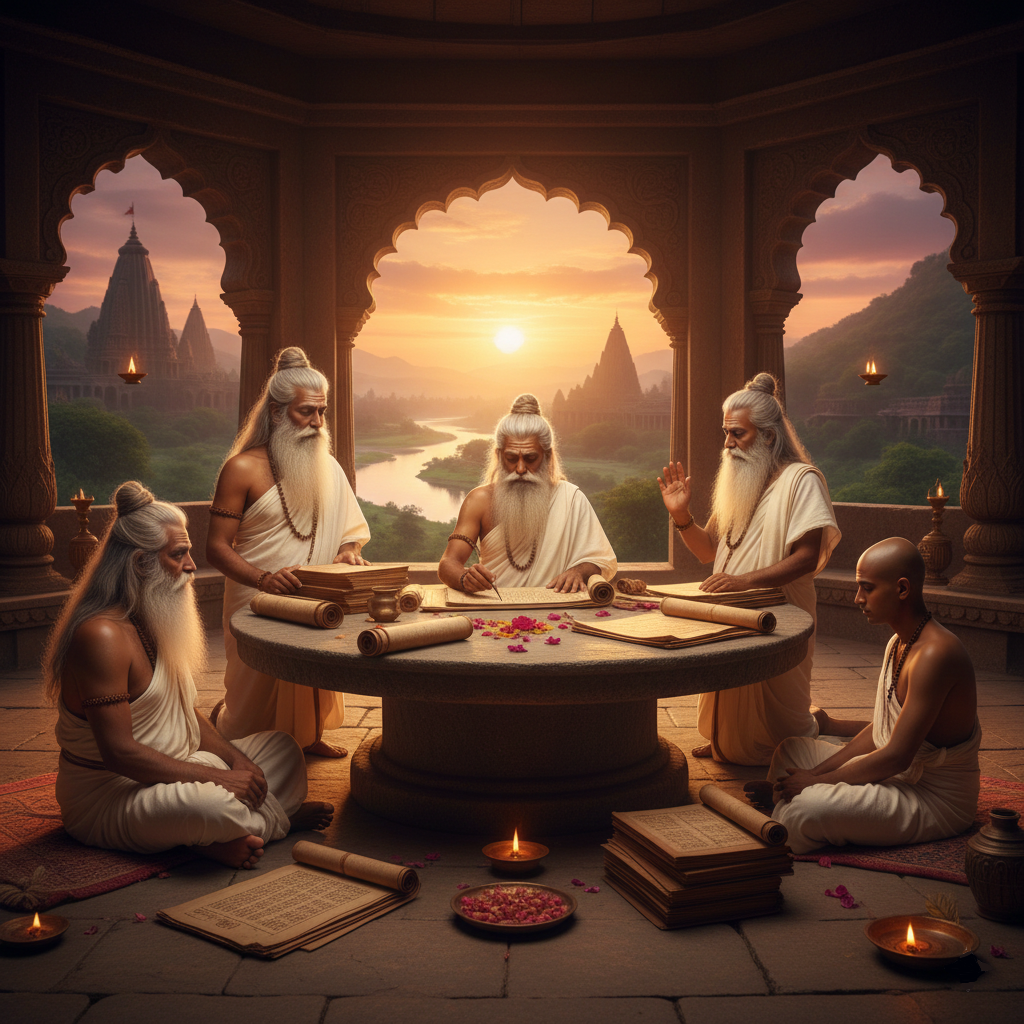
This is not a criticism of holistic practitioners. Many of the finest integrative healers, herbalists, and bodyworkers working today are doing genuinely wholistic work — they simply spell it differently. A good coach understands that the integration belongs to the client. A skilled acupuncturist knows they are not healing you; they are creating conditions in which your own system rebalances itself.
But the word matters because the word shapes the expectation. When someone enters a “holistic wellness” program, the implicit contract is often: follow this protocol and become whole. When someone commits to a wholistic approach, the implicit contract is different: here are traditions, practices, and perspectives that have proven their depth across centuries — what you do with them is your work.
That shift — from receiving integration to practicing it — changes everything about how you engage with Ayurveda, with Traditional Chinese Medicine, with Stoic philosophy, with plant medicine, with breathwork. These are not prescriptions. They are bodies of knowledge accumulated by people who were paying very close attention to the same problems you are dealing with now. They survive because they work. But they only work if you bring your whole self to them, rather than waiting for them to do the work on your behalf.
Why Ancient Traditions Are Wholistic by Design

Every genuine ancient wisdom tradition is, at its core, a technology for self-authorship. This is what makes them different from modern wellness products, and why they outlast every trend.
Ayurveda does not give you a diet. It teaches you to read your whole constitution — your prakriti, your current imbalance, your relationship to season and stage of life — so that you can make your own decisions about food, movement, rest, and remedy. The practitioner is a guide. The authority is yours.
Stoicism does not tell you how to feel. It trains your capacity to govern your own inner state from a wholeness and stillness within. It teaches you to distinguish what is within your control from what is not, and to act from that clarity. Marcus Aurelius did not practice Stoicism because he had access to a good coach. He practiced it because no empire, no position, and no external condition could do the inner work for him.
Traditional Chinese Medicine‘s highest ambition is a body in self-regulation — a system so well understood by its inhabitant that disease finds no foothold. The physician’s skill is in reading the imbalance and creating conditions for the body’s own intelligence to correct it.
Buckminster Fuller, more on this amazing person coming up, described the same principle from an engineering angle: synergy is the behavior of whole systems unpredicted by any of the parts. You cannot optimize your way to wholeness. You cannot buy it in components. The whole only behaves as a whole when you engage it as one.
The Question Underneath the Spelling
The real question is not whether to spell it with an H or a W. We’re not splitting hair. But for decades, I’ve been working with technology and always marvel how we either use very complicated phrases we need to boil down to acronyms or flat out use misspelled words as marketing lure. The real question is who is doing the integrating — and whether they know it.
If you have been in the wellness space for any length of time and found yourself collecting practices without quite arriving anywhere, accumulating knowledge without quite changing, this may be the reason. Integration is not additive. It is not the sum of your sessions, your supplements, your subscriptions, or your certifications. It is the ongoing, honest, sometimes difficult work of bringing all of that into relationship with who you actually are — not who you are supposed to become.
That work cannot be outsourced. It can be supported. It can be illuminated by traditions that have been doing it for millennia. But it is yours.
That is what the W is for.