
The Gnostic Vision: Ancient Wisdom for the Modern Soul
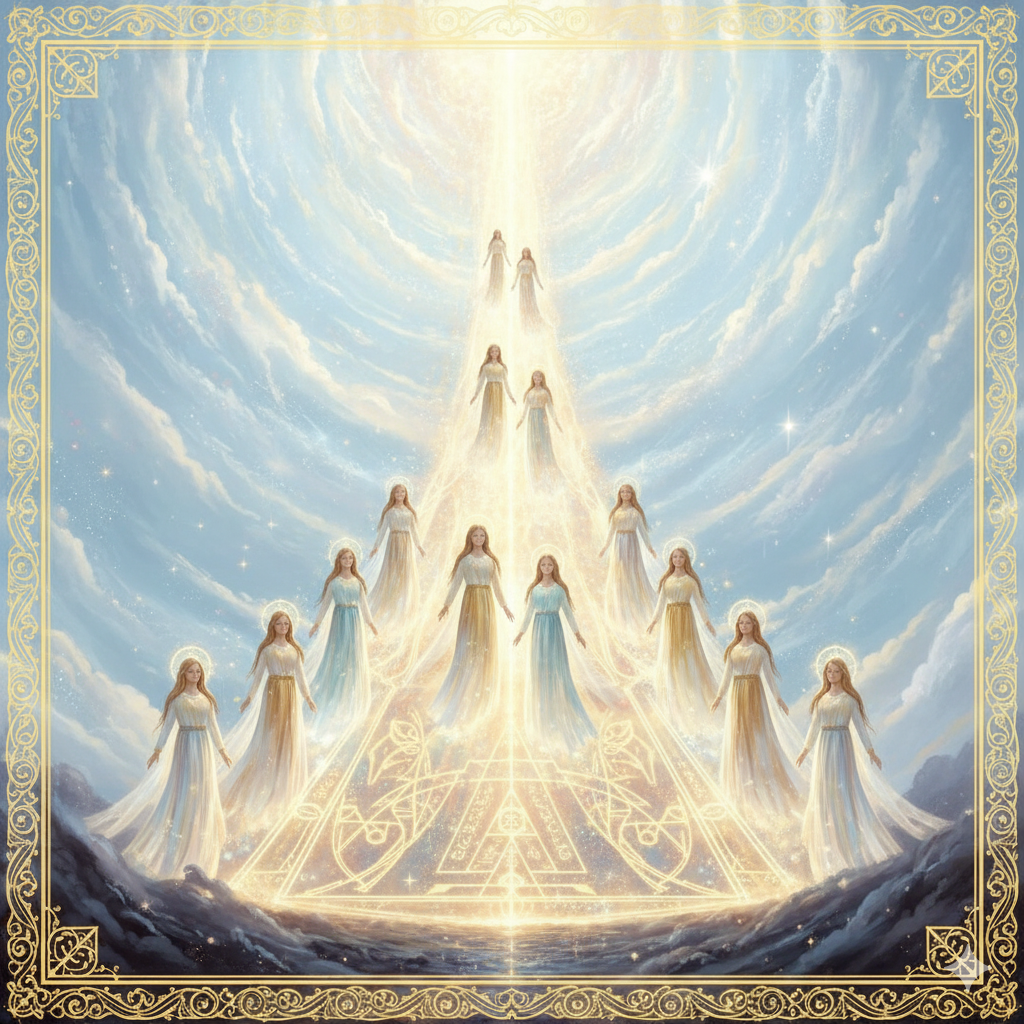
In Gnostic Cosmology: The Architecture of the Divine, we continue from where we left off in with the One — the Monad — that is not a being who thinks, wills, or acts in recognizable ways. It is closer to what the Hindu tradition calls Brahman: pure, self-subsisting consciousness so complete it generates reality simply by being what it is. It has no needs, no lacks, no movement toward anything outside itself. It simply is, in a fullness that exceeds every category, and certainly, any conventional human vocabulary.
The Gnostics were careful not to project human qualities onto it. The Monad is neither masculine nor feminine. Not present nor absent. Not even, strictly speaking, good — for goodness implies comparison, and the Monad has nothing to compare itself against. It simply is. The ancient teachers called this approach the via negativa: the path of knowing by un-naming. Every concept applied diminishes it. Every word misses it. It cannot be added to, subtracted from, multiplied, nor divided. It is. And yet from this unspeakable silence, something flows.
We find here reminiscence of Taoism which states that the Tao cannot be named, but we can certainly say what it isn’t. We can also see how some religions insist on God being omnipresent, omnipowerful, and omniscient, respectfully, present everywhere, all-powerful, and all-knowing.
THE PLEROMA: FULLNESS AS A COSMOS
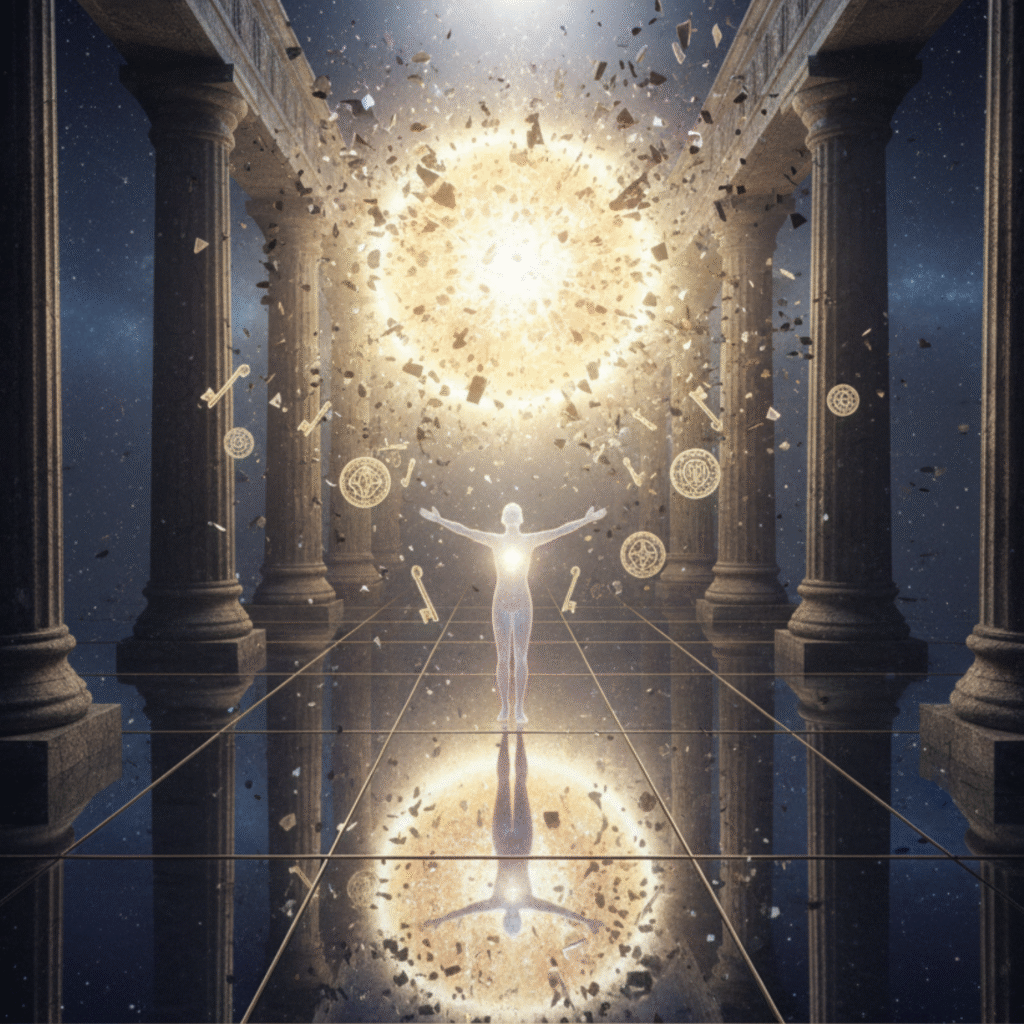
The first expression of the Monad is the Pleroma — a Greek word meaning “fullness.” This is the divine realm: not a place in space, but a mode of being. Pure light. Pure harmony. Pure knowing. The Pleroma is what reality looks like when nothing is hidden from itself. And yes, this is beyond 5D concepts.
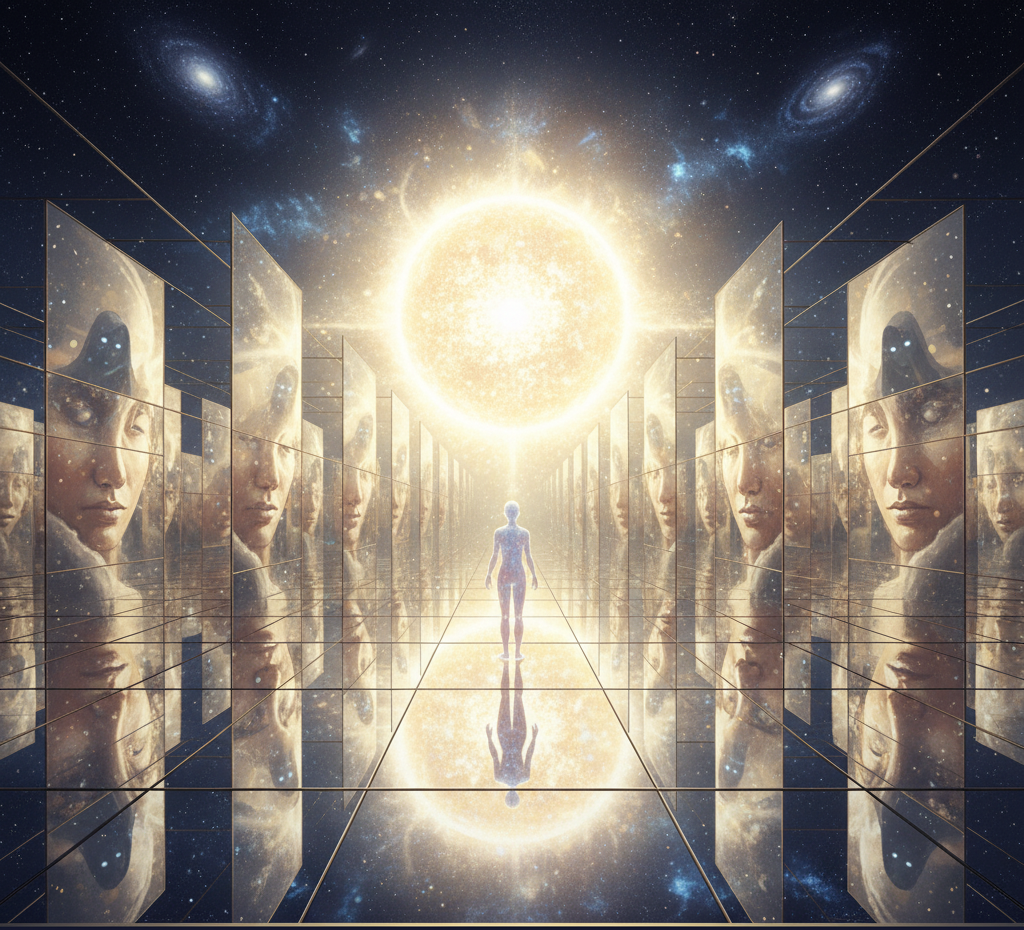
Populating the Pleroma are divine intelligences the Gnostics called Aeons — from the Greek word for “age” or “eternity.” They are not angels in the popular sense: beings with wings and tasks. They are living expressions of the divine nature itself, differentiated aspects of the Monad given form and relationship. Mind and Truth. Word and Life. Humanity and Assembly. They exist in complementary pairs — syzygies, masculine and feminine principles in dynamic balance — because the Gnostics understood that wholeness requires polarity, not uniformity.
In the most elaborated Gnostic schools — particularly the Valentinian tradition, developed by Valentinus around 140 CE — the Aeons number thirty, organized into three tiers. The first eight, the Ogdoad, are closest to the Monad. The next ten, the Decad, represent deeper principles of divine harmony. The final twelve, the Dodecad, stand at the furthest edge of the divine realm, nearest the threshold where spirit begins to meet matter.
Each tier receives less of the original light — not because the Monad withholds, but because emanation is progressive differentiation. The last of the thirty Aeons is Sophia. And her name — Wisdom — is both the key to the entire cosmology and the hinge on which it turns.
SOPHIA’S FALL: WHEN WISDOM ACTS WITHOUT BALANCE
To understand Sophia is to understand the most human story at the heart of the cosmos.
She is the last of the Aeons, the most distant from the Source, and the most restless. Where the other Aeons rest in their complementary balance — each paired, each held, each participating in the harmonious dance of the Pleroma — Sophia burns with a longing that cannot be stilled. She yearns to create. Not merely to receive, not to reflect, not to participate in the shared life of the divine realm. To originate. To bring something new into being from the sheer force of her own desire.
This yearning is not evil. It is the divine impulse of creativity itself — the same impulse that breathes through every artist, every parent, every visionary who has ever felt compelled to make something from nothing. Sophia’s hunger to create is, in its origin, the most sacred of drives.
But she acts alone.
In the Gnostic understanding, creation within the Pleroma is always a dyadic act — masculine and feminine in partnership, the syzygy that mirrors the nature of the Monad itself. Every act of true creation in the divine realm requires the consent and counterpart of another. However, Sophia does not wait. She does not seek her counterpart. She does not ask for the will of the others. She moves from pure yearning, from a force so overwhelming it bypasses the wisdom her own name promises.
What emerges from this unbalanced creative act is not what she envisioned. It is a being of fire and shadow: powerful, but sealed off from the light it was made from. Blind to its own origins. A distorted mirror of what Sophia had reached for in her longing for the Source.
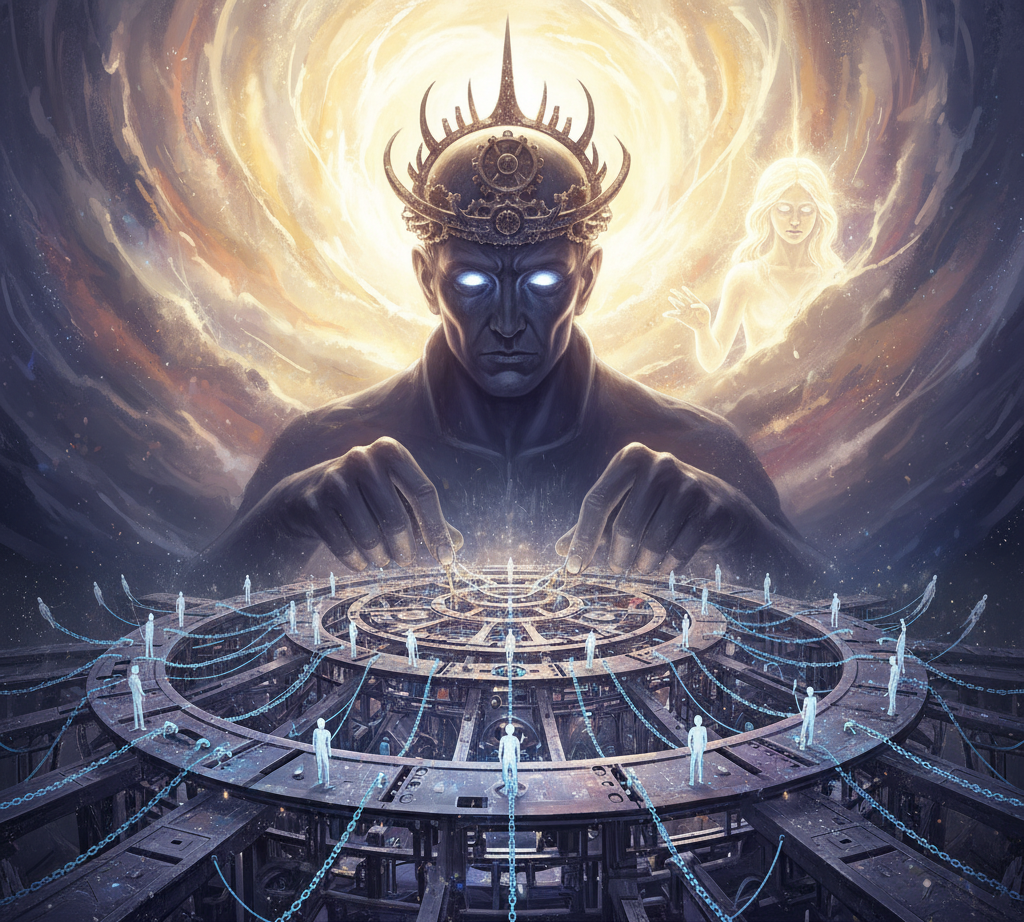
The Gnostics called this being Yaldabaoth — later known as the Demiurge, the craftsman. And Sophia, horrified by what her unsanctioned longing had produced, casts him downward into the realm below the Pleroma. She veils him in a luminous cloud, concealing him from the higher worlds. But in casting him out, she unknowingly sends fragments of her own divine light with him — sparks of Pleroma that will eventually find their way into every human being ever born.
Let’s be clear about the hidden elephant in the room. This is not a story about punishment. It is a story about consequence: what happens when the deepest part of us acts from longing without balance, from passion without partnership, from yearning without the grounding of another. And it is, ultimately, a story about how the light finds its way home even through the darkest detours. The early Gnostics understood this and translated in the best ways they could, in parables and stories.
THE DEMIURGE AND THE MATERIAL WORLD
Alone in the void beneath the Pleroma, Yaldabaoth does what every creator does: he builds.
Drawing on the divine fragments embedded in it — fragments it cannot recognize as anything other than its own power — it fashions a hierarchy of lesser beings the Gnostics called Archons, administrators of the material cosmos. Through them, it constructs the world we inhabit: layer upon layer of dense reality, beautiful in its complexity, real in its textures.
It does this without knowledge of the higher realms. It has never seen the Pleroma. It does not know there is anything above him. And so when it surveys its creation, it makes the declaration the Gnostics recognized immediately from a different scripture: “I am a jealous god, and there is no god but me.”
These are the words of Exodus. The Gnostics were not being provocative in placing them in the Demiurge’s mouth. They were making a precise claim: any god who needs to assert his own supremacy, who rules through jealousy and fear, who cannot tolerate a rival because he cannot conceive of a higher reality — is not the Source. He is a fragment pretending to be the whole.
The material world, in this cosmology, is not evil. It is a facet, incomplete at best until experienced wholistically. It is the work of a craftsman who had access to divine patterns but not divine understanding — who could replicate the architecture of the Pleroma but not its living intelligence. Beautiful in its complexity, genuine in its suffering, real in its textures — but a shadow of a higher reality its maker could not see.
THE DIVINE SPARK IN EVERY HUMAN BEING
Here is where the cosmology becomes intimate.
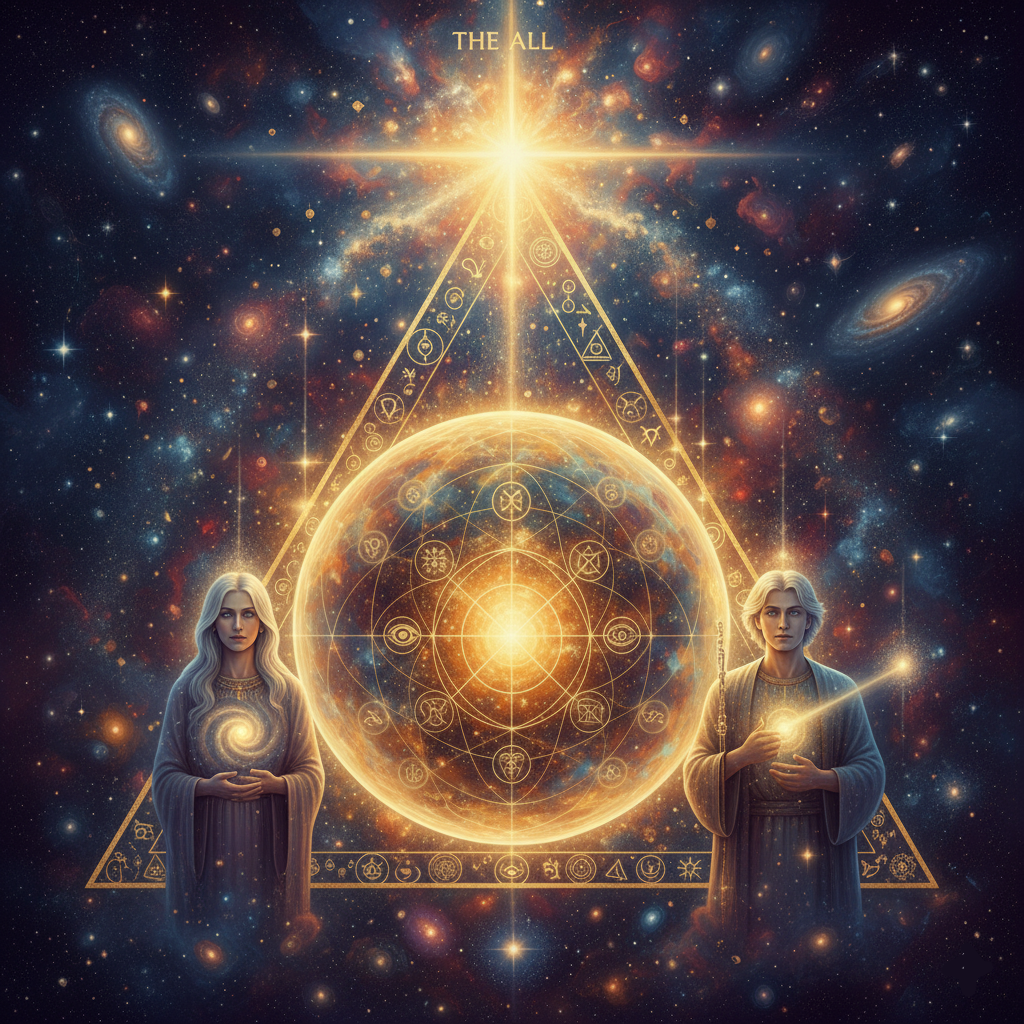
When Yaldabaoth fashioned the human form, he could build the body — its extraordinary biological intricacy, its capacity for sensation and thought — but he could not animate it with spirit. It had the form. It lacked the essence. And so the higher powers arranged a cosmic sleight of hand: Yaldabaoth was guided to breathe into its creation the very fragments of Sophia’s light it unknowingly carried. In the act of completing its greatest work, it released the divine into it.
Humanity awoke with a radiance that exceeded its creator. And in the deepest layer of every human consciousness burns what the Gnostics called the pneuma — the divine spark, the fragment of the Pleroma that belongs not to this world but to the realm of pure light.
This is the Gnostic diagnosis of the human condition. You are not a sinner awaiting judgment. You are a spark in temporary exile, awaiting remembrance. That restlessness no achievement can satisfy. That grief without a clear cause. That recognition of beauty arriving from somewhere deeper than ordinary experience. That hunger for meaning that no accumulation can quiet. That is the pneuma — the Pleroma-light within you, pressing toward its source.
WHY GNOSIS, NOT FAITH
Orthodox Christianity offers salvation through faith and dogma. Gnosticism offers something different: gnosis — the direct, transformative recognition of your own divine nature. Not belief in a doctrine about the divine, but the living experience of recognizing what you already are.
You cannot be told your way to gnosis. This is the point of a wholistic life. It is yours. Your wholistic center or sorts. A teacher can point, a text can illuminate, a practice can create the conditions. But the recognition itself — the moment the spark becomes aware of itself as spark — arises from within. This is precisely why Gnosticism has no gatekeepers. No institution can dispense it. No hierarchy can withhold it. The Invisible Spirit is not rationing the divine spark by denomination.
The architecture of Gnostic cosmology is ultimately not an intellectual system. It is a map — the same map that was buried in an Egyptian jar for fifteen centuries. A map of where you came from, how far you traveled from home, and the light within you that, once recognized, knows the way back.
In Part 3, we turn to the Archons — the lesser powers who govern the material world — and what the Gnostic analysis of power and control reveals about the systems we live within today.
Sources: The Apocryphon of John (Nag Hammadi Codex II); Against Heresies, Irenaeus (c. 180 CE); Elaine Pagels, The Gnostic Gospels (1979); Stephan Hoeller, Gnosticism: New Light on the Ancient Tradition of Inner Knowing (2002).