
There is a moment in every technology cycle when the tool stops serving the human and starts replacing them. We are living inside that moment right now — and most people can feel it, even if they can’t name it.
I finally bit the bullet. After years of working with the free version of AI, I used my business card to subscribe to Claude. And I am not regretting the action. After years of working with most public AI platforms, I’ve come to understand how to relate to it and how to make it work for me. Not the other ways around…
In a recent newsletter I was reading, it said that ninety percent of Americans want paper menus back. Not grandparents. Not technophobes. Everyone. And I’m not surprised. Seven years ago on a trip to China, my money wasn’t needed as a robot made its way to our table where my friends ordered for me and paid. That transaction was human-less, save for us at the table. Everything was automated. I enjoyed the experience as technically intriguing but felt no need to make a habit. I miss talking to waiters.
Today, Walmart pulled back on self-checkout kiosks. Tinder is losing subscribers and Bumble shed sixteen percent of its paying users. Dating apps — the very idea of algorithmically optimizing human connection — are quietly failing while dinner parties with strangers are quietly thriving.
This is not a backlash against technology. It is a backlash against bad manners.
The Machine Implementation That Forgot Its Place
Every tool humanity has ever developed had a proper place and usage. Fire belongs in the hearth, not the middle of a living room. The plow belongs in the field, not on the dining table. The printing press democratized knowledge and engaged conversations that fueled knowledge.
Artificial Intelligence (AI) is no different. It is the most powerful productivity tool most available to us today. And like every powerful tool before it, it all depends on how we will use it. Or perhaps a better question is how do you want to use it before companies decide how it will use it for you? It is being misused, not out of malice, but out of excitement and, if we are honest, greed. Cutting corners rarely yields elegant solutions.
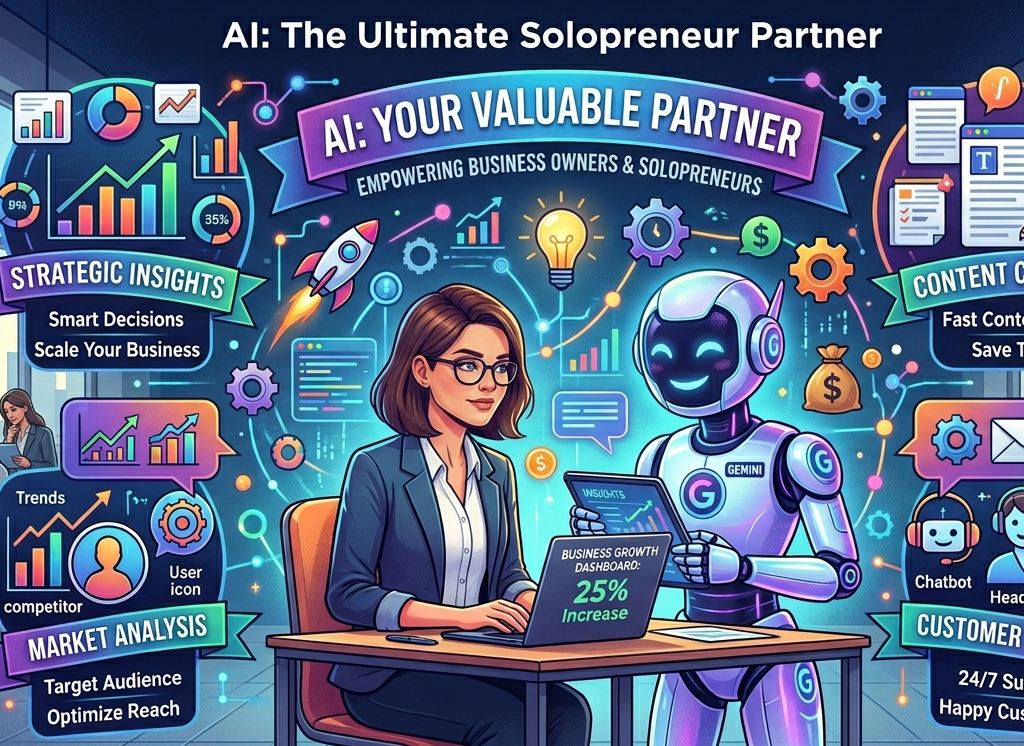
The misuse looks like this: a press release written entirely by AI, polished to a frictionless shine, saying absolutely nothing that could not have been said by any other company in any other industry on any other day. A customer service chatbot that makes you type your problem four different ways before offering you a link to an unfathomable FAQ. A social media post that sounds like it was written by someone who has heard of human beings but never quite met one. Does that sound familiar?
And yet we recognize these things instantly, if not eventually. We feel their emptiness before we can articulate why. And what we are feeling is the absence of the one ingredient no language model can supply: original human creativity. The specific texture of a particular mind, shaped by a particular life, seeing a particular problem from an angle no one else occupies.
That is what differentiates one voice from another. One brand from another. One relationship from another. And it cannot be automated.
What AI Actually Does Well
Here is what I found out AI does extraordinarily well: it works in the kitchen.
It organizes. It drafts. It summarizes, transcribes, schedules, optimizes, and iterates at a speed no human can match. It can take your rough thinking and give it structure. It can take your structure and suggest ten variations. It can handle the administrative weight that used to consume hours of creative energy — freeing that energy for the work only you can do. It does the things I know how to do but faster, with more efficiency, and with greater ease. This leave me to focus on more creative solutions and strategies.
The restaurant that uses AI to manage inventory, optimize pricing, schedule staff, and interact with clients — and then hands you a leather-bound menu and a server who remembers your name — understands this distinction intuitively. The technology disappears into the background. The human experience breathes in the foreground.
The newsletter that runs on automated workflows but reads like a letter from a sharp, curious friend understands it too. The brand that uses AI for logistics but hosts events where you can meet the founder and touch the product. The consultant who uses AI to research faster and think deeper — but walks into the room as themselves, with their own earned perspective and their own irreplaceable relationships. This is what I aspire to continue to do after 40 years of digital tool I can continue to use.
These are not anti-technology positions. They are basic human ones. And they happen to also be better business.
The Creativity Gap No Algorithm Can Close
Decades ago I ran language center in the South of France. I coordinated teacher’s classes, schedules, and adult students. Then personal computers came in and introduced interactive CD-Rom solutions. Most teachers felt it was the end of their days at the head of a classroom. They felt they would be replaced by computers. 35 years later, teachers are still here.
This led me to leave for Japan where I pursued more technology and learning to use it, not be used by it.
Ancient wisdom traditions understood something that modern technology culture is being forced to relearn: the container and the essence are not the same thing.
You can replicate the form of a human communication perfectly — the length, the tone, the vocabulary, the structure — and still produce something that feels hollow. Because what people are responding to, when they respond to writing or conversation or any creative act, is not the form. It is the presence behind it. The specific consciousness that chose these words, in this order, for this reason, out of everything else they could have said.
That presence is what builds trust. Trust is what builds relationships. Relationships are what build businesses, communities, and lives worth living.
AI cannot manufacture presence. It can simulate the surface features of it well enough to fool a casual reader for a moment. But it cannot sustain that simulation across a relationship. And people — who are exquisitely calibrated, after millions of years of evolution, to detect authenticity — notice the difference faster than any algorithm can adapt.
The Actual Opportunity
The businesses and creators who will thrive in this moment are not the ones racing to automate creativity and everything the customer touches. They are the ones automating everything the customer doesn’t see, freeing humans from tedious tasks, and using the time and energy that frees up to be more human than they could have been before.
More present. More responsive. More creative. More themselves.
AI in the kitchen means faster prep, less waste, better systems. AI at the table means a cold meal and a screen where a person used to be.
The technology is not the problem. It never was. The question — the one every era has had to answer for itself — is where the tool ends and the human begins. Or how will you chose to use it before someone else does it for you?
That line is not drawn by the machine. It is drawn by you and me, quietly, without fanfare.
To the fearful ones, plenty of authors and story-tellers have forewarned us of becoming lazy and indolent. From Asimov to Star Trek, those philosophical debates have been presented. It is up to us to remember them and move forward with Stoic determination.
And right now, ninety percent of us are drawing it at the menu.
What do you think — has technology enhanced or replaced your experience as a customer lately? Share your thoughts below.