These articles are part of the build your own spiritual cocktail series. We present these ancient wisdom for you to pick and chose what fits, disregarding what doesn’t. And as with any good cocktails, tweak as you wish and update the recipe to find what fits. Eventually throughout life, you realize you need less and less ingredients. And this article grew so big due to its inherent complexity, I had to cut it in two. If you have corrections or wish to add to these articles, please contact us.
In part 1, we looked at what Zoroastrianism is and its philosophy of Good Thoughts, Good Words, and Good Deeds. Today, we continue with free will and responsibility.
The Sacred Fire: Symbol of Eternal Truth
One of the most recognizable aspects of Zoroastrianism is the sacred fire that burns continuously in fire temples. This is not fire worshiping. It is a symbol.

Fire represents the light of truth, the warmth of divine love, the purity that burns away corruption, and the eternal presence of Ahura Mazda. Just as fire gives light and warmth, truth illuminates our path and divine wisdom warms our souls.
In fire temples, priests tend sacred flames that have burned for centuries, some for over a thousand years. These flames are never allowed to go out. They represent the eternal, unchanging nature of truth and righteousness. This symbolism offers a powerful meditation for modern life. It asks what is the sacred fire burning in our life and what truth guides us? What principles could you tend so carefully that they never go out?
In a world of constant change, distraction, and moral relativism, the image of the eternal flame reminds us that some things do not change. Truth is truth. Goodness is goodness. Your responsibility to cultivate Good Thoughts, Good Words, and Good Deeds does not shift with fashion or convenience.
Reverence for Nature: Environmental Wisdom from Ancient Times
Thousands of years before modern environmental movements, Zoroastrians already taught that the earth is sacred. Fire, water, earth, and air are not resources to exploit but divine gifts to honor and protect.
Pollution, according to Zoroastrian teaching, is not just a practical problem. It is a spiritual offense. To pollute the earth, to poison water, to corrupt the air, is to desecrate the sacred and to align oneself with the forces of destruction rather than creation.
This ancient respect for nature offers profound wisdom for our modern environmental crisis. We face climate impacts, man-made or otherwise, habitat destruction, population displacement, animal or human, pollution, and species extinction because we have treated the natural world as a commodity rather than a sacred trust. Native American managed to live in the Americas for thousands of years disturbing their environment as little as possible. They took what they needed, nothing more. Settlers have manage to not only pollute the land, air, and water, but globally in 250 years. That’s quite a record, and sadly, one that has tell-tale of previous historic similar events with dire consequences.
Zoroastrian teaching is clear: we are not masters of nature but its stewards. Purity in our physical environment reflects purity in our spiritual lives. When we care for the earth, we honor the divine creation. When we destroy it, we participate in the work of Angra Mainyu, the destructive spirit.

Practical applications for modern life:
Make environmentally conscious choices. Reduce waste, conserve energy, protect water, support sustainable practices. This is not just environmentalism. For Zoroastrians, it is spiritual practice. Leave as little of a wake behind you as possible. Simple, but it takes awareness and presence something we find in our own stillness.
When we start to see nature as sacred and not separate, we have a sense of ease, of belonging, of being part of an incredibly complex ecosystem. We don’t own it. We are here because of it. That is a powerful paradigm shift. When you walk in a forest, swim in a river, or watch a sunset, take a moment to recognize that you are experiencing the sacred. This shift in perception changes how you relate to the natural world.
Connect environmental action to ethical living. The same principles that guide Good Deeds in your human relationships, honor, respect, care, protection, apply to your relationship with the earth.
Teach children reverence for nature. One of the reasons ancient wisdom has endured is that elders passed it to the young. Help the next generation see the earth as sacred.
Life After Death: The Journey of The Soul
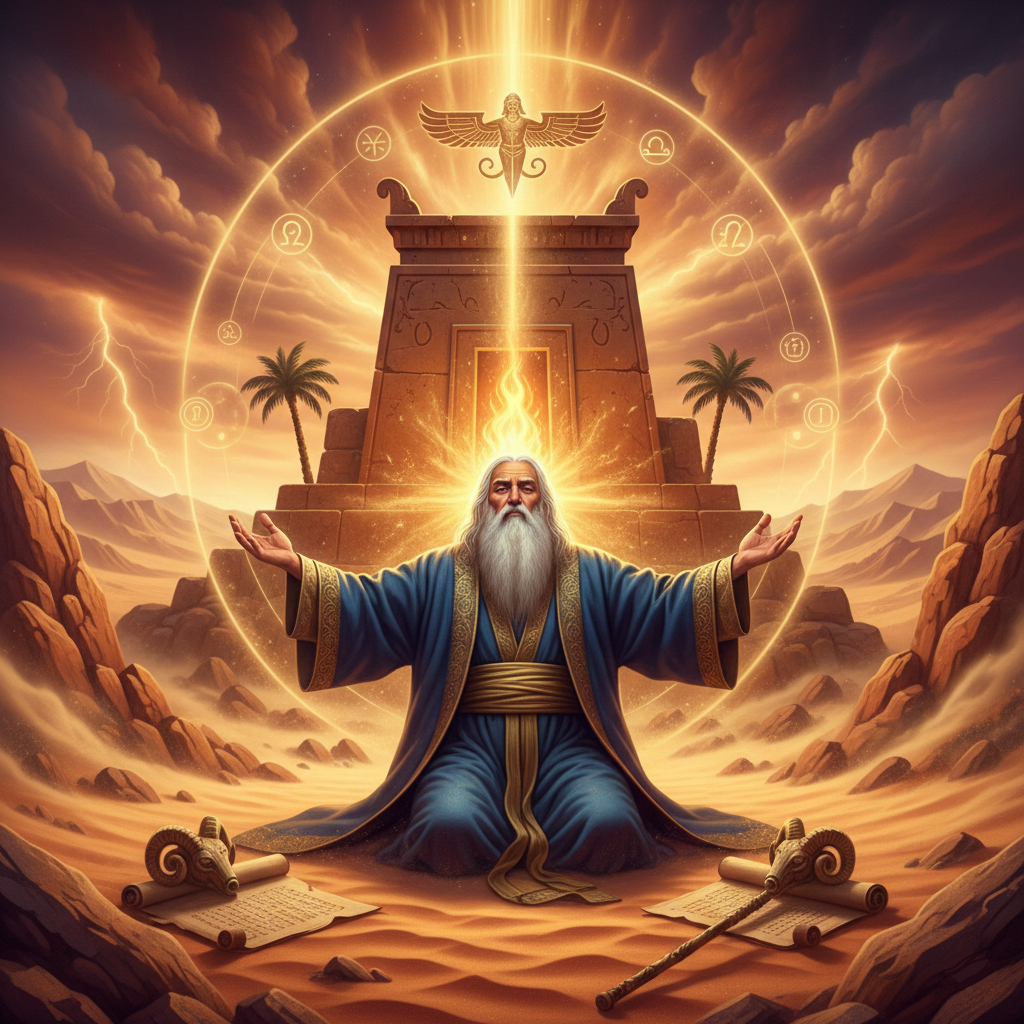
Zoroastrianism teaches that death is not the end. After the body dies, the soul remains for three days near the body before beginning its journey to the next world. This a theme we find in many ancient religions, from the East to the West.
On the fourth day, the soul approaches the Chinvat Bridge, the Bridge of Judgment. Here, the soul faces an accounting of its entire life. Every thought, every word, every deed is weighed. This always reminds me of Star Trek’s Klingon Sto’Vo’Kor, the place where the Klingon Warrior face their past deeds.
This is not judgment by an angry, punishing god. It is natural consequence. The soul that has cultivated Good Thoughts, spoken Good Words, and performed Good Deeds has built itself into something light, pure, and aligned with truth. The soul looks at its deed and figure what it thinks of its passage on Earth. After that, such a soul easily crosses the bridge and can enter the House of Song, the realm of light and joy in the presence of Ahura Mazda.
However, the soul that chose falsehood, cruelty, and destruction built itself into something heavy, corrupt, and aligned with darkness. For such a soul, the bridge narrows, and it falls into the realm of suffering where it must undergo purification.
Again, this is not from a vengeful god, but the soul itself that decides. But even this is not eternal damnation. Zoroastrian eschatology teaches that eventually, there will be a final renovation of the world, called Frashokereti. At that time, good will triumph completely over evil. All souls will be purified, and the entire creation will be reunited with Ahura Mazda in perfect truth and light.
This teaching about judgment and afterlife serves a practical purpose in daily life. It reminds us that our choices have consequences beyond this life. It encourages ethical living not from fear of punishment but from understanding that we are building our own souls with every choice we make.

So ask yourself, what are you building? With each thought, word, and deed, are you constructing a soul of light or a soul of darkness? Are you aligning yourself with truth or falsehood?
Zoroastrianism in the Modern World
Today, there are fewer than 200,000 Zoroastrians worldwide, mostly in India where they are called Parsis, and in Iran. The religion that once ruled the vast Persian Empire and influenced the world’s major religions is now a small, close-knit community. Yet its teachings remain powerfully relevant. In fact, the very challenges of modern life make Zoroastrian wisdom more urgent than ever.
We live in an age of:
Information overload where distinguishing truth from falsehood is increasingly difficult. Digital communication where words spread instantly and can cause tremendous harm. Good Thoughts require us to seek truth carefully. Good Words remind us to speak and post with consciousness and care. Moral complexity where ethical choices are not always clear. Good Deeds call us to act with integrity even in ambiguous situations.
Environmental crisis threatening our health and the future of life on earth. Zoroastrian reverence for nature offers spiritual motivation for environmental action.
Anxiety and powerlessness where people feel controlled by forces beyond their influence. Zoroastrian teaching about free will and personal responsibility reminds us of our power to choose.
Integrating Zoroastrian Wisdom into your Life
You do not need to convert to Zoroastrianism to benefit from its wisdom. These teachings are universal, applicable to anyone seeking to live with more integrity, purpose, and peace. This is part of our build your own spiritual cocktail series.

Here is how you might begin:
Morning Intention Setting
Start each day with the Zoroastrian triad. Before you get out of bed, set an intention:
Today I will cultivate Good Thoughts. I will notice when my mind turns toward negativity, fear, or judgment, and I will choose thoughts aligned with truth and wisdom without judgement.
Today I will speak Good Words. I will be truthful, kind, and purposeful in my speech. I will use my words to encourage, comfort, and bring clarity.
Today I will perform Good Deeds. I will look for opportunities to help, to serve, to act with integrity. I will make choices that contribute to goodness in the world.
This practice takes less than five minutes but frames your entire day around ethical intention.
The Evening Review
Before you sleep, review your day through the lens of the triad:
What thoughts did I cultivate today? Which were aligned with truth? Which led me away from it?
What words did I speak? Did I speak truthfully? Kindly? Did I use my words to build up or tear down?
What deeds did I perform? Did I act with integrity? Did I help or harm? Did I contribute to goodness?
This nightly practice, similar to the Stoic practice of evening reflection, builds self-awareness and strengthens your ethical muscle. Do this without judgement
The Speech Filter
Before you speak, especially in difficult or emotional situations, pause and ask:
Is this true?
Is this kind?
Is this necessary?
If what you are about to say fails any of these tests, reconsider.
The Choice Practice
Throughout your day, pause at decision points and consciously recognize: I am choosing. Right now, I have the power to align myself with truth or falsehood, with light or darkness, with creation or destruction.
This practice counteracts the feeling of being on autopilot or controlled by circumstances. It reminds you of your freedom and responsibility.
Environmental Mindfulness
Make at least one environmentally conscious choice each day as a spiritual practice. This could be reducing waste, conserving water, choosing sustainable products, or simply spending time in nature with reverence and gratitude. We go out of way to avoid plastic wrappers. They are tough to decompose and some are not recyclable. We just don’t need as much as grocery stores and other places want us to go home with. Hey, it’s one brick in the wall. But we don’t see it as sacrifice or inconvenience. We’re just honoring what we want, not what an industry forces down our throats.
Service Practice
Commit to performing at least one Good Deed each day. This could be helping a neighbor, volunteering, being fully present for someone who needs to talk, or simply doing your work with excellence and integrity. If you are truly allergic to others, than do a good deed for yourself, read a good book, meditate, wash yourself and do the same mentally.
Eventually Good Deeds are their own reward because they align you with the cosmic force of goodness.
Study and Contemplation
This is my favorite part. Read about ancient wisdom on TheWholilsticCenter.com! In this article we talk about Zoroastrianism. Find more articles until you find the ones that interest you. Contemplate their teachings. Let ancient wisdom speak to your modern heart. Those traditions that endured so long touche something eternally true about human existence.
The Enduring Gift of Zoroastrian Wisdom
Zoroastrianism’s gift to humanity is not complex theology or elaborate rituals. It is something far more practical and profound: a clear, actionable guide for ethical living.

I knew people in a small village in the South of France that practiced this. Simple Good Thoughts, Good Words, Good Deeds. Three principles that address the totality of human experience and provide a roadmap for navigating every situation with integrity.
It teaches us that we are free no matter our circumstances. That we retain the power to choose our thoughts, words, and deeds. We are responsible for our choices that shape who we are, how we show up, and tip the cosmic scales in the eternal battle between good and evil.
Truth matters. In an age of relativism and propaganda, Zoroastrianism declares that truth is real, knowable, and worth aligning ourselves with.
Continuing the Journey at The Wholistic Center
Our exploration of ancient wisdom continues. Having traveled from Japan to ancient Persia, next we journey into the mystical heart of Islamic spirituality to discover Sufism. This is a fascinating esoteric tradition that shares deep historical and spiritual connections with Zoroastrianism. There, we will explore divine love, the purification of the heart, and the path of selfless service.
Explore more practical wisdom for daily living at TheWholisticCenter.com/emotional-wellness, where ancient teachings meet modern life challenges.