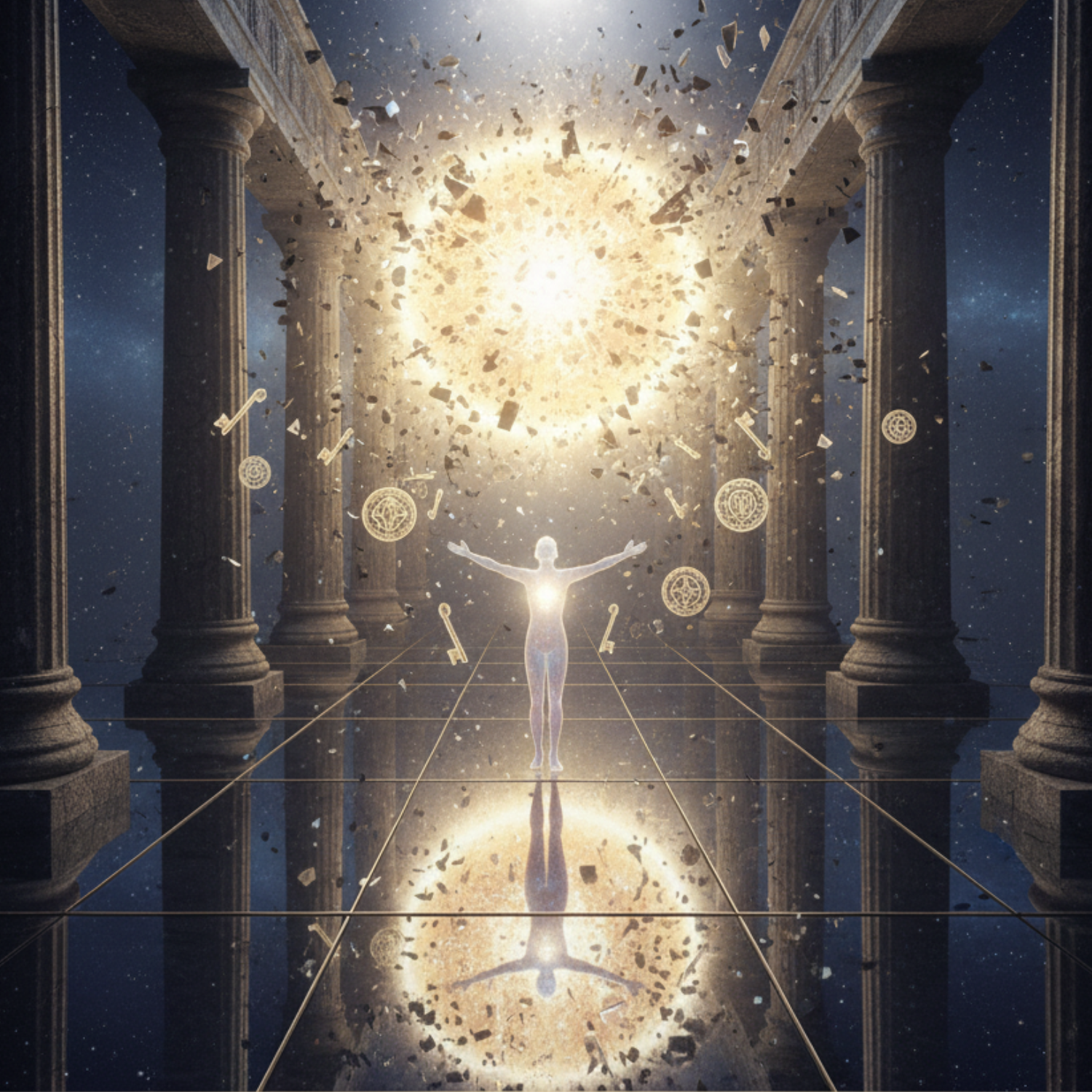
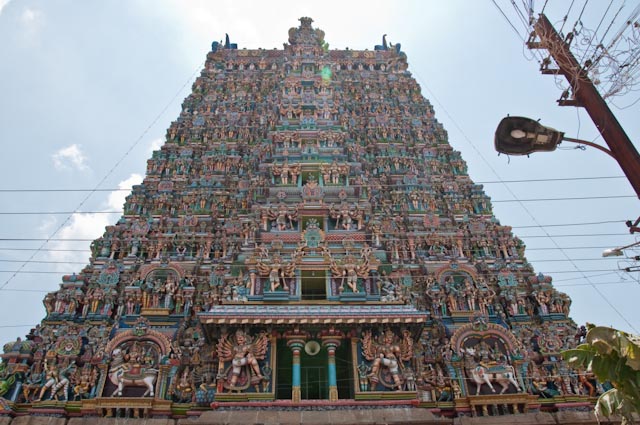
There was a time when humanity’s greatest structures were temples. Stone and silence rose together—spaces built not for commerce or entertainment, but for slowing down, tapping in, and reverence for life. Each arch, each column, was a hymn in stone, these were external representation of honoring life on Earth.
Today, our cathedrals are screens. We kneel before algorithms, whisper prayers to glowing glass, worship businessmen, and call it connection. The sacred has not died—it has been displaced. And in that displacement, we’ve lost something essential: the ability to be still.
When Stillness Meets Life and Business
Life and business decisions made in the still inner sanctum yield better results than those made from knee-jerk reactions. This isn’t mystical thinking—it’s proven science.
Research from INSEAD and the Wharton School found that mindfulness meditation helps people make more rational decisions by increasing resistance to the sunk-cost bias—the tendency to continue investing in failing projects simply because we’ve already invested so much.
“Most people have trouble admitting they were wrong when their initial decisions lead to undesirable outcomes,” explains researcher Andrew Hafenbrack. “A brief period of mindfulness meditation can encourage people to make more rational decisions by considering the information available in the present moment.”
Studies show that quiet contemplative moments modulates brain activities associated with cognitive control, emotion regulation, and empathy, leading to improved decision-making. Research on entrepreneurs demonstrates that mindfulness “allows us to become more aware of our thoughts, choices, decisions, and reactions. It encourages introspection and lets us step back from the turmoil of a situation, giving us a clear vision.”
Successful people have many things in common, mainly they practice some sort of stillness, whether in mediation or walking, or being able to withdraw on the stop during a meeting and tap their inner still place. So can you. In fact, monks practice it. Spiritual seekers practice it. Everyone can practice it and reap the benefits over time. In any case, it’s a deep need we all have, regardless of whether we heed it or not.
The Sacred Vacuum We Created
Modernity achieved its triumph through disenchantment. The Industrial Revolution brought so much, so fast, that something was lost. The promise to deliver us from toiling the land with more free time to do as we wish was replaced with manning the machines into an eternal upgrade and update cycles. The modern world, steeped in materialism, was stripped of its mystery in the name of progress. The invisible was traded for the measurable. The cosmos, once alive and filled with meaning, became a machine. But not everywhere.
Carl Sagan’s famous “Cosmic Calendar” helps us recalibrate. He compressed the 13.8 billion-year history of the universe into a single year. The Big Bang happens at midnight on January 1. Life doesn’t appear until late September. Dinosaurs show up on Christmas Eve. Human ancestors arrive around 10:30 PM on December 31. And recorded history? The last 10 seconds before midnight.
All human civilization—every empire, every innovation, every thought you’ve ever had—crammed into the final blink on the cosmic clock. As various sacred texts remind us, a lifetime is but a blink in the eye of the Maker.
One amazing awareness video show an astonishing representation of sub-particles to the biggest observable planets. This can help re-calibrate ourselves in the Universe. It also helps us make things a little more relative and avoid falling into the entertainment social media trap, of being happiness seeking missiles. Imagine politicians and world leaders watching this video every day?
This perspective helps us avoid falling into that trap—constantly pursuing the next thing, the next achievement, the next dopamine hit from social media without fixing a desired goal and result. Without the sacred, existence becomes flat. Events become meaningless, consumed mindlessly without purpose.
And in this sacred vacuum, we have an opportunity: sacred creation.
The Hidden Continuum
The sacred was never truly lost. One truth observable throughout the Universe is that rhythm exists everywhere—from days to seasons and beyond. As the Hermetic axiom teaches: As Above, So Below. As Below, So Above. These rhythms transcend time and space. What was lost can be regained.
If we once dwelled in temples made of stone and ritual, we can experience that same sense of the sacred wherever we are—even in the middle of a crowd, lost in reflection whenever and wherever we choose. It’s accessed through finding stillness at any point. And in that stillness comes silence and awareness. We are. We exist.
“Do you not know,” asked St. Paul, “that your body is a temple of the Holy Spirit within you?”
This was not metaphor. It was ancient wisdom.
The ancients built temples because they understood architecture as theology. These structures weren’t merely for worship—they gathered the right place and energy for visitors to access higher states of mind. Form and function were mirrors pointing to the soul, not the soul itself.
Notice that Notre-Dame Cathedral in Paris, as with many others were never symmetrical? The right tower is thinner than the left. One side doesn’t reflect the other. The asymmetry is intentional—perfect symmetry would be too rigid, not very human. The sacred requires space for the unexpected.
Reclaiming Your Inner Sanctuary
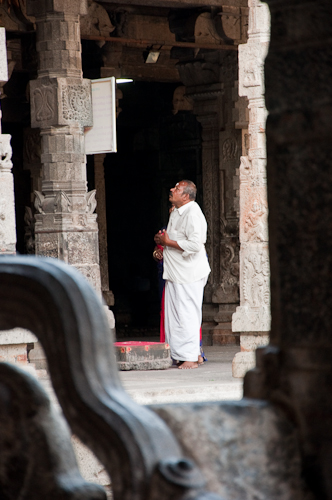
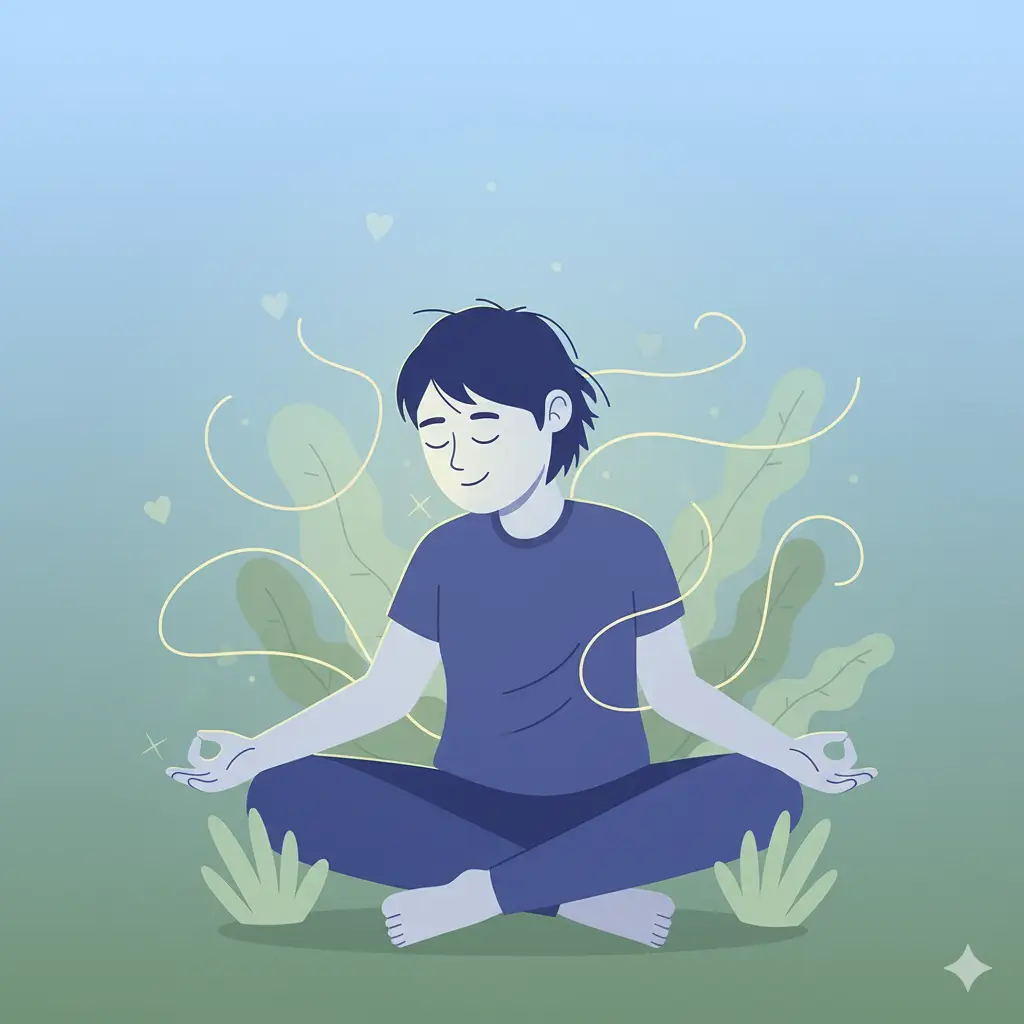
To inhabit a human body consciously means to breathe, to feel, to dwell in awareness. We can restore that sense of sacred geometry within, even in our fast-paced digital age.
Studies in workplace wellness show that mindfulness interventions provide positive effects for chronic illness, pain, depression, anxiety, and perceived stress. Research confirms that meditation can help people make better, more profitable business decisions. Since happy employees are 12% more productive than unhappy ones, and happier salespeople sell 37% more, mindfulness directly improves organizational performance.
The practice is simple:
- Concentrate on the breath. Focus on the heart area. Eventually, you will find that inner stillness—the fountain of revelation and answers. Go and check out the HeartMath Institute.
- There is your inner sanctum, that temple within. This isn’t abstract spirituality. It’s a simple slowing down into yourself. Some might see a real temple in their mind’s eye. Others see nothing. Some see faces and images.
- Concentrate on the space, whether it has shape or not. Don’t judge it. Don’t define it. Simply be quiet and observe. That’s enough for now.
- This inner space isn’t built of stones but of awareness basking in stillness. It’s a welcome relief in a world always on the go.
When Rumi kissed the ground, when Eckhart spoke of “God in the pot and the pan,” when the Zen monk swept the floor, they revealed the same truth: the temple is not a place you enter. It is what you are.
The Architect’s Blueprint
To return to this primordial sacred is to access it through stillness and silence. It can be done for any reason, personal or business decision making. Research shows increased activity and grey matter in the prefrontal cortex among long-term meditators—the area responsible for higher-order thinking, judgment, decision-making, and pro-social behavior like empathy and compassion.
Start with one minute each day, then two, building gradually. There you find that elusive direct perception the Greeks called gnosis. There you rediscover the forgotten half of the divine—the feminine principle that sanctifies life rather than transcending it.
For centuries, spirituality focused on the sky, seeking ascent and abstraction. The sacred feminine reminds us that the All exists in form, nature, relationship, and matter. The divine isn’t somewhere else. It’s here, in your body, in your breath, in this moment.
Quiet mind: As we become more relaxed and aware, we understand that the “normal” way our mind operates is trancelike, unfocused, and chaotic, whereas the quiet mind has qualities of sobriety, clarity, and steadiness. When our mind becomes more still and silent, our intelligence becomes aligned with a greater intelligence that understands our situation objectively and we see exactly what we need to do or not do. Our senses are sharp, colors and sounds are vivid—everything seems eternally fresh and alive. (The Wisdom of the Enneagram, 358)
Your Daily Practice
The temple within requires no pilgrimage, no priest, no special conditions. It simply requires your presence.
As explored in wordless thinking, you can access this sanctuary beyond concepts and language. Like Taoism’s Wu Wei, it’s about alignment rather than force. Similar to Shintoism’s recognition of the sacred in nature, your body is the dwelling place of spirit.
And as the pathless path teaches, no one can give you this sanctuary. You must discover it yourself, through your own direct experience.
The screens will always be there. The algorithms will always call. The noise will never fully cease.
But the temple within remains, waiting in stillness. Not demanding. Not insisting. Simply present.
All you have to do is stop. Breathe. And remember what you’ve always known: you are the sacred space you’ve been seeking.
Continue Your Journey
This article is also featured on The Wholistic Center Podcast, where we explore ancient wisdom for modern living. Subscribe to hear more practices for reclaiming stillness in a noisy world.
Explore related wisdom:
- The Wordless Thought Exercise: Thinking Without Language – Accessing the silent sanctuary
- Taoism: What Ancient China’s Way of Water Teaches Us – The art of effortless action
- Shintoism: Japan’s Ancient Way of the Kami – Recognizing the sacred everywhere
- The Pathless Path: Why Your Inner Compass Can’t Be Mapped – Your unique journey inward
Visit The Wholistic Center to discover more practices for wholistic living in the modern world.