Moving on with our second article focused on what The Wholistic Center website is about, what do ancient wisdom have to teach our modern societies, after the previous Shintoism article. Today, we take a look at Taoism.
These articles are part of the build your own spiritual cocktail series. We present these ancient wisdom for you to pick and chose what fits, disregarding what doesn’t. And as with any good cocktails, tweak as you wish and update the recipe to find what fits. Eventually throughout life, you realize you need less and less ingredients.
Our society teaches us to push, strive, force, and control. On the opposite side of the spectrum, Taoism whispers something different: flow, yield, allow, and align. It says our words cannot describe the Tao. Roughly translated to “the way”, Life, the Universal Force Behind Everything, etc, what we can do is say what it isn’t.
When I was in high school, I took a class called Eastern Philosophy at the age of 14. That’s where I first read the Tao Te Ching. For the first time in my education, something made sense to me in a way that Western thinking never had. Taoism was the first spiritual tradition that felt true to how I experienced the world, rather than how I was told I should experience it.
Decades later, I still return to Taoist wisdom. And in our modern world of hustle culture, burnout, and constant striving, these ancient Chinese teachings might be exactly what we need.
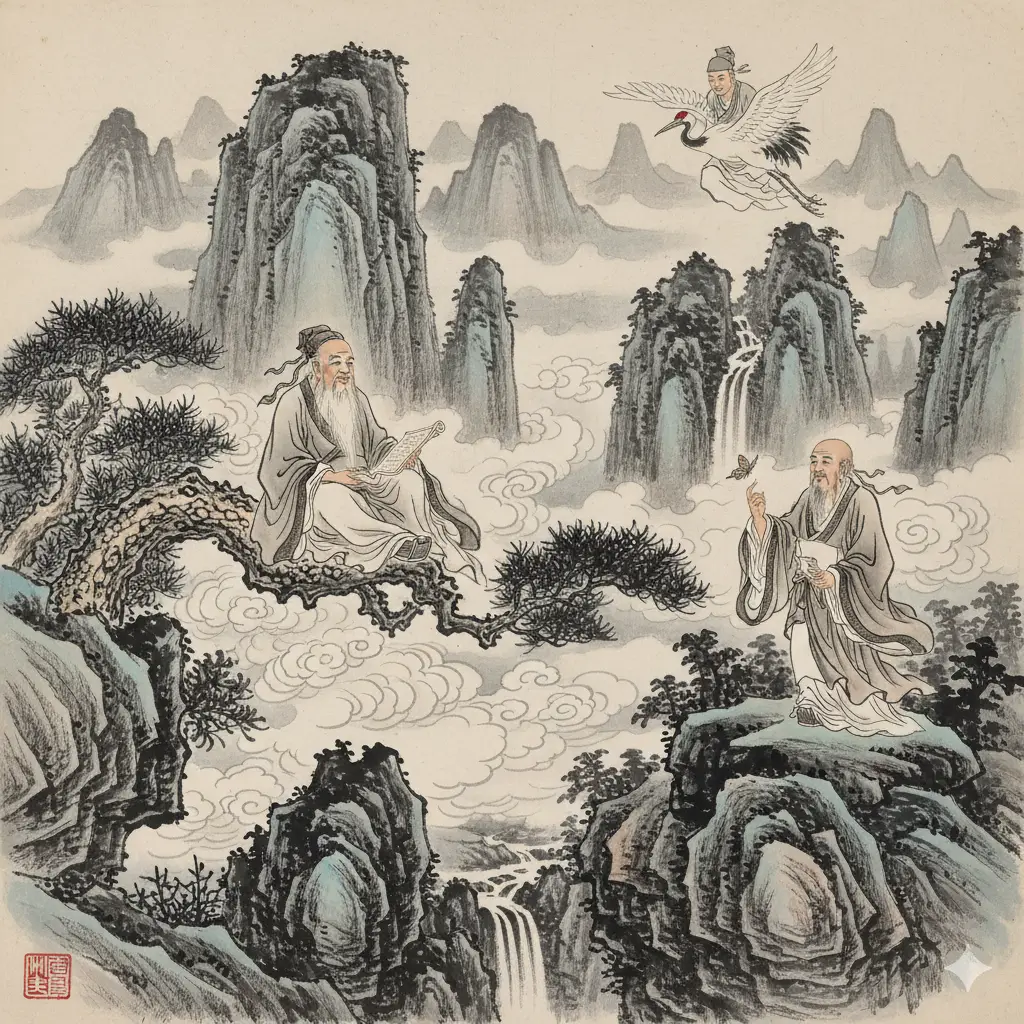
The Tao That Cannot Be Named
Taoism emerged during China’s Warring States period (475-221 BCE), a time of tremendous chaos and conflict. In that turbulent era, philosophers began seeking a deeper truth beneath the surface of human struggles—a universal order that existed regardless of political turmoil. Perhaps, it’s no surprise so many pursue personal growth and how The Wholistic Center became live this year in the midst of the current geopolitical unrest.
The foundational text, the Tao Te Ching, is traditionally attributed to Laozi (Lao Tzu). Scholars debate its authorship and exact date. What matters isn’t who wrote it, but what it reveals: a way of understanding reality that has proven relevant across centuries and cultures. The message is more important than the messenger, in most cases.
The opening lines establish everything that follows: “The Tao that can be told is not the eternal Tao. The name that can be named is not the eternal Name.”
Right away, we’re told that the deepest truth can’t be captured in words. After all, our words and language are finite and describing the infinite escapes it. Essentially, we’re told that the map is not the territory. The menu is not the meal. And no description of the Tao can replace direct experience of it. Words are just that, words and the importance we attach to them.
Simply put, Tao, “the Way”, is the natural flow and order of the universe. It’s not a god or force you worship, but a pattern you recognize and align with. Like gravity or the changing seasons, the Tao simply is, whether we acknowledge it or not.
The Power of Emptiness
One of the most striking teachings in the Tao Te Ching comes from Chapter 11, using everyday examples to illustrate a profound truth:
“We join spokes together in a wheel, but it is the center hole that makes the wagon move. We shape clay into a pot, but it is the emptiness inside that holds whatever we want. We hammer wood for a house, but it is the inner space that makes it livable. We work with being, but non-being is what we use.”
This one hit home for me. While in the West we are taught to concentrate on the external, to look outside for answers, this passage brings us back to the essential, the often time overlooked truth of our reality, emptiness. After all, a cup is useful because of the empty space within. A wheel is useful because of the empty hub at the center that allows it to turn. Between the walls, ceiling and roof, it’s the empty space where we dwell.
Let that one sink in for a while. It’s simple and brings us back to a space of equanimity. It applies beyond the observation of objects. In conversation, the pauses between words create meaning. In music, the silence between notes creates rhythm. In life, the empty space in your schedule allows spontaneity and rest.
We tend to value only what’s tangible and solid, especially in the Western cultures. Taoism reminds us that true utility often resides in openness, emptiness, flexibility, and receptivity—qualities rooted in what isn’t there rather than what is. Modern culture tries to fill every moment, every space, every silence. Taoism suggests this is backward. The emptiness is where possibility lives.
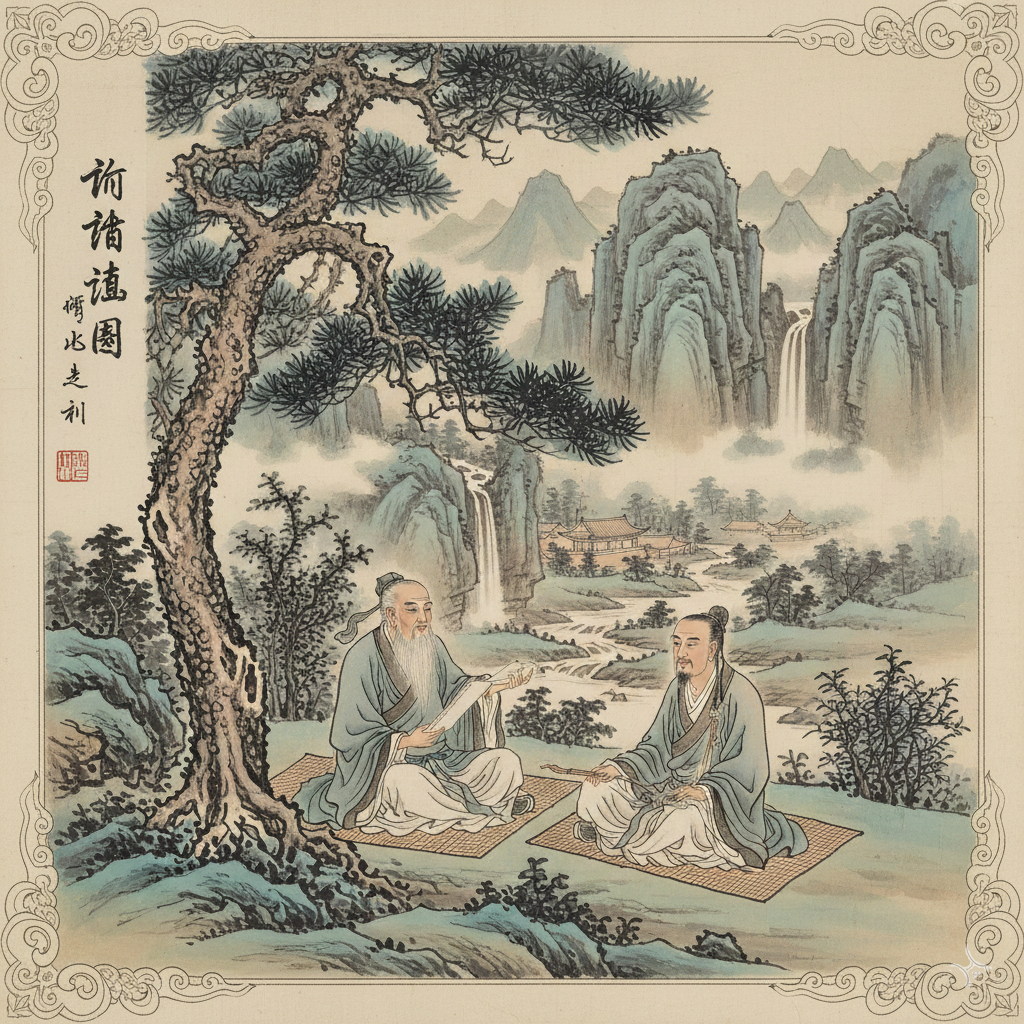
Wu Wei: The Art of Effortless Action
The most famous Taoist principle is that of Wu Wei. It is often translated as “non-action” or “non-doing.” But this translation is misleading and has been vulgarized. Wu Wei doesn’t mean sitting around doing nothing.
Research describes Wu Wei as “a state of perfect knowledge of the coexistence of the situation and perceiver, perfect efficaciousness and the realization of a perfect economy of energy.” More simply: it’s action in perfect harmony with the natural flow of things without forcing or straining. It’s flow, more than fight, a perfect analogy reflected in Chinese martial arts from Kung Fu to Tai Chi Quan. It’s that ineffable state of neutral observation and settling into the situation in a non-judgemental way. That’s the best way I can explain from my single point of view.
We can think of it like water, often referred to in Taoist essays. Water doesn’t force its way around obstacles—it flows naturally, finding the path of least resistance, and it overcomes anything, eventually. As soft as water is, it conquers solids. Over time, water shapes rock. As Chapter 78 of the Tao Te Ching says: “Nothing in the world is softer or weaker than water. Yet nothing is better at overcoming the hard and strong.”
Wu Wei is acting without struggle, achieving without forcing, accomplishing through alignment rather than through aggressive effort. It’s the difference between swimming against the current and swimming with it—you still move in either case, but one exhausts you while the other carries you forward.
Studies on Wu Wei in modern contexts show it connects to concepts like flow state, mindfulness, and non-striving. Athletes performing at their peak often describe a state where action happens effortlessly, without conscious thought interfering. That’s Wu Wei in motion.
My “wu wei” moment was when I let go of looking for my soul-partner and my wife showed up a few months after.
Zhuangzi: Freedom Through Spontaneity
While Laozi’s Tao Te Ching provides the philosophical foundation, the text attributed to Zhuangzi (Chuang Tzu) brings Taoist wisdom to life through stories, humor, and radical freedom. They are fun to read, give you a bit of that inimitable Chinese story-telling quirkiness, and are a delight to read over and over.
One of the most famous stories is the Butterfly Dream. Zhuangzi dreamed he was a butterfly, flying and fluttering about happily. When he woke, he didn’t know: Was he a man who dreamed he was a butterfly, or was he a butterfly now dreaming he was a man? How many of us have awaken from a dream truly wondering how real it was, somewhere, somehow…
This isn’t just a clever puzzle. It illustrates the fluid nature of reality and identity. The rigid boundaries we draw between things—self and other, dream and waking, right and wrong—are more arbitrary than we realize. True freedom comes from recognizing this relativity and not being trapped by fixed categories.
Another celebrated story involves Cook Ding, who could dismember an ox with such skill that his knife never dulled. He explained that he didn’t cut through bone and tissue—he found the natural spaces between them and moved through those openings. His work was effortless because he aligned with the natural structure of what he was working with.
This is Wu Wei in practice: mastery through alignment, not through force. It’s like a surfer constantly catching that perfect wave and gliding with it, not over it or taming it.
One of my favorite stories was that of Zhuangzi where he tells the story of a massive tree whose wood was so poor, and ugly that no lumberjack would cut it down. Because it was considered worthless, it survived and grew to enormous size. It shaded animals and man and brought a lot of happiness and survival for critters. The messages are many and that freedom by becoming “useless” in society’s eyes—escaping the burden of conventional expectations and attachments brings fulfillment. There’s a heaven for fools. Taoism champions “the utility of the useless.”
What Taoism Teaches Modern Life
In a world dominated by hustle culture, productivity obsession, and constant striving, Taoist wisdom offers a powerful alternative:
Work with natural rhythms, not against them. Research shows that prolonged exposure to high-stress environments harms both productivity and health. Wu Wei suggests aligning work with your natural energy patterns rather than forcing constant output.
On one of my trips to Shanghai, I visited the Shanghai Baiyun (White Cloud) Taoist Temple. According to the temple, a realized Taoist master resides there. Although after hours of staying there, I never saw the master, it was amazing to see the flow of people. It was there I understood how most Asian societies seamlessly intertwine philosophy and religion without any hang ups. The many hall had so many figurines and statues of important Taoist deities. Everyone was free to worship the one they related to and gave offerings. I gave also. It was magical. Despite the hustle and bustle that modern day Chinese cities offer, stepping inside this famous temple was an oasis of tranquility, a reminder that serenity can be found inside a busy city.

Being a Master In a Busy Society
Solutions arise when you stop forcing them. Instead of attacking problems head-on, Wu Wei encourages stepping back and allowing understanding to emerge naturally. Sometimes the best action is patient observation, something life has forced on me.
Western new age teaches us to let go and let God. This is similar. You might have a wish and push a few atoms in that direction. But you let go and let the Universe orchestrate everything. It knows better than you do.
Reminding ourselves that s softness overcomes hardness, like water shaping stone, consistent gentle pressure applied in alignment with natural principles achieves more than aggressive force. Studies of Chinese leadership show that managers who embrace Wu Wei principles often achieve better results than those who rely on rigid control.
The empty space holds possibility. Rest isn’t laziness—it’s essential. Stillness is where wisdom emerges. From there, we understand how silence isn’t awkward—it’s where clarity emerges. Simplicity isn’t lack—it’s freedom from unnecessary complication.
The Tao Te King often refers that when people are left to their own device, they are happy and do good things. Only when when the way is lost do leaders emerge embracing morality. Then thiefs show up along guns and tanks. In general, a rigid attitude limits our perceptions and certainly hinders freedom. As contemporary applications show, Wu Wei principles inform modern approaches to work-life balance, stress management, and mindfulness practices.
Taoism reminds us that the best “solutions” are non-action observing and letting the rest find its inherent place.

Connecting to The Wholistic Center Philosophy
Taoism aligns perfectly with The Wholistic Center’s core teaching: you have direct access to wisdom without intermediaries. The pathless path is the simplest and easiest paths of them all.
The Tao cannot be taught—it can only be experienced. No master can give it to you. No scripture contains it. You find it through direct perception, by aligning with the natural flow of reality rather than imposing artificial structures upon it. This connects to what we explore in the pathless path: your journey home is uniquely yours. The Tao that works for someone else may not be your Tao. Trust your inner compass.
Taoism also relates to wordless thinking. The Tao exists before and beyond language. By cultivating wordless awareness, you access it more directly than through conceptual understanding. And like Shintoism’s recognition of kami in nature, Taoism sees the sacred woven throughout the natural world. The divine isn’t separate from reality—it IS reality, when perceived clearly.
There was something formless and perfect
before the universe was born.
It is serene. Empty.
Solitary. Unchanging.
Infinite. Eternally present.
It is the mother of the universe.
For lack of a better name,
I call it the Tao.
It flows through all things,
inside and outside, and returns
to the origin of all things.
The Tao is great.
The universe is great.
Earth is great.
Man is great.
These are the four great powers.
Man follows the earth.
Earth follows the universe.
The universe follows the Tao.
The Tao follows only itself.
Practicing Taoist Wisdom Today
You don’t need to become a Taoist to benefit from Taoist principles. Whether in personal or professional life, here’s how to begin:
- Notice where you’re forcing, where you feel push back or resistance. Pay attention to areas of your life where you’re pushing hard against resistance. What would happen if you stepped back and looked for the natural flow instead?
- Find the empty spaces. Where in your schedule, your home, your mind could you create more openness? What would you gain by having less rather than more?
- Practice patience. When facing a problem, wait before acting, especially if you are like me an extrovert. Observe the situation fully. Let solutions emerge rather than forcing them.
- Move like water. When you encounter obstacles, stop, take scope, and look for ways around rather than ways through. Adapt to circumstances rather than demanding circumstances adapt to you.
- Question your categories. Notice what rigid thinking (“this is good, that’s bad,” “I must succeed,” “they are wrong”) creates. Does it bring suffering? Can you hold those judgments more lightly?
- Align with natural rhythms. Work when energy is high, rest when it’s low. Don’t try to be equally productive at all hours. Trust the cycle.

The Enduring Wisdom
Taoism emerged 2,500 years ago in a time of chaos and war. Today’s, its teachings remain profoundly relevant to our modern struggles with burnout, anxiety, and disconnection. Perhaps that’s because the Tao itself—the natural way of things—doesn’t change. Human nature doesn’t fundamentally change. What worked for finding balance and peace during the Warring States period works today, because it’s based on universal patterns rather than temporary circumstances.
The gift Taoism offers us today is a break from yet another set of rules and beliefs. It’s experiential. It’s an invitation to perceive reality more directly, to recognize the natural order that’s always been there, and to align your life with it. The more you do, the more something shifts. Effort becomes easier. Struggle diminishes. Not because problems disappear, but because you stop fighting against the current and start flowing with it.
That’s the promise and the paradox of the Tao: by doing less, you accomplish more. By forcing nothing, everything falls into place. By seeking nothing, you find what you’ve been searching for all along.
Continue Your Journey
This article is also featured on The Wholistic Center Podcast, where we explore ancient wisdom for modern living. Subscribe to hear more about practices that deepen your connection to natural flow and your inner compass.
Explore related wisdom:
- Shintoism: What Japan’s Ancient Way of the Kami Teaches Us – Another tradition honoring natural harmony
- The Wordless Thought Exercise: Thinking Without Language – Accessing wisdom beyond concepts
- The Pathless Path: Why Your Inner Compass Can’t Be Mapped – Understanding your unique journey
Visit The Wholistic Center to discover more ancient wisdom for modern challenges and our YouTube channel.