Your job isn’t to light someone else’s way. It is to tend your own inner flame, stay connected to your own compass, and stay in your own lane. Trust that everyone has the same direct access to divine guidance that you do. That’s wholistic healing: honoring the divine intelligence within yourself and within everyone else, even when—especially when—it leads empowerment in directions you wouldn’t choose. Nicolas Zart
When we see someone suffering, our natural impulse is to wish them well. We send positive thoughts, visualizations of what we feel is their highest best, and the purest intentions for their healing. We imagine specific body parts mending, psychological wounds closing, and pain dissolving in the way we would want them to be solved, but not necessarily in the way their soul might want to experience it.
We direct our energy toward the outcome we feel is for the highest benefit for the people we care for. However, it might not necessarily be what they need or have chosen to experience. What we wish for them is what we see it, not necessarily what they need.
No matter how well-grounded our wishes are, that’s not healing for the highest good. That’s wishful healing at best; at worst, it’s making yourself feel good and taking on the responsibility for someone else. We can easily end up taking on another person’s karmic debt by depriving them of an experience their soul needed to have, regardless of how we view good or bad. In any case, we can’t see the entirety of the Universe and rarely can see what a soul has wished to experience. We must be careful what we wish for, whether for ourselves or others.

The Problem with “Helping”
The problem with visualizing specific outcomes for others is that we’re imposing our vision onto another’s journey. No matter how well founded it is, it is still our vision. It is OK to engage in healthy conversation, but we cannot impose on others what we feel is right, or wrong.
What it boils down is that I don’t know what’s best for you. And neither do you for me. Our souls know. And unless we are 100% synced soul-to-soul, our finite human minds can’t grasp the soul’s innate needs. My human mind barely knows what’s best for me. Through direct access to my inner guidance can I possibly know my soul’s curriculum, karma, purpose, and lessons needed. And unless we were intimately linked, soul-to-soul, our linear minds, steeped in dualistic thoughts can’t grasp the ultimate highest goods. Our souls can.
From a personal point of view, had anyone removed the business frustrations I’ve felt over the past two decades, they would have robbed me of my deep inner connection today. Had I continued to live my life the way I did in my twenties, when everything came effortlessly without gratitude, I wouldn’t be where I am today. These problems I encountered became the very curriculum of what my soul needed. And once centered in Source, what I thought were solutions don’t always feel like the highest good for me. In fact, it everything became relative. And the same goes for healing and manifestations, especially those we wish on others.
This is where healers, energy workers, and spiritually-inclined helpers must tread carefully. It’s surprisingly easy to accumulate karmic debt focusing on specific outcomes—even positive ones. Your good heart doesn’t protect you from the consequences of interfering with another soul’s journey.
It is far more rewarding for everyone to empower people and situations.

What True Healing Looks Like
We can think of it like atoms: electrons are negatively charged, circulating positive protons, bound together by neutral neutrons. The electrons are what we see and may not like. Although we may not like them, they serve a purpose. While it’s normal to turn our attention to the positive protons, the neutral neutrons are what bind it all together. This is where the healer’s clue is: neutral energy. Those are polarizing sides of the poles. Neutral energy serves any purpose, good or bad.
The most powerful form of healing is offering all the neutral energy needed for that person to use as their soul determines is best for their highest good. And here’s the distinction: You’re not healing their shoulder pain, their depression, or their relationship struggles. You’re providing energy for their soul to do as it wishes, not as you do. That is true empowerment for both. The other way is to impose your will, your understanding, and sometimes just to make you feel good without knowing what is best for the other.
The hardest part6 is that if someone’s highest good involves what looks like a destructive path, you must allow that to happen. You don’t need to agree. You can warn them and can pray for the highest and best resolutions. But you cannot force what you feel is right. You don’t know ultimately what is needed.
The Boundary Between Support and Control
Let’s be clear: no one should enable harmful behavior or accompany someone down a destructive road. You can say you won’t go down that route or facilitate harmful behavior. You can refuse to participate in someone’s self-destruction without insisting they take the path you think they should take. If you disagree with someone’s path, you can walk away.
This is what it means to live a wholistic life, to observe everything neutrally and send energy for the highest purpose of the Universe. By acting like this, sending them all the neutral energy to do whatever their soul has determined, honors their sovereignty while maintaining your own. That’s a tough position to adopt, but a wholistic one in the long run.

The Hard Truth About Sovereignty
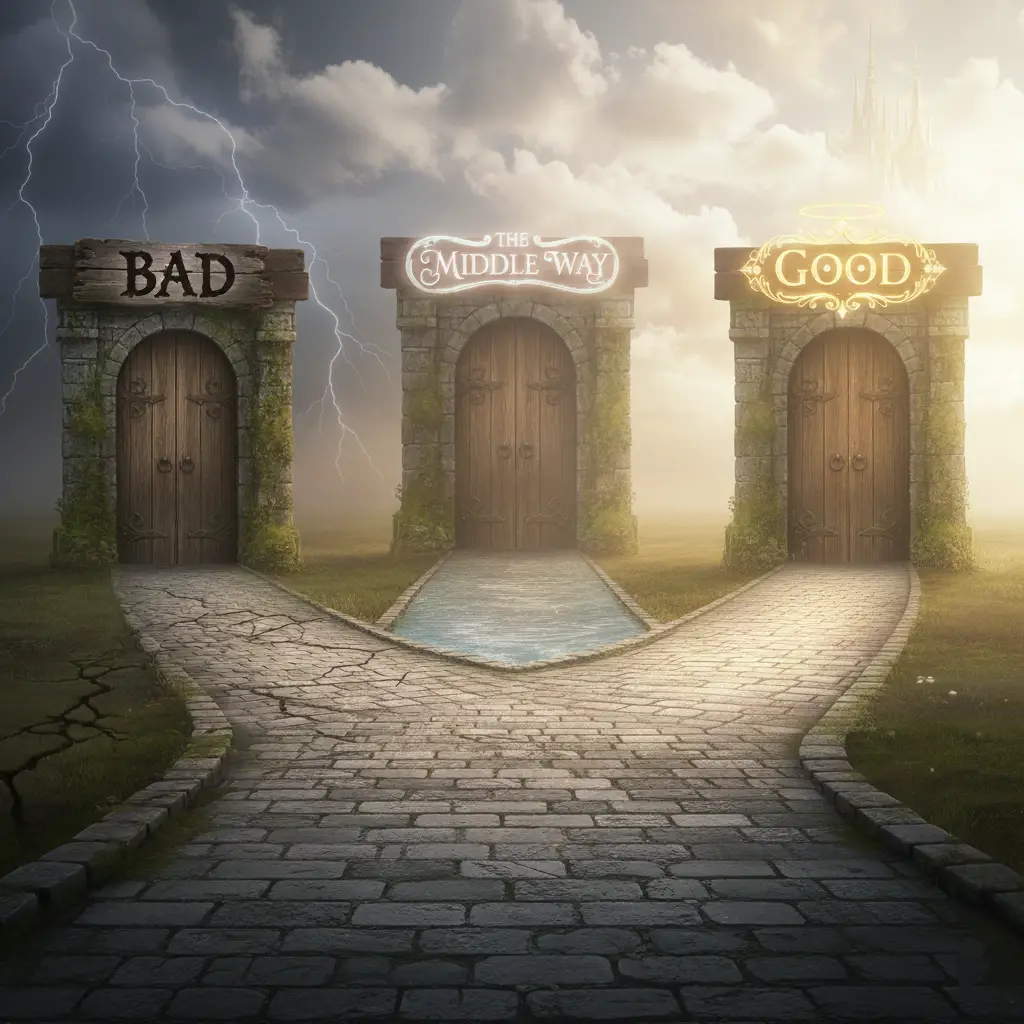
This is one of the fundamental teachings of The Wholistic Center, to follow the pathless path. Keep your eyes open. Strike that observation stance in all situations. Raises yourself above the pendulum shift to the fulcrum away from the sweep. Honor individual sovereignty, yours, the situation, and theirs. Listen to your gut hunch. If it’s not clear, step back. If it’s right, you will always have another chance to act accordingly.
When it comes to healings, we need to empower people, not decide for them—no matter how well-founded our hearts are. Trust that each person has their own connection to Source, their own inner compass, and their own journey. We can only help them attune to it, but not decide for them or wish for anything but to help them reconnect to their essence.
The Practice of Allowing
Don’t confuse a wholistic path with passive indifference. It’s active trust in the intelligence of each soul’s journey. When you send healing energy for someone’s “highest good” rather than for the specific outcome you desire, you’re practicing profound respect, empowerment, and honoring a soul’s journey. You’re acknowledging that this person has their own direct connection to Source and their soul knows its curriculum better than you do. You’re also acknowledging that our limited perspective cannot encompass their full journey. That our true healing serves their evolution, not our personal comfort, and that sometimes, what looks like suffering is actually a sacred transformation. Mostly, you’re getting out of the way so that divine intelligence can work through the situation in whatever way serves all involved. And that applies in any parts of your life, personal, sacred, and business.

Applying This to Your Life
Whether you’re a professional healer, energy worker, or simply someone who loves people and wants to help, dealing with co-workers, friends, and neighbors, this understanding transforms your approach:
In healing work: Offer energy, not directions. Support growth, not specific outcomes. Hold space without imposing vision.
In manifestation practice: Connect to Source, not to acquiring things. Center yourself, not in grasping. Allow rather than force.
In relationships: Love people where they are, not where you think they should be. Respect their journey even when it diverges from yours.
In spiritual practice: Honor direct experience of the divine in yourself and others. Release the need to “fix” or “save” anyone.
At work: Take your time to step back and see the bigger picture. This might be happening for your highest good, even if it doesn’t feel like that. Release the need to act quickly. As prized as it is in our societies, it also leads us to rash decision-making and having to deal with consequences later.
The Invitation
True healing honors sovereignty. It empowers rather than directs. It offers energy without strings attached, trusting that each soul knows exactly what it needs.
This is the path of the conscious healer—one who understands that the greatest gift we can offer is unconditional love and energy, with complete trust in the wisdom of each soul’s journey.
Related reading: The Pathless Path: Why Your Inner Compass Can’t Be Mapped – Explore how this understanding begins with your own connection to Source.
Continue Your Journey: Discover more about wholistic living, sovereignty, and conscious healing at The Wholistic Center