

The Man Who Walked Past the Beggars
There is a story I have carried with me for a long time. How do you go through life and not lose your sensitivity, or as Eastern philosophers say, your sense of compassion and empathy?
A Westerner travels to India and meets a celebrated figure — a man widely respected for his charitable work, beloved by millions, known for his deep dedication to relieving suffering. Walking together through the streets, the Westerner is confronted for the first time by the full intensity of poverty in a major Indian city: the sounds, the smells, the sheer density of human need. And the beggars. Hands reaching from every direction, eyes holding impossible weight.
What shocks the Westerner almost as much as the suffering itself is the Indian philanthropist’s response to it. He walks past. Not obliviously — he sees every hand, every face. He simply keeps walking.
The Westerner finally asks: how can you do that? Do you not see them?
The answer is one I have never forgotten. Of course I see them, the philanthropist says. Painfully so, every single day. But what is there to do? Stop and help every hand that reaches out? You would be poor just like them soon enough. You cannot help everyone. You can only help those you can help. And in the meantime, you must shield yourself from this suffering — not because it doesn’t matter, but because collapsing under its weight helps no one.

The deeper message cuts in two directions at once. The first is the one most sensitive people already understand: do not lose yourself in the suffering of others. Dissolving your own center helps no one. But the second edge is sharper and less comfortable: do not congratulate yourself for helping one or two people and calling it done. The ego finds great satisfaction in the visible act of charity — the coin in the outstretched hand, the moment of connection on the street. True to the wholistic philosophy we explore here, the more demanding practice is to go to the source. First principles thinking asks not who is visibly suffering in front of me right now, but what are the root conditions that produce this suffering, and where can my particular energy address those roots most effectively? That is a harder question. It is also the more compassionate one.
If you are a highly sensitive person, this story will either resonate deeply or disturb you. Possibly both at once. In either case, wisdom comes to those who are ready and I know I am like you, very much ready.
You Are Not Broken. You Are Wired Differently.
Before we go any further, something needs to be said clearly: if you feel things more intensely than others seem to, if the news leaves you genuinely depleted, if other people’s pain lands in your body as if it were your own — you are not weak. You are not dramatic. You are not imagining it.
You are, in the clinical language, a Highly Sensitive Person — or HSP. Yay, another acronym! And on behalf of the group, welcome to the group. It’s not easy to be HSP.
The term was first developed by psychologist Elaine Aron in 1997 to describe a trait found in roughly 20 to 30 percent of the population, characterized by deeper cognitive processing of stimuli, heightened emotional reactivity, greater awareness of environmental subtleties, and strong aesthetic sensitivity. Research published in 2025 in Frontiers in Psychology confirms that higher levels of sensory processing sensitivity are frequently associated with more negative mental health outcomes, including ease of excitation in response to the environment and heightened empathy, potentially leading to compassion fatigue.

This is not a flaw in the design. HSPs have incredible empathy and strong emotional reactions. They often feel exhausted after being around strong emotions — or pain or suffering — in others. HSPs can actually absorb others’ emotions as their own. While this is a wonderfully empathic quality, it can be dangerous from a mental health standpoint.
The gift and the burden are inseparable. The same depth of processing that makes you a more attentive friend, a more perceptive journalist, a more intuitive healer — is the same depth that makes a devastating news cycle feel like a personal assault. This is called the life challenge you have to figure out.
What the Research Tells Us About Empathic Overload
Perhaps this is a good time to differentiate empathy from compassion.
While empathy and compassion are often used interchangeably in everyday discourse, a meaningful distinction between the two has significant implications for personal development. Empathy, broadly defined, is the capacity to feel with another — to internalize the emotional state of another person as if it were one’s own. Compassion, by contrast, moves beyond feeling with to acting for: It is the motivational orientation that transforms emotional resonance into purposeful care and action. Researchers such as Tania Singer and Matthieu Ricard have noted that sustained empathy, without the boundary of compassion, can lead to emotional exhaustion or “empathic distress,” whereas compassion tends to generate resilience and a sense of meaning. For those committed to personal growth, this distinction is not merely semantic — it invites a deliberate cultivation of compassion as a more sustainable and generative practice than empathy alone, one that preserves emotional attunement while grounding it in agency and intentionality.
Scientists have recently proposed renaming compassion fatigue entirely to “empathic distress fatigue” since it may be based on high levels of empathy more than anything else. That distinction matters. Compassion — the wish for others to be free from suffering — is actually sustainable. It is empathy in the form of emotional merger, absorbing another’s pain as your own, that depletes.

The research on HSPs and burnout is increasingly precise. While sensory processing sensitivity was positively associated with burnout, anxiety, depression, stress, and health complaints, significant differences emerged between HSPs and non-HSPs when their environments were accounted for. HSPs in favorable environments, with more social support and fewer negative life events, reported greater life satisfaction and fewer negative outcomes.
Environment matters enormously for HSPs — more than for the general population. The same nervous system that is damaged by chronic stress and relentless bad news is also, in the right conditions, capable of flourishing more fully than average. You are not simply more fragile. You are more responsive — in both directions.
Sensory processing sensitivity shows statistically significant positive relationships with worries, rumination, social anxiety, depression, and perfectionism, and negative relationships with self-esteem, quality of life, and some social skills. But newer research is equally clear that HSPs who develop strong emotion regulation strategies report stronger well-being and greater life satisfaction than their less-sensitive peers. The sensitivity itself is not the problem. The question is what we do with it.
Ancient Wisdom Already Knew This
Long before we had clinical language for any of this, the contemplative traditions were working on exactly this problem: how to remain open-hearted in a world that can endlessly drain you.

The Zen tradition offers the story of the sage whose golden begging bowl is stolen by a thief. Rather than resisting, the sage offers everything freely. The thief, overwhelmed by the sage’s non-attachment, returns: your freedom from grasping shames me — teach me what you know. The lesson is not indifference. It is that true compassion flows most naturally from inner freedom, not from reactive, obligatory giving. When we give from depletion, we give poorly. When we give from fullness, we give without diminishment.
The Buddha, in one telling, passes a beggar without stopping. A disciple asks: why no help? The Buddha’s response points to the difference between scattered almsgiving and the kind of deep, consistent teaching that transforms the root of suffering. Universal compassion, he suggests, is not the same as trying to answer every immediate call. It requires a considered choice about where one’s energy goes.
Mother Teresa, whose entire life was oriented toward the poorest of the poor, nonetheless had clear limits. She focused her energy on specific people in specific places — the dying in Calcutta’s homes, not every beggar on every street. Critics sometimes called this selective. Her own understanding was strategic: systemic, sustainable care serves more people than exhausted, scattered care.
The Zen master Ryokan, finding a thief in his empty hut, offers his blanket. The thief flees, ashamed. Later, arrested, Ryokan testifies on his behalf. The thief repents and becomes a student. Fearless compassion — compassion that does not flinch, that does not deplete itself through fear — has a power that cautious, self-protective giving does not.
The thread running through all of these stories is the same: the capacity to help is itself a resource that must be tended. Protecting it is not selfishness. It is stewardship.
The Science of Sustainable Compassion
While empathy and compassion are often used interchangeably in everyday discourse, a meaningful distinction between the two has significant implications for personal development. Empathy, broadly defined, is the capacity to feel with another — to internalize the emotional state of another person as if it were one’s own. Compassion, by contrast, moves beyond feeling with to acting for: it is the motivational orientation that transforms emotional resonance into purposeful care and action. Researchers such as Tania Singer and Matthieu Ricard have noted that sustained empathy, without the boundary of compassion, can lead to emotional exhaustion or “empathic distress,” whereas compassion tends to generate resilience and a sense of meaning. For those committed to personal growth, this distinction is not merely semantic — it invites a deliberate cultivation of compassion as a more sustainable and generative practice than empathy alone, one that preserves emotional attunement while grounding it in agency and intentionality.
The Buddhist tradition distinguishes between empathy — feeling what others feel — and compassion, which is the wish for others to be free from suffering without necessarily merging with that suffering. This distinction turns out to be clinically important.
Research on loving-kindness meditation, known in Pali as metta, has found it to be one of the most reliable tools for sustaining the capacity to care over time. According to a study from 2023 on compassion fatigue in nurses working in neonatal intensive care units, practicing loving-kindness meditation daily can reduce compassion fatigue after just one month.
A broader meta-analysis confirmed that loving-kindness interventions had positive effects on mindfulness, compassion, positive affect, negative affect, and psychological symptoms relative to passive control groups, and showed potential comparability to alternative evidence-based therapeutic treatments.
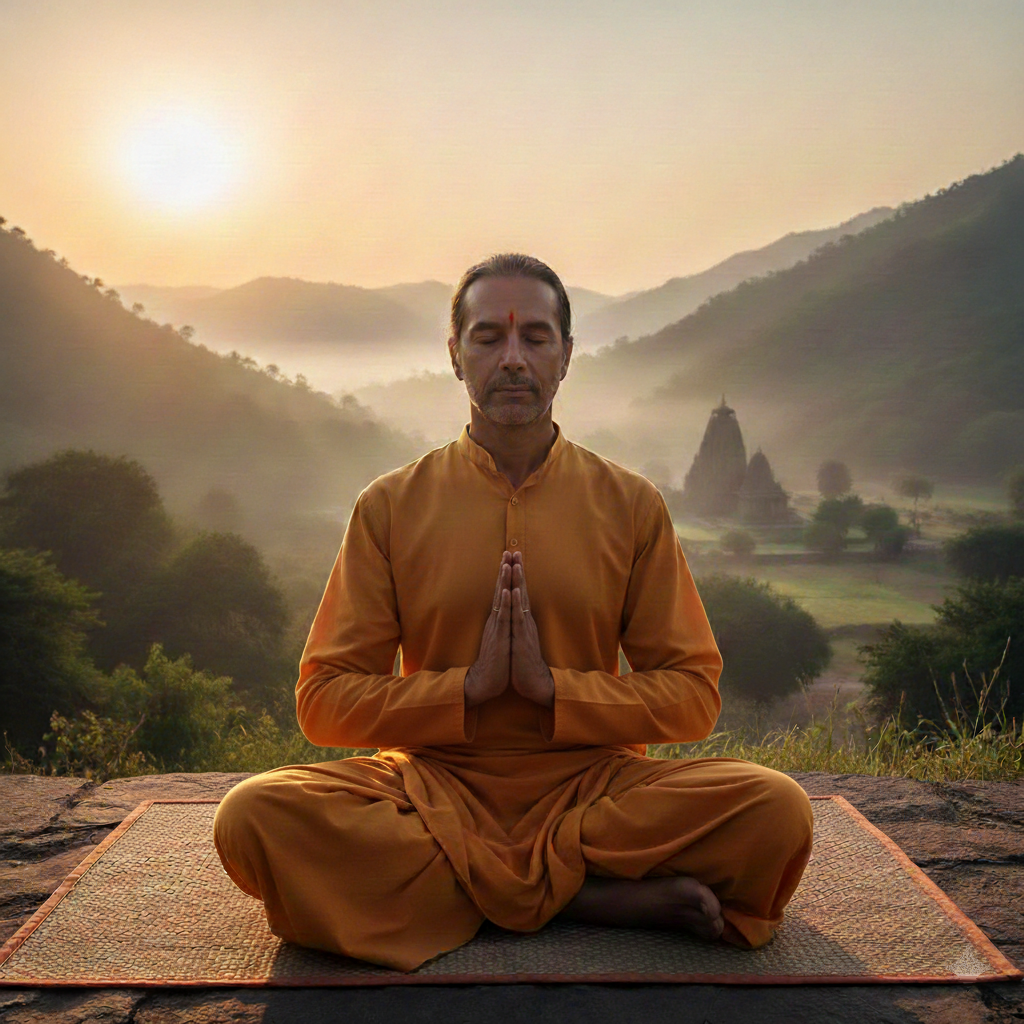
What makes metta different from simply trying to feel better? It works by deliberately cultivating warmth — first toward oneself, then outward in expanding circles to loved ones, neutral strangers, and eventually to all beings — without requiring the practitioner to absorb suffering. You are not pretending the pain does not exist. You are relating to it differently. Loving-kindness meditation led to improvements in positive emotions, which led to improvements in social connectedness, which led to improvements in vagal tone — suggesting that compassion-based practice does not merely shift mood, but reshapes the very physiological substrate through which we engage with others and the world.
Nature connection offers another evidence-based pathway. Highly sensitive people are more connected with nature, and nature connectedness plays a significant role in well-being, particularly as a moderating factor in the relationship between environmental sensitivity and mental health. Time in natural environments is not a luxury for HSPs. The research suggests it functions more like medicine.
For highly sensitive people specifically, this matters enormously. The HSP nervous system is not defective — it is highly tuned. Metta does not dull that tuning. It gives the nervous system a way to remain open without being overwhelmed.
Reasoned Compassion: The Framework
The Effective Altruism movement has contributed something useful to this conversation, even if its language is sometimes clinical for a wholistic context. The core insight is this: when empathy is scattered across every visible suffering it encounters, it is actually less effective than empathy that is directed, focused, and sustained. GiveWell, which conducts rigorous research on charitable impact, has directed over two billion dollars to top charities through careful prioritization. The Against Malaria Foundation has protected over a hundred million people. GiveDirectly has delivered eight hundred million dollars in direct cash to 1.6 million people across twelve countries.
The point is not that only quantifiable impact matters. The point is that the impulse to help everyone, right now, indiscriminately — the impulse that drives HSPs to exhaustion — is not actually the most helpful impulse. Reasoned compassion asks: where can my particular energy, attention, and capacity do the most sustained good? And it answers that question honestly, without guilt about the infinite remainder.
This is what the Indian philanthropist understood walking through those streets. This is what Mother Teresa understood in Calcutta. This is what the Buddhist tradition means when it distinguishes between wisdom and mere sentiment.
A Practical Path for the Highly Sensitive
The research and the ancient traditions converge on a set of practices that are specific enough to actually use.

Name your three. Choose three causes, communities, or people that align with your deepest values and genuine capacity. Give to those with full presence. For everything else — practice witnessing without merging. You can see suffering without absorbing it. You can hold awareness of it without making it yours to fix.
Protect your media diet deliberately. Make a habit of noticing how you feel when watching the news or scrolling through social media. If you start to feel anxious, overwhelmed, or unable to function, that is the signal that you have consumed too much. Being informed does not require being continuously flooded. For HSPs, curated, time-limited news consumption is not avoidance. It is self-management.
Practice metta daily — briefly. Five minutes in the morning, before the day’s demands arrive. Begin with yourself: May I be well. May I be at peace. May I be free from suffering. Extend outward from there. This is not spiritual bypassing. It is nervous system maintenance.
Spend time in nature. Not as a break from real life, but as a genuine practice. The research is clear that for highly sensitive people, connection with natural environments has measurable, meaningful effects on well-being. Water, trees, open sky — whatever is available to you.
Separate feeling from fixing. You are allowed to feel the weight of the world without being required to carry it. Feeling and fixing are not the same response. The contemplative traditions are unanimous on this: the capacity to witness suffering clearly, without flinching and without merging, is itself a form of compassion. It is, in fact, the prerequisite for the kind of help that actually helps.
Watch for inappropriate guilt. HSPs experiencing compassion fatigue may have feelings of resentment toward those they care for — and then guilt at having those feelings. Recognizing that these are signs of depletion, not moral failure, is the first step toward recovery.
The Wholistic View
What strikes me most about all of this — the ancient stories, the clinical research, the practical frameworks — is how consistently they point in the same direction.
You cannot give what you do not have. You cannot sustain open-heartedness if you have allowed the heart to be emptied by demands it was never designed to meet alone. The wholistic path is not about feeling less. It is about feeling fully, wisely, sustainably — from a place of enough rather than a place of perpetual debt.
The Indian philanthropist walking those streets every day, year after year, doing the work he could do without being destroyed by the work he could not — that is not indifference. That is thirty years of practice.
That is what we are working toward.

The Wholistic Center explores ancient wisdom traditions, modern healing practices, and the wholistic path toward a more integrated life. If this article resonated with you, explore our series on Hermetic philosophy, Taoism, and the contemplative traditions that have long known what we are only now measuring.