
A FEARLESS EXPLORER WHO CHANGED HOW WE SEE TIBET
Alexandra David-Néel lived from 1868 to 1969, a full century of extraordinary adventure and spiritual discovery. She accomplished something no Western woman had done before: in 1924, disguised as a Tibetan pilgrim, she entered Lhasa, Tibet’s forbidden holy city. At age 55, she crossed frozen mountain passes and treacherous deserts, enduring hardships that would have broken most people.

Her goal was simple but profound. She wanted to learn Tibetan culture and religious philosophy firsthand, to walk into the heart of the forbidden land and understand it from the inside.
What she discovered there, and what she shared in over 30 books, offers timeless wisdom for anyone seeking answers in life today.
Alexandra David-Néel rocked my world in the 1980s when I first discovered her books. She was not just a creative writer with vivid descriptions of adventure. She gave us something precious and irreplaceable: a glimpse of Tibet before the Chinese “occupation “liberation” changed everything forever. Her extraordinary resolution to prove a woman could do so many things not allowed for women, meant she became the first modern woman to walk to Lhassa and become a Tibetan Lama. Her story is extraordinary, historical, and awe-inspiring.
Ultimately, she introduced me to ancient Tibetan practices that woke up something deep within me, faint memories that felt like coming home. Her writings opened a door to a world that no longer exists, practices and teachings that are rapidly fading as the few remaining teachers with direct ties to old Tibet pass away.
Tibetan Buddhism: a Unique Blend
Tibetan Buddhism might seem like an oxymoron to purists. Classical Buddhism emphasizes no-self, emptiness, and the elimination of attachment. Tibetan Buddhism incorporates ancient and traditional local rituals, magic, deities, and beliefs in states before awareness itself. Both seem opposite and only an ancient Asian culture could marry such extremes. Welcome to Tibetan Buddhism.
This rich Himalayan tradition draws from multiple sources according to scholars, some highly debated to this day. Indian Buddhism forms the foundation. Taoism contributes concepts of natural flow and balance. Chinese Chan Buddhism adds direct insight beyond scriptures. The indigenous Tibetan Bon tradition brings shamanic elements and nature reverence, as we saw in our previous Tibetan Buddhism articles above-linked.
These influences create a spiritual path unlike any other, combining rigorous philosophy with ecstatic ritual, strict monastic discipline with wild mystical practice, intellectual debate with direct experiential knowledge. And this, David-Néel reflects in her books at a time and age when Tibet was closed off to the world and left pristine in its ways.

David-Néel documented it all without judgment or romanticization. She kept a rational mind, almost scientific in its foundation, which is particularly amazing considering women were shunned form academia, preferring them to knit and sing. Despite not being strictly educated as a scientist, but an east philosophy scholar, she approached this wild world with a scientific mind, tackling thorny concepts most would have shied away from investigating. She reported what she saw, experienced, and learned. Her accounts stand as invaluable sources from a time when Tibet remained relatively untouched by the modern world.
That Tibet is gone now. What remains are scattered communities in exile and a handful of elderly teachers who carry the old ways in their bones. Their knowledge, tested and refined over centuries, faces extinction. These teachers are fast fading. We can only wonder if the newer Tibetan generations will carry that unique torch? Will China recognize this unique cultural tradition it has influenced and has been influenced with? It sounds like it could be happening, hopefully, just in time before its disappearance.
The Power of Doubt as a Spiritual Tool
Healthy skepticism will keep you on track and avoid lingering with wanna be self-styled gurus. And David-Néel’s core lesson from Tibetan masters is not so surprising: Doubt. Even the current Dalai Lam reflect this in his talks and teaching. He is often quoted saying don’t just listen to me. Go and find out for yourself. And if it fits, come back and talk to us. It should be that simple.
Healthy skepticism is one of the tenants of being a great scientist. The other is to be open minded enough to research anything without prejudice. Alexandre David-Néel fits that bill perfectly.
In her book The Secret Oral Teachings in Tibetan Buddhist Sects, she shares advice from a Tibetan master: “Doubt!” This is not cynical skepticism or paralyzing uncertainty. It is active inquiry, intelligent questioning, fearless investigation. The teaching is this: Question what you accept as real. Empty your mind of assumptions and inherited beliefs. Test reality yourself through direct experience. From thereon, you can march forward having rid yourself of preconceived notions.
This wisdom fits our modern world perfectly more than ever these days of divisive entertainment news and geopolitical intrigues. We face a barrage of constant stress, misinformation disguised as truth, and self-doubt that undermines our confidence. David-Néel’s approach reminds us to apply genuine resilience.
As always, start small. Find your inner stillness, even in the middle of a crowd. It might not be easy at first, but you can find how to do this effortlessly eventually. Become aware of yourself without judgement. Just observe. After that, notice thoughts as they arise. Ask yourself: Is this actually true, or am I assuming? Am I reacting to reality or to my interpretation of reality?
Research from the American Psychological Association confirms that mindfulness practices, including inquiry-based meditation, reduce anxiety and improve emotional regulation. This is especially important when facing decision, especially so for important business ones. Studies show that questioning automatic thoughts and observing mental patterns without judgment strengthens psychological wellbeing. Plus, this develops self-awareness that eventually leads to self-mastery.
Tibetan lamas used doubt as a tool for enlightenment. They questioned everything: Is good really good? Is evil truly evil? What lies beyond these concepts? They went deeper than conventional morality to discover direct truth. David-Néel saw this practice among hermits meditating in mountain caves and monks debating in monastery courtyards. The method remains powerful for modern life.

Facing a career change? Doubt your assumptions about what success means. Relationship troubles? Question the stories you tell yourself about what you deserve or what’s possible. Ethical dilemma? Examine where your beliefs about right and wrong actually come from.
Doubt leads to clarity. Not the false clarity of certainty, but the real clarity that comes from seeing things as they are.
Searching and Prying Beyond The Appearances
Another revolutionary Tibetan teaching David-Néel encountered and offers us is the concept of going beyond. The instruction: Stop at no goal, not even spiritual attainment. There’s always something more to find. But, be careful to fall into its opposite of wanting to turn every stone you find and eventually exhaust yourself. And if you do, as previously mentioned, you will exhaust yourself and find that sweet relief that comes with surrendering to your inner self! Both roads lead ton the same path, eventually.
Virtue is valuable, but cling to being virtuous and you trap yourself. Taoism remind us that laws eventually push some to break them from the constraint instead of being and feeling free, to naturally work with the communal human experience. Nirvana and daily life are not separate. Enlightenment and delusion are two sides of the same coin. There is no final destination, no ultimate state to achieve and then rest.
Tao Te Ching 58
If a country is governed with tolerance,
the people are comfortable and honest.
If a country is governed with repression,
the people are depressed and crafty.
When the will to power is in charge,
the higher the ideals, the lower the results.
Try to make people happy,
and you lay the groundwork for misery.
Try to make people moral,
and you lay the groundwork for vice.
Thus the Master is content
to serve as an example
and not to impose her will.
She is pointed, but doesn’t pierce.
Straightforward, but supple.
Radiant, but easy on the eyes.
Keep moving. Keep inquiring. Keep letting go. Find your way, eventually.
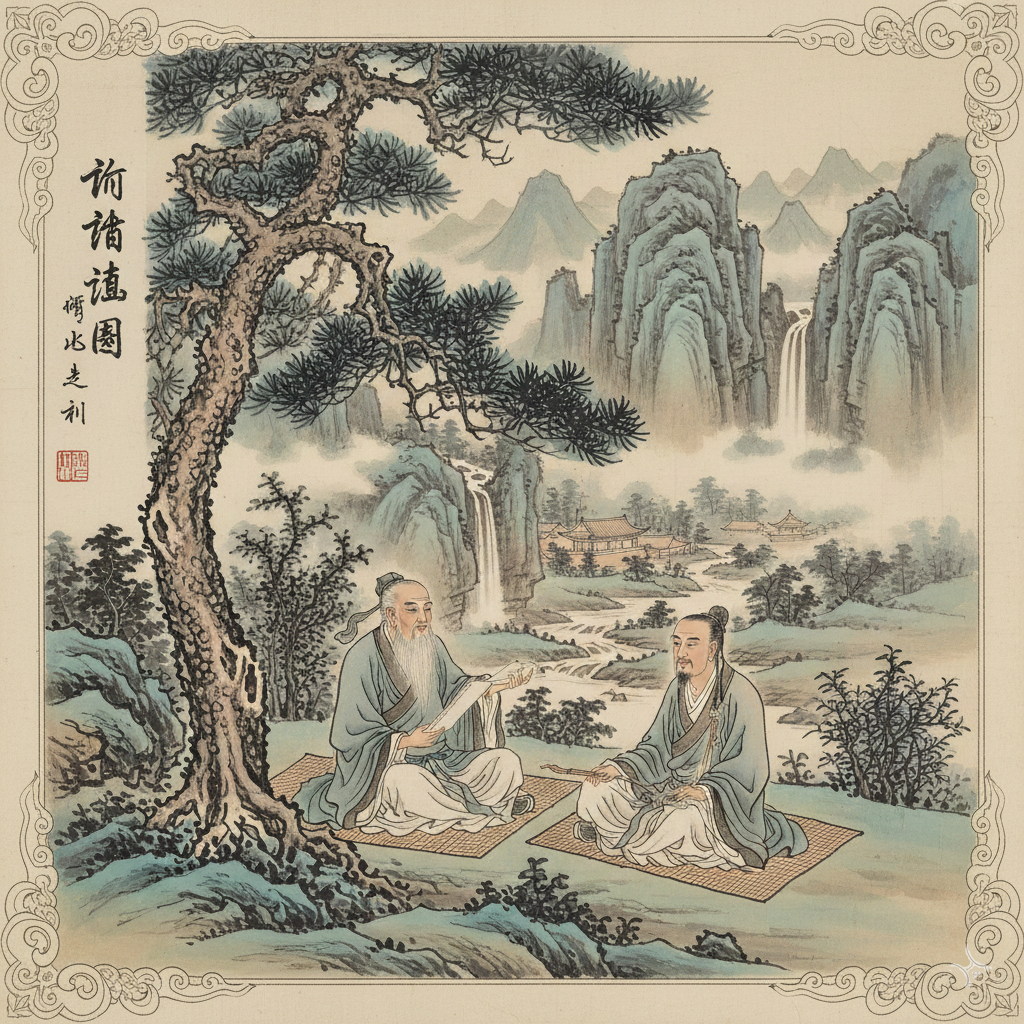
David-Néel learned this from masters like the Gomchen of Lachen, a hermit who practiced in isolation for years. He taught that the moment you think you have arrived, you have stopped walking the path. The moment you grasp at any achievement, even spiritual realization, you have lost it.So, keep moving. keep inquiring. keep letting go. Find your way, eventually
This teaching runs counter to how pure Buddhism is often presented, with its structured path of stages and attainments. Tibetan approaches blend Chan flexibility and Taoist flow. Deities become tools for the mind rather than beings to worship. Practice becomes exploration rather than accumulation.
For modern life seekers, this means freedom from potential trap. Stuck in anger? Go beyond the anger and beyond the need to not be angry. Observe your reactions. It’ doesn’t matter if you act on them. Simple observe at first. Addicted to approval? Transcend both the craving for validation and the spiritual pride of not needing it.
The extremely successful and well-known research from the Harvard Study of Adult Development, the longest study on happiness spanning over 80 years, shows that psychological flexibility and strong relationships predict happiness better than wealth, achievement, or any fixed state. People who adapt, who move with life’s changes, who do not cling to any particular identity or accomplishment, experience greater wellbeing throughout their lives. This correlates perfectly with ancient wisdom regardless of where on this planet. Renounce clinging to and go with the flow. Well, it’;s a bit more subtle than that, but that’s what we’re here for after all.
David-Néel’s own travels proved this teaching. She faced bandits, blizzards, starvation, obstacles along her way, and political danger. Her survival did not come from having a plan that worked. It came from her ability to adapt moment by moment, to let go of what was not working and try something new, to move beyond each obstacle without carrying the weight of past failures. As my hermetic friends used to tell me earlier, want, see, feel, push a few atoms in that direction, and let go. Don’t demand and don’t keep on asking for you showing despair instead of trust, faith, flow, and surrender.
Buddhist Compassion Rooted in Reality?
Tibetan Buddhism teaches various methods tummo, being one David-Néel introduced to the west. The particularly sacred practice generates inner heat through meditation. David-Néel mastered this practice herself. She witnessed, as others have as well, monks drying wet sheets on their bodies in freezing snow through the power of focused meditation.
These demonstrations truly and irrefutably show mind over matter practiced over centuries. However, the gift of these practices is not to develop superhuman abilities, but a deep understanding that comes from direct experience. In other words, the boundaries we perceive between self and other, between mind and matter, between possible and impossible, are far more flexible than we imagine. And then, there’s more to discover beyond that.
Once this understanding happen, compassion and empathy follows, ideally. Once experiencing the seaming divisions between you and others, it returns to being conceptual rather than absolute, you begin to feel others’ suffering as intimately connected to your own. Compassion becomes not a moral duty but a normal and spontaneous response.
Hints of Taoist philosophy can be discerned: harmony with nature rather than force, cooperation with reality rather than domination. Chan Buddhism adds direct insight that bypasses intellectual understanding. Shintoism also reflects this furthering the unity of these ancient world-wide wisdom systems.David-Néel noted these blends throughout Tibetan practice, making the teachings remarkably practical despite their mystical elements.
This teaches us that instead of immediate judgment and reaction, step back, find your center again, ask yourself what do you want to do with this, and investigate. Look for the common humanity. Feel the underlying unity beneath surface differences.
The Greater Good Science Center at UC Berkeley, which studies the science of compassion and wellbeing, confirms through research that compassion training boosts psychological health, strengthens relationships, and even improves physical health markers. Their studies show that compassion is not just a nice idea but a practice with measurable benefits.

Being Authentic and Not to Copy Others
David-Néel warned strongly against romanticizing Tibet. Western seekers in her time, as in ours, wanted exotic magic and easy enlightenment. She refused to feed those fantasies. She reported facts. Yes, some Tibetan masters demonstrated abilities that seemed magical. And there were plenty of scammers too. Of the more qualified ones, these abilities came from decades of rigorous discipline, not weekend workshops or secret techniques. Tibetan culture values oral teachings passed directly from master to qualified disciple. Masters test students for years before revealing deeper practices. There are no shortcuts. The path requires personal commitment, sustained effort over a lifetime, and honest self-examination.
Putting Teaching into Practice
Besides what we wrote about above, finding stillness and calming your spirits, have a healthy dose of skepticism when confronted with something new and reviewing old premises. It doesn’t mean to say, but approach it neutrally and check in on your premises. What do you hold as true? Try to notice when you find yourself in distress, his week,. Stop and ask: What am I believing right now that might not be true? What assumption am I making? What if I question this?
Practice going beyond. Pick something you cling to: an identity, an achievement, a way you think you should be. Get very neutral about it. Don’t judge it. Notice if there is clinging and eventually what and why. Then consciously let go, just for a moment. See what happens. Do not make this into a new accomplishment to cling to. Just practice releasing.
This practices doesn’t require any special beliefs, religious, or commitment to Tibetan Buddhism. They are simply effective methods for reducing suffering and increasing clarity, tested over centuries by countless practitioners. Like the Dalai Lama says, Tibetan Buddhism is a science of the mind, not religion or philosophy.
Many of Alexandra David-Néel’s works are available free through the Internet Archive. Start with Magic and Mystery in Tibet for vivid accounts of practices she witnessed, following it with My Journey to Lhasa for her remarkable story of entering the forbidden city.
Modern Tibetan Buddhist teachers continue these traditions, though often adapted for Western students. They are becoming few and far between. Research what is available in your area or online. Look for authentic teachers who emphasize practice and personal verification over quick results and exotic promises.
The practices she documented are not museum pieces. They are living methods still capable of transforming lives, still relevant to modern struggles, still offering genuine paths to peace and understanding.
In a world that often feels overwhelming, where certainty is demanded but truth seems elusive, where connection is craved but division deepens, these teachings offer something genuine: practices that work, methods that transform, wisdom that endures.
Doubt your limitations. Go beyond your boundaries. Cultivate compassion for all beings, starting with yourself.
The path Alexandra David-Néel walked remains open. The teachings she preserved remain alive. The transformation she experienced remains possible.
All that is required is your willingness to begin.

RESEARCH CITATIONS AND EXTERNAL LINKS:
Britannica on Tibetan Buddhism
Alexandra David-Néel Works on Internet Archive
American Psychological Association on Mindfulness
Greater Good Science Center (Compassion Research)
Harvard Study of Adult Development