These articles are part of the build your own spiritual cocktail series. We present these ancient wisdom for you to pick and chose what fits, disregarding what doesn’t. And as with any good cocktails, tweak as you wish and update the recipe to find what fits. Eventually throughout life, you realize you need less and less ingredients. And this article grew so big due to its inherent complexity, I had to cut it in two. If you have corrections or wish to add to these articles, please contact us.
When most Westerners think of yoga, they envision flexible bodies contorting into complex poses on colorful mats in trendy studios. However, this image represents only a tiny fraction of what yoga truly encompasses. The practice that millions now pursue for fitness and stress relief has undergone a profound transformation from its ancient spiritual roots in India. Understanding this evolution reveals not only the rich philosophical tradition of yoga but also how Western influence, commercialization, and modern gymnastics have reshaped it into something nearly unrecognizable from its origins. It can also help you avoid joint stretching studios masquerading as yoga.
What Patanjali Actually Said About Yoga
To understand authentic yoga, we must turn to the foundational text: the Yoga Sutras of Patanjali, composed approximately 2,000 years ago. Patanjali’s famous definition appears in the second sutra of the first chapter: “Yogaś-citta-vṛtti-nirodhaḥ” – yoga is the cessation of the fluctuations of the mind. Notice that it talks about the mind and not the poses, otherwise known as asana?
Yoga is a path to self-realization via eight limbs (Ashtanga): yamas/niyamas (ethics), asana (posture for stability), pranayama (breath), pratyahara (withdrawal), dharana (focus), dhyana (meditation), samadhi (union). The poses (asana) are but one aspect of yoga. And if you want to know more about Patanjali, see here.
This definition reveals yoga’s true purpose: not to achieve the perfect headstand or develop sculpted muscles, but to still the restless mind and achieve spiritual liberation (moksha or kaivalya). Patanjali was systematizing teachings that already existed, acknowledging in his very first sutra that he was continuing an established tradition rather than inventing something new.
The Original Yoga Sutras
The Yoga Sutras comprise 196 concise aphorisms divided into four chapters (padas):
- Samadhi Pada: Explores the essence and goal of yoga—mental clarity and meditative absorption
- Sadhana Pada: Outlines the practice of yoga, including the famous Eight Limbs
- Vibhuti Pada: Describes the powers and insights arising from deep practice
- Kaivalya Pada: Addresses ultimate liberation and freedom
What’s striking for modern practitioners is how little Patanjali says about physical postures. In fact, of the 196 sutras, only three address asana (physical postures), totaling merely nine words—less than 1% of the text. Sutra 2.46 defines asana simply as “sthira sukham asanam”—the posture should be steady and comfortable. That’s it. No instructions for warrior poses, no guidance on backbends, no mention of the hundreds of complex postures taught in modern studios. Asanas were supposed to help the body maintain mediation poses for a long time. They also help with better energy flow within the complex system of our bodies. This is very different from the Western yoga taught that focus almost exclusively on posture.
Yoga focuses on seated meditation postures. The Bhasya commentary (likely by Patanjali himself) suggests only twelve seated positions were mentioned. To name a few, Padmasana is the famous lotus position most people are familiar with. Virasana is the hero posture. Others were designed for maintaining stillness during meditation. The purpose was purely practical: finding a stable, comfortable position that could be maintained for extended periods while practicing pranayama (breath control) and meditation.
The Eight Limbs: Yoga as a Wholistic Philosophy
Patanjali’s Eight Limbs of Yoga (Ashtanga Yoga) present a comprehensive philosophical system for living:
1. Yama (Ethical Restraints)
Five moral disciplines governing our relationship with the external world:
- Ahimsa (non-violence)
- Satya (truthfulness)
- Asteya (non-stealing)
- Brahmacharya (appropriate use of energy, often translated as celibacy)
- Aparigraha (non-possessiveness)
2. Niyama (Personal Observances)
Five practices for self-discipline and spiritual growth:
- Saucha (purity and cleanliness)
- Santosha (contentment)
- Tapas (disciplined use of energy)
- Svadhyaya (self-study and study of spiritual texts)
- Ishvara Pranidhana (surrender to a higher power)
3. Asana (Posture)
Physical postures meant to prepare the body for meditation as a means to stillness.
4. Pranayama (Breath Control)
Regulation of prana (life force) through conscious breathing practices.
5. Pratyahara (Withdrawal of the Senses)
Turning attention inward by detaching from external stimuli.
6. Dharana (Concentration)
Focusing the mind on a single point or object.
7. Dhyana (Meditation)
Sustained, uninterrupted flow of concentration.
8. Samadhi (Absorption)
The ultimate state of meditative consciousness where the individual self merges with universal consciousness.
These eight limbs were meant to be practiced concurrently, not sequentially. Yet modern yoga classes typically focus almost exclusively on the third limb (asana) and occasionally the fourth (pranayama), largely ignoring the ethical, contemplative, and spiritual dimensions that Patanjali considered essential.
Traditional Yoga Systems in India
Before yoga became synonymous with physical exercise, Indian philosophical traditions recognized multiple paths to spiritual liberation. The Bhagavad Gita, composed between the 5th and 2nd centuries BCE, outlines several major paths:
Raja Yoga (Royal Yoga)
The path of meditation and mental discipline, primarily associated with Patanjali’s systematic approach. It focuses on controlling the mind through the Eight Limbs, with meditation as the primary practice.
Karma Yoga (Yoga of Action)
The path of selfless service and action performed without attachment to results. Practitioners dedicate all actions to the divine or greater good, purifying the heart through right action without ego involvement.
Bhakti Yoga (Yoga of Devotion)
The path of love and devotion to the divine. Through prayer, chanting (kirtan), worship, and service, practitioners cultivate unconditional love and surrender to a personal deity or higher power. This is considered by many to be the most accessible path.
Jnana Yoga (Yoga of Knowledge)
The path of wisdom and self-inquiry, often considered the most challenging. Through scriptural study, philosophical investigation, and rigorous self-analysis, practitioners seek to distinguish the eternal Self (Atman) from the temporary ego-personality.
Hatha Yoga
A later development (emerging around the 11th-12th century CE) that emphasizes physical practices including asanas, pranayama, and purification techniques. The Hatha Yoga Pradipika (15th century) mentions 84 asanas but describes only 15 in detail, focusing on four main ones: Siddhasana, Padmasana, Simhasana, and Bhadrasana—all seated poses.
Tantra Yoga
A mystical path working with kundalini energy through ritual, mantra, visualization, and practices designed to unite Shiva (consciousness) and Shakti (energy).
Kriya Yoga

A powerful meditation technique that deserves special attention as a complete system unto itself. While Patanjali mentions kriya yoga briefly in the Yoga Sutras (referring to disciplined practice, self-study, and surrender to the divine), the specific pranayama-based meditation technique known as Kriya Yoga today has a fascinating modern history.
According to tradition, Kriya Yoga is an ancient technique that was lost for centuries and revived in 1861 when the legendary master Mahavatar Babaji initiated Lahiri Mahasaya in the Himalayan mountains near Ranikhet. Lahiri Mahasaya, a householder and railway accountant from Bengal, was chosen to bring this powerful technique back to the world after its long period of secrecy.
What makes Kriya Yoga distinctive is its scientific approach to spiritual development. Rather than relying solely on philosophical study or devotional practices, Kriya Yoga employs specific pranayama techniques that work directly with the life force (prana) and the subtle energy centers along the spine. According to Paramahansa Yogananda, who brought Kriya Yoga to the West and authored the influential Autobiography of a Yogi (1946), one half-minute of Kriya practice equals one year of natural spiritual evolution.
The technique involves mentally directing life energy to circulate around the six spinal centers, which correspond to different levels of consciousness. Through this practice, practitioners aim to accelerate their spiritual evolution and ultimately achieve samadhi—union with the Divine. As Yogananda described it, Kriya Yoga is the “airplane route to God,” in contrast to slower theological paths.
The Kriya Lineage
The Kriya Yoga lineage represents an unbroken guru-disciple transmission:
Mahavatar Babaji: The mysterious, reportedly immortal yogi who revived Kriya Yoga in the modern era. According to tradition, Babaji has maintained a physical form for centuries and works in subtle ways for humanity’s spiritual evolution. He is said to be in constant communion with Christ, collaborating to spread spiritual techniques for this age.
Lahiri Mahasaya (1828-1895): Born Shyama Charan Lahiri, he was the first to teach Kriya Yoga openly in modern times. Unlike traditional ascetics, Lahiri Mahasaya remained a householder throughout his life, demonstrating that the highest spiritual realization was accessible to people living ordinary lives with families and jobs. He revolutionized yoga by making these powerful techniques available to all sincere seekers, regardless of caste, gender, or social status. He taught hundreds of disciples across India, adapting the technique slightly for each individual’s needs.
Sri Yukteswar Giri (1855-1936): A distinguished disciple of Lahiri Mahasaya, Sri Yukteswar combined profound wisdom with practical teaching. He established ashrams in Puri and Serampore and was known for his synthesis of Eastern and Western thought. His book The Holy Science attempts to show the underlying unity between Hindu scriptures and Christian teachings.
Paramahansa Yogananda (1893-1952): Sri Yukteswar’s most famous disciple, Yogananda brought Kriya Yoga to the West starting in 1920. He founded the Self-Realization Fellowship (SRF) in the United States and Yogoda Satsanga Society (YSS) in India. His Autobiography of a Yogi became a spiritual classic, introducing millions to Indian philosophy and meditation. Yogananda emphasized that Kriya Yoga was suitable for modern times because it required direct experience rather than blind faith.
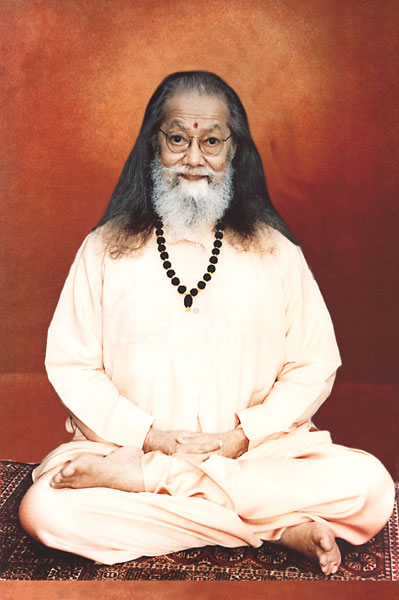
Paramahamsa Hariharananda (1907-2002): Born Rabindranath Bhattacharya in Bengal, Hariharananda was initiated into Kriya Yoga by Sri Yukteswar in 1932. He later received higher Kriya initiations from Paramahansa Yogananda (second Kriya in 1935), Swami Satyananda Giri (third Kriya in 1940-41), and Bhupendranath Sanyal Mahasaya (final higher Kriyas in 1943-45).
In 1949, Mahavatar Babaji himself appeared to Hariharananda at the Karar Ashram in Puri, blessing him and prophesying his mission to spread Kriya Yoga throughout the East and West. Hariharananda was known affectionately as “Baba” to his students and was recognized as a synthesis of action (karma), wisdom (jnana), and devotion (bhakti).
He was extraordinarily learned, mastering the Vedas, Upanishads, Bhagavad Gita, Bible, Quran, Torah, Buddhist texts, and numerous other scriptures. His interpretations, particularly The Bhagavad Gita in the Light of Kriya Yoga, offered new metaphorical understandings that integrated scriptural wisdom with the practical science of Kriya meditation. He began teaching in the West in 1974-1975, eventually establishing the Kriya Yoga Institute in Homestead, Florida, and centers worldwide. Until his mahasamadhi (conscious exit from the body) in 2002 at age 95, he worked tirelessly, teaching and initiating thousands into Kriya Yoga.
Current Living Masters: The lineage continues through Hariharananda’s principal disciple, Paramahamsa Prajnanananda, and other authorized teachers who maintain the authentic transmission of this sacred technique.
I was fortunate enough to have been initiated into Kriya yoga by Paramahamsa Prajnanananda and to have met Hariharanandaji. My encounter with him was as mystical as you would expect as that of meeting a holy man. I walked in his room with a million questions and walked out humbled when he kindly, but forcefully helped me refocus on within instead of searching outside. It was a most humbling experience being in front of such a wise person by myself.
The Kriya Tradition and Guru-Disciple Relationship
Unlike most modern yoga, Kriya Yoga maintains the traditional guru-disciple relationship and initiation ceremony. The actual technique is not published in books or taught in open classes. Instead, seekers must prepare through preliminary practices, study the philosophy, and demonstrate sincere commitment before receiving initiation from an authorized teacher in the lineage.
This approach preserves the integrity and power of the practice. As Babaji instructed Lahiri Mahasaya, there are “ancient rigid rules which govern the transmission of the yogic art from Guru to disciple.” The technique includes multiple levels—Lahiri Mahasaya divided Kriya into four parts, with the second, third, and fourth Kriyas being “higher Kriyas” taught only after mastery of the foundational practices.
Kriya Yoga vs. Modern Postural Yoga
It’s crucial to understand that Kriya Yoga represents a completely different approach from the postural yoga dominating Western studios:
- Focus: Kriya emphasizes pranayama (breath control) and meditation, not physical postures
- Goal: Direct realization of the Self and union with the Divine, not fitness or flexibility
- Method: Specific, scientifically structured techniques rather than flowing sequences
- Transmission: Traditional guru-disciple relationship rather than weekend teacher trainings
- Philosophy: Complete spiritual system including ethics, lifestyle guidance, and scriptural study
- Accessibility: While made available to householders by Lahiri Mahasaya, it still requires serious commitment and proper initiation
Kriya Yoga represents what traditional yoga actually looked like—a comprehensive spiritual science focused on inner transformation rather than external achievement.
Ultimately, these paths were never meant to be mutually exclusive. Traditional Indian philosophy recognized that different people have different temperaments and that various approaches could lead to the same destination of self-realization.
Next, we’ll look at the second part of Yoga: From Ancient Philosophy to Modern Practice – Understanding the Evolution and Commercialization in more details.