
“Marsanes: The Most Obscure Gnostic Text Ever Found at Nag Hammadi” from Labyrinth of the Veiled unpacks one of the densest Nag Hammadi manuscripts—a Coptic translation of a 3rd- or 4th-century Greek visionary discourse that maps metaphysical ascent through intellect rather than myth or faith. Unlike narrative Gnostic gospels, Marsanes (Nag Hammadi Codex X) delivers a precise, austere blueprint of layered realities, challenging readers to transcend gods, self, and conventional religion via disciplined perception. Caveat emptor!
Have you ever noticed whenever there is a problem, there you are? Dr. Hew Len, Ho’Oponopono
The Manuscript and Its Hidden Origins
There is a lot of talk around gnosticism. What is it and what is not runs amok. At The Wholistic Center we like to keep things simple, first principle thinking sort of thing. We get tap the source, which funny enough is the gist of gnosticism, inner knowledge. So how do we do that? Sit down, grab a cup of tea or whatever else you like and read on…
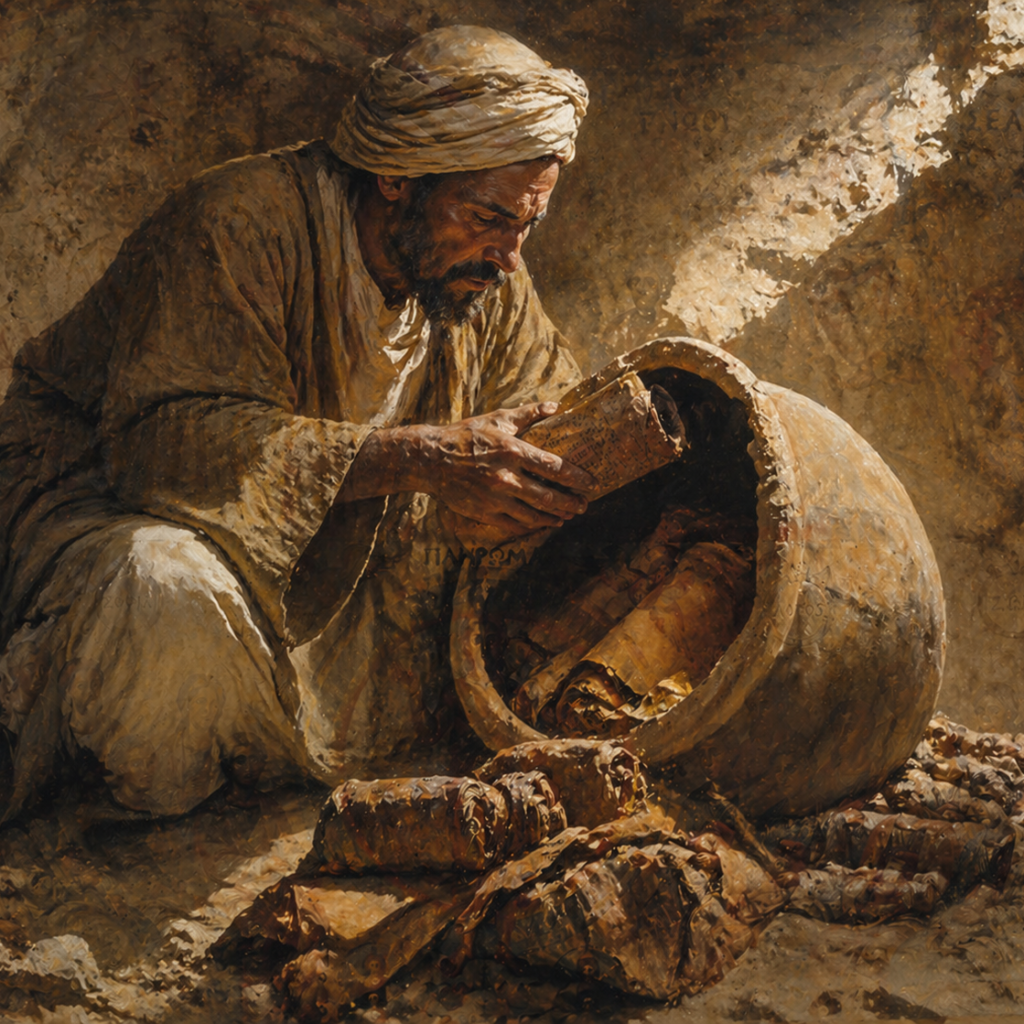
Discovered in 1945 among the Nag Hammadi library—sealed clay jars buried by Egyptian monks to evade church purges. This Sethian-linked text evades easy storytelling. It assumes prior initiation, speaking in abstract terms influenced by Platonism (e.g., Plotinus’ Enneads) and middle Platonic thought, naming intellectual realms, and warning against mistaking symbols for sources. Scholars like Bentley Layton and John D. Turner note its postulation of an “Unknown Silent One” transcending the Invisible Spirit, marking a unique theological shift.
A Vertical Map of Realms
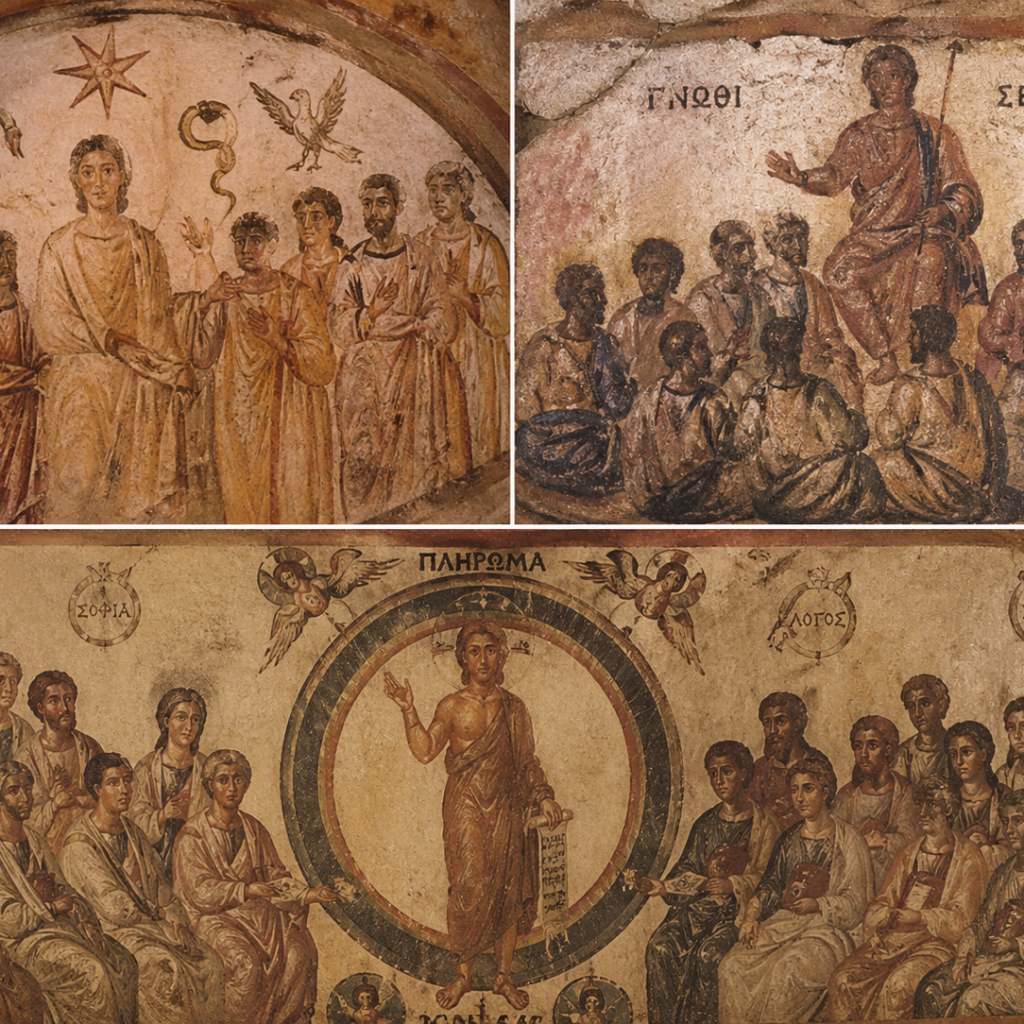
Marsanes outlines a hierarchical cosmos: an ineffable Source emanates pure intellect, descending through subtler states of awareness into the fragmented material world. As we climb down the lower levels, they fragment in perception. The higher ones unify it, with no savior figure or dramatic fall, they are just stages of refinement where error is misalignment, not sin. The text’s precision distinguishes it by emphasizing a disciplined intellect as the ladder upward. This echoes Neoplatonic ascent but demands abandonment of even cherished truths.

Gods Relativized, Intellect Elevated
Gods of popular worship aren’t denied, but placed mid-hierarchy. They become powerful custodians of order and form, yet ignorant of higher fullness, akin to Gnostic archons but without mythic rebellion. Worshiping them as ultimate traps the seeker in partial reality. Its true divinity is freedom beyond them, accessible via inner sovereignty—no temples or intermediaries needed. This subverts ancient civic religion, implying political hierarchies lose cosmic backing, making the text initiatory and “dangerous.”
The Provisional Self and Liberation
The everyday self—ego shaped by memory, desire, and role is a lower-strata construct, provisional for worldly life but blind to unity. Ascent dissolves it into participatory awareness. The intellect perceives without grasping, achieving “unknowing” as higher clarity, not ignorance. Rewards aren’t ego-immortality but release; ethics follow from proportioned seeing, fostering compassion via alignment, not command.
Modern Resonance of Ancient Orientation
A lot of people fear negativity. We shouldn’t.
Nearly every ancient wisdom system agrees on one thing, that The Source built this universe on free will. That means negativity serves a purpose too. Liberation, through experiencing something all the way to the point of saying no. No thank you.
A lot of well-meaning people take on a Don Quixote spirit these days, fighting injustice, reclaiming positivity, all in the name of “the Light.” That comes from a good heart. But no one gets to decide which experiences another soul is allowed to have. Don’t do it to me. I would be mad at you. Let me chose knowingly even if you don’t feel I am. Warn me, that’s OK, and only that.
This isn’t a call to let everyone do whatever they want. Quite the opposite. When someone’s choice touches your life, good or bad, you become part of the equation too. As Dr. Hew Len, famous for his modernization of Ho’Oponopono said, have you ever noticed whenever there is a problem, there you are? Warning them is normal — just be clear the warning comes from your own vantage point, not some higher authority.
Still, each soul has the right to choose. Positive or negative, building or destroying. And that’s what negativity does. What some call evil does. It gives a soul something to push against, until one day it says no. No thank you.
In an info-saturated era, Marsanes critiques attachment to wrong knowing—doctrines, identities, even “spiritual superiority”—urging perception beyond systems. It empowers without ego-inflation: question inherited limits at personal cost, but recover deeper freedom. Not for masses, it’s for those sensing perennial dissatisfaction, offering humility-courage amid cosmic complexity.