
These articles are part of the build your own spiritual cocktail series. We present these ancient wisdom for you to pick and chose what fits, disregarding what doesn’t. And as with any good cocktails, tweak as you wish and update the recipe to find what fits. Eventually throughout life, you realize you need less and less ingredients.
What hasn’t been said or written about Buddhism? One of the most well-known philosophy is also one of the least well understood. Through decades of vulgarization and odd translations, what started around 2,500 years ago in northern India with a young prince waling away from everything has had millennia of influence. Sheltered in his palace with his wealth, his family, and curated views of life, Siddhartha wasn’t satisfied. Even though he was set to be the future king.
His name was Siddhartha Gautama, and his search for answers to human suffering would create one of the world’s major religions: Buddhism.
I came to Buddhism early in high school and it defined my life and foundations. What started with Allan Watt’s The Ways of Zen lead to Siddhartha by Herman Hess and many books there after. In the late 1990s, I worked closely with the Tibet House NYC where my love of Buddhism grew even more.
What drove someone who had everything to give it all up? And what did he discover that still resonates with millions of people today?
A Time of Spiritual Revolution
Buddhism arose in northeastern India sometime between the late 6th century and the early 4th century BCE. This was a period of intense spiritual and social transformation. It was a time when a number of thinkers had begun to question the authority of the Vedas, the ancient Hindu scriptures that had dominated religious thought for centuries.
India’s social landscape was changing rapidly. The rise of cities in central India, with their courts and commerce challenged old ways of thinking. People were no longer satisfied with inherited religious answers. They wanted direct experience of truth.
The main concern dominating religious thought and practice at the time was the problem of suffering and death, especially the belief in an unending cycle of deaths and rebirths. Many wandering teachers attracted followers by offering different paths to liberation from this cycle. Siddhartha Gautama followed many and would become eventually one of these teachers.
The Prince Who Saw Suffering
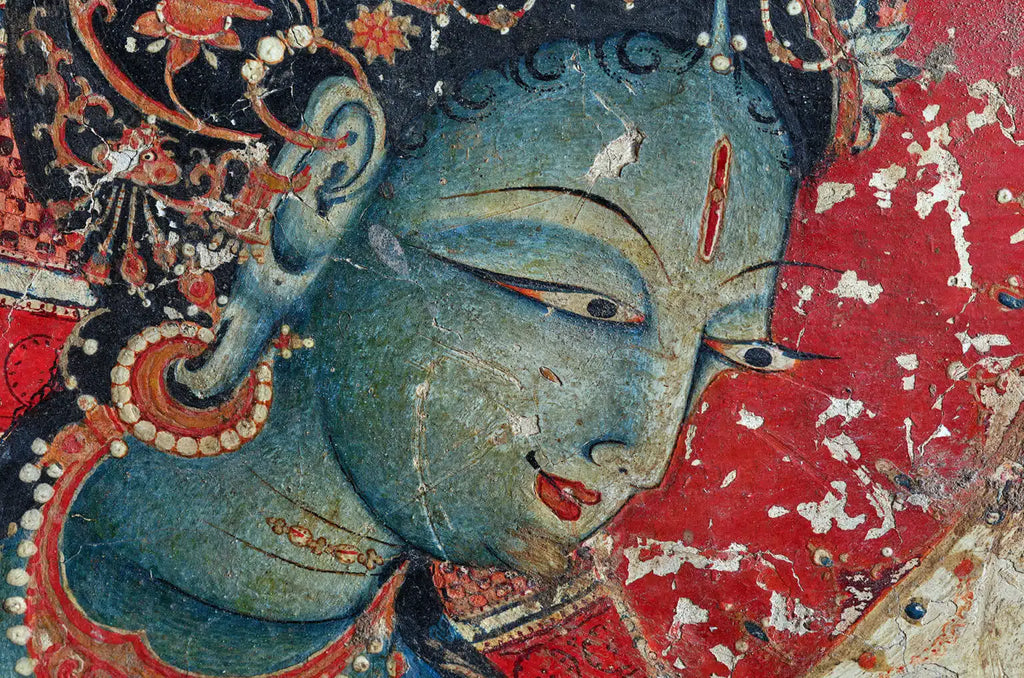
According legend, Siddhartha was born in Lumbini, now Nepal, to royal parents of the Shakya clan. Sources debate as to whether Gautama was born around 563 BCE or as early as 623 BCE, or as late as 448 BCE.
According to Buddhist texts, a prophecy was given that Siddhartha would become either a powerful king or a great spiritual leader. His father, King Suddhodana, wanted him to become a king. He sheltered and protected him from seeing or experiencing anything unpleasant or upsetting for the first 29 years of his life. He went as far as to remove old people and beggars from the streets when his son would be paraded. This left Siddhartha with only beautiful, young, healthy people in the streets.
But for the young prince who lived in luxury, surrounded by pleasure and protected from pain, this wasn’t enough. He managed to leave the palace on his own on four separate trips. What Siddhartha encountered shocked him. An old person. A sick person. A corpse. And finally, a wandering spiritual seeker who appeared peaceful despite having nothing. These “Four Sights” revealed what his father had hidden: that life involves aging, sickness, death, and suffering—and that some people sought spiritual answers to these realities.
The Great Renunciation
Moved by the suffering of the world, Siddhartha decided to give up his lavish lifestyle. At age 29, Siddhartha left his palace, his wife, and his infant son to become a wandering ascetic—a spiritual seeker who renounced worldly life to search for truth.He renounced everything and never turned back.
For nearly six years, he undertook gruesome fasting and other severe austerities, studying with various meditation teachers and pushing his body to extremes. He ate so little that he became skeletal. He practiced breathing techniques until he nearly suffocated. He was searching for enlightenment through self-denial at almost any cost. But these techniques weren’t enough. Eventually, he embraced the idea of the “Middle Way,” which means existing between two extremes—seeking a life without social indulgences but also without deprivation. This is a strong foundation behind The Wholistic Center that seeks to embrace all things without falling into extremes.
Enlightenment Under the Bodhi Tree
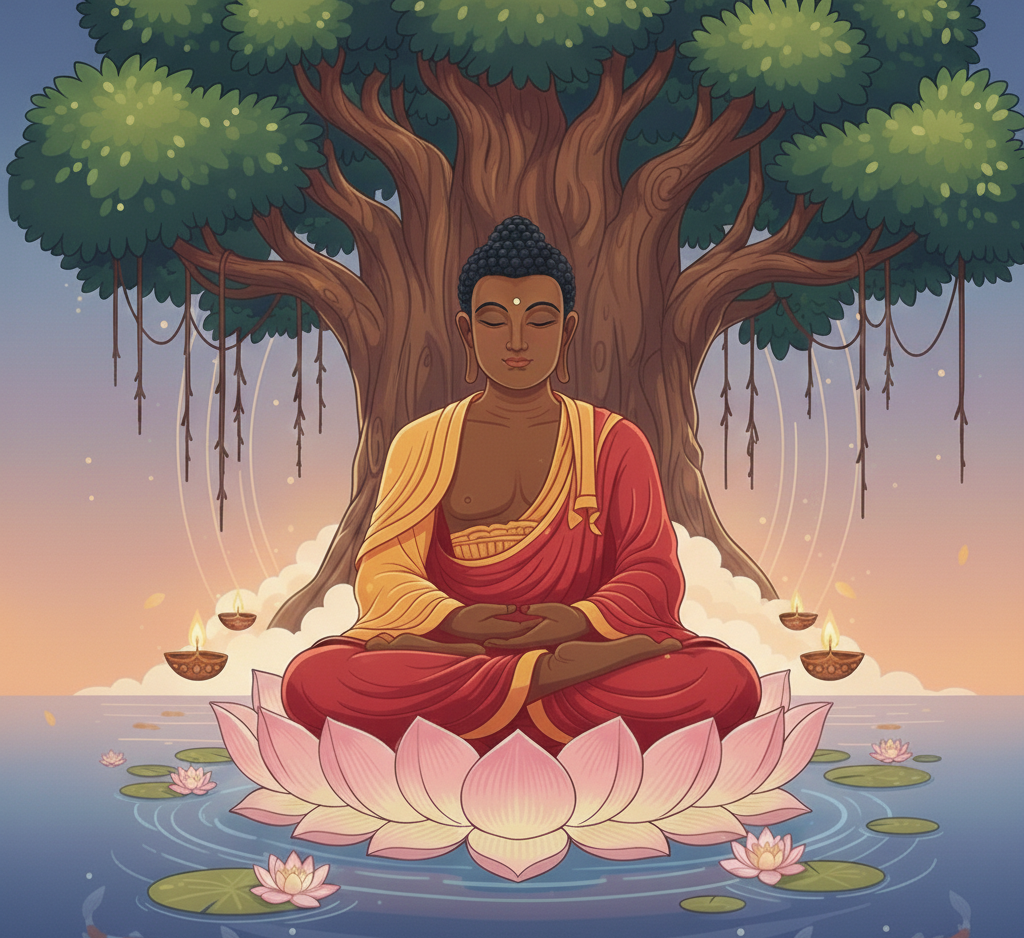
After regaining his strength, he seated himself under a Bodhi tree in west-central India and promised not to rise until he had attained supreme enlightenment. For 49 days, he meditated deeply.
We visited this sacred area and today, it hosts temples and various Asian philosophies and religious centers. It was also amazing to have my personal mala beads touch the sacred tree. Despite it not being the original, it is supposed to have come from clippings of the original. In any case, it was magical.
After fighting off Mara, an evil spirit who tempted him with worldly comforts and desires, Siddhartha reached the spiritual state of enlightenment at the age of 35. He became “the Buddha”—the Awakened One.
It is probably important to understand that the term Buddha has been bestowed to many enlightened being. When we talk of Buddha, wee usually refer to Siddhartha who claimed to have directly perceived the nature of reality, the causes of suffering, and the path to liberation from it. He saw the endless cycle of birth, death, and rebirth driven by ignorance and craving, and he understood how to break free from it.
The Buddha began teaching around Benares, giving his first sermon at Sarnath. For the remaining 45 years of his life, he traveled the Gangetic Plains of eastern-central India, teaching his doctrine to diverse people from different castes and initiating monks into his order.
The Core Teachings: Four Noble Truths
The pillars of Buddhism are probably best know as the Four Noble Truths. Out of compassion for others’ suffering, the Buddha taught:
- The First Noble Truth: Life is suffering (dukkha). Life as we normally live it is full of pleasures and pains. Pleasures don’t represent lasting happiness and we suffer from wanting them, wanting them to continue, and wanting pain to go away.
- The Second Noble Truth: Suffering is caused by craving. We crave sense pleasures and want things to be as they are not, refusing to accept life as it is.
- The Third Noble Truth: Suffering can end. There is a way out of this cycle.
- The Fourth Noble Truth: The path to ending suffering is the Eightfold Path—a set of practices involving ethical conduct, mental discipline, and wisdom.
The Eightfold Path includes:
- Right understanding
- Right intention
- Right speech
- Right action
- Right livelihood
- Right effort
- Right mindfulness
- Right concentration.
These aren’t commandments. They are guidelines for transforming how you think, speak, act, and perceive reality.
What Makes Buddhism Different
Several aspects distinguish Buddhism from other traditions of its time:
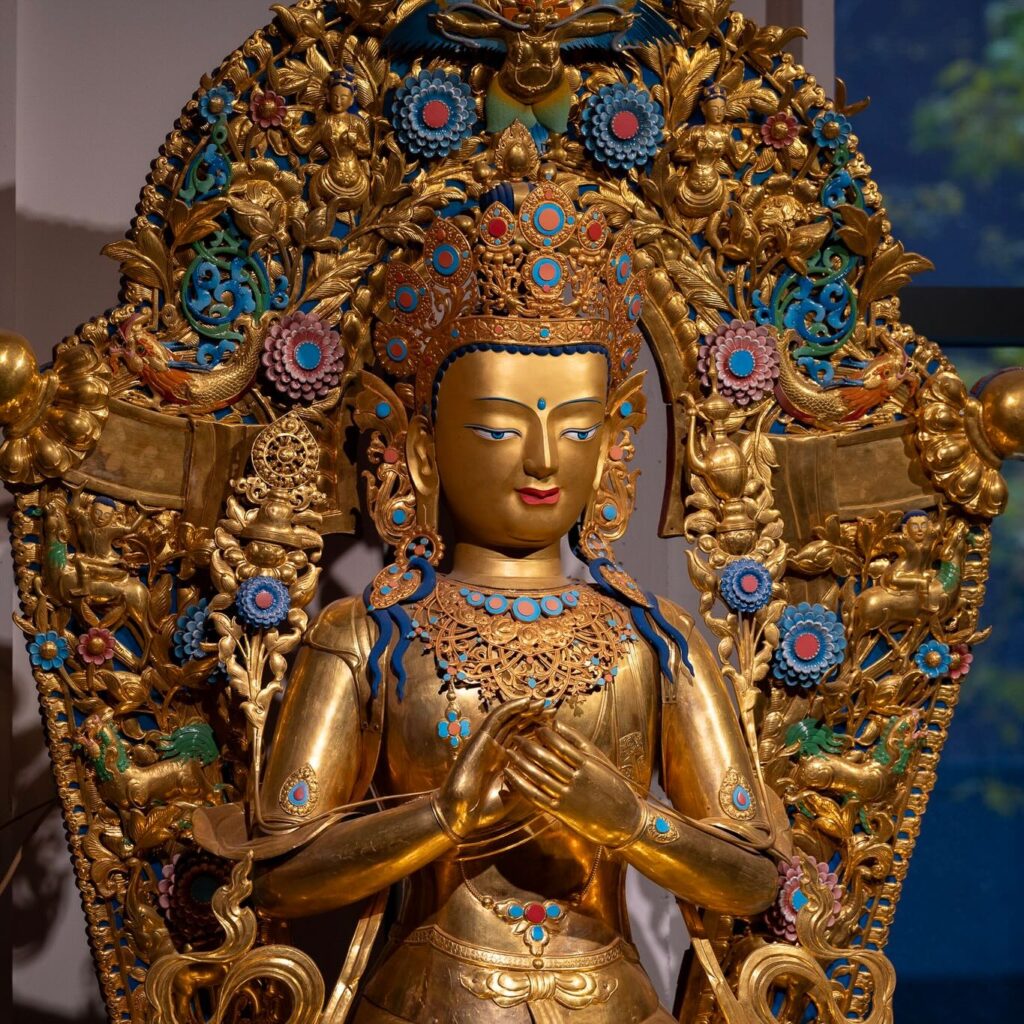
The Tibetan Dalai Lam says that Buddhism isn’t a religion or a philosophy, but a science of the mind. In Buddhism there are no supreme god. The Buddha is not a deity. He was someone who achieved enlightenment and displayed aspects of Buddhahood. He stayed behind to teach and guide others toward enlightenment. Buddhists don’t worship Buddha or pray to him for favors—Buddha statues help followers concentrate and meditate as they develop peace and love within themselves.
Direct experience over blind faith. The Buddha famously told his followers not to accept his teachings simply because he said them, but to test them through personal experience.
Middle Way philosophy. Rather than extremes of self-indulgence or self-denial, Buddhism advocates balance and moderation.
Practical focus on ending suffering. The Buddha refused to engage in abstract metaphysical debates, focusing instead on practical methods for liberation
The Three Jewels of Buddhism are:
- Buddhism centers on the Buddha (the teacher)
- The Dharma (the teaching)
- The Sangha (the community of practitioners).
The Spread of Buddhism
When Buddha died around 483 BCE, his followers began organizing a religious movement, with his teachings becoming the foundation for what developed into Buddhism. The tradition evolved and split into different schools over time according to the new cultures they entered.
This explains why Tibetan Buddhism is so different from India’s and Japan’s, for instance. Buddhism’s original middle way philosophy allowed it to peacefully cohabits with other religions, as we saw in the Shintoist article. Around the first century CE, a major division occurred between Mahayana and Hinayana branches. Today, the three main types are:
Theravada Buddhism: Currently found in Sri Lanka and Southeast Asian countries, emphasizing the historical Buddha and monastic meditation practice.
Mahayana Buddhism: Prevalent in China, Japan, Korea, and Vietnam, emphasizing the bodhisattva ideal—enlightened beings who choose to help all others reach liberation.
Vajrayana Buddhism: Found mainly in Tibet and Mongolia, incorporating esoteric practices and tantric techniques.
Buddhism spread far beyond India through the efforts of Emperor Ashoka in the 3rd century BCE, who sent missionaries to Sri Lanka and other regions. Around the sixth century CE, the Huns invaded India and destroyed hundreds of Buddhist monasteries, and during the Middle Ages, Islam’s spread forced Buddhism into the background in India.
What Buddhism Teaches Modern Life
Buddhism’s hits at the core of universal human experiences:
Suffering is real and understandable. Rather than denying pain or calling it punishment, Buddhism acknowledges suffering as a natural part of existence with identifiable causes.
Mind training brings freedom. Through meditation and mindfulness, you can change your relationship with thoughts, emotions, and experiences.
Compassion matters. Central to Buddhist ethics is developing kindness toward all beings, recognizing our fundamental interconnection.
Attachment creates pain. Much of our suffering comes from clinging to pleasurable experiences, resisting unpleasant ones, and trying to make permanent what’s inherently impermanent.
The middle path works. Balance between extremes—neither indulgent nor ascetic, neither eternalist nor nihilist—offers a sustainable way forward.
Direct experience trumps dogma. Test teachings through practice rather than accepting them on authority alone.
Connecting to The Wholistic Center Philosophy
Buddhism aligns beautifully with The Wholistic Center’s core principle: trust your direct experience over external authority. The Buddha explicitly told followers to be “lamps unto themselves,” to verify teachings through their own practice rather than accepting them blindly. In fact, the many Tibetan Buddhist promote Buddhism as this is what millennia has taught them, but to not believe it first without seeing for yourself. Only then should you come back and talk with them. It’s a refreshing difference from the brutal believe, trust, and don’t argue. Buddhism honors individual sovereignty while offering practical methods.
Like Taoism’s emphasis on natural flow and Shintoism’s recognition of the sacred in everyday life, Buddhism doesn’t require belief in distant gods or complex theology. It offers practical tools for working with your own mind and experience. The Buddha’s Middle Way resonates with wholistic living—neither forcing nor neglecting, neither grasping nor rejecting, but finding balance through direct awareness.
And Buddhism’s emphasis on meditation connects to practices like wordless thinking, where you access wisdom beyond linguistic concepts.
Continue Your Journey
This article is part of our series exploring ancient wisdom for modern living. Also featured on The Wholistic Center Podcast, where we dive deeper into practices that transform consciousness and daily life.
Explore related wisdom:
- Taoism: What Ancient China’s Way of Water Teaches Us – The art of effortless action
- Shintoism: Japan’s Ancient Way of the Kami – Recognizing the sacred in nature
- The Wordless Thought Exercise – Meditation beyond concepts
- The Pathless Path: Why Your Inner Compass Can’t Be Mapped – Your unique journey to truth
Visit The Wholistic Center to discover more ancient wisdom traditions and their relevance for contemporary challenges.