
We’re writing a few introductory articles before diving into ancient wisdom topics to find out what they have to offer us next. In the meantime, we’d like to raise awareness on what we consider normal despite going through life feeling something is off. So, please, enjoy this article and let us know your thoughts.
Society can make us feel as if we are running on a treadmill that never stops. More money. A better job. A nicer car. A bigger house. More love. We chase after these things believing they’ll finally make us happy. Then we hit a wall, a disappointment, or maybe achieve our goals. And somehow, we’re still not satisfied.

Welcome to life as a “happiness-seeking missile.”
The Enneagram, which we’ll talk about in greater details soon, reminds us that “it is not seeking happiness that produces change, but self-knowledge and awareness. Today it’s enough to see your flight from your own true center more clearly.” And its book “Enneagram Transformations: Releases and Affirmations” backs it up with: “Knowing our type helps us become more conscious self-observers, and self-observation is necessary if we are to become free of our unthinking, mechanical reactions. If we do not observe ourselves, we cannot ever hope to be our own master. We will be like marionettes yanked by every impulse tugging on our strings.” Observastion is one of the most important qualities to develop in our lives.
The Never-Ending Chase
Our society teaches us to keep moving, keep achieving, keep acquiring more and more, stuck in a never-ending growth loop. The reality is not the same. This is currently highlighted by so many companies struggling after tweaking a system that became inflexible.
When we hit a wall or feel empty inside, we’re told to manifest more of what we want. Simply visualize it, we are told. And so we dive right back in: more money, more success, more stuff. This is the definition of madness: doing the same thing expecting different results.

We’re rarely taught to stop and think. Seldom at school or at home have we been asked to look within and examine what is happening, what’s going on and what we’re really seeking.
Research from Yale University’s happiness course—one of the most popular classes in the school’s history—shows that our minds often lie to us about what will make us happy. We think getting that promotion or buying that house will change everything. Studies show it rarely does. Howerver, it keeps us going until we are exhausted. And what perfect time to talk about this, as we get into the New Year’s Resolution we visited last week. How has that worked out for you so far?
Here’s an example I can offer. I love music and play music. I started playing drums at the age of 14. I picked up a guitar around the same time and had no problem making sounds out of anything I touched. In my 50s, I became enthralled with bass. Bass and drums hold music together. They are the glue that bonds a good band. A good drummer works with a good bassist and vice versa. I wanted to get my hands on a bass. It took years. I visualized playing bass. I focused on the bass parts of songs I listened to. Eventually, I got a nice bass. And it mostly sits there by myself, unused… And writing this, I’m committing to taking bass lessons today!
According to research published in the Journal of Personality and Social Psychology, people consistently overestimate the happiness external achievements will bring them. This is called “impact bias”—we think changes will affect us more than they actually do. And if we ask, who does it serve? We don’t feel it serves our best interests, but it is a deeply rooted ancient system designed to keep our society functioning. And there’s nothing wrong with this. It helped us survive until now. But hasn’t survival been reached by now? In other words, don’t we deserve the fruit of our constant happiness-seeking labor? Surely by now, we should celebrate the fruit of our ancestors and their sacrifices?
The Question That Changes Everything
The Dalai Lama once asked: “How much is enough? When is enough? What does ‘enough’ look like?”

Like a skilled life coach, he was guiding people to think deeper. Most of us never seriously considered these questions. We just keet chasing the next thing. So try asking yourself right now:
- When would I have enough money?
- What would “enough money and success” look like?
- If I got everything I’m chasing, would I finally stop and feel content?
It’s obvious so many people don’t know when they’ve hit the invisible barrier of having enough.
Then ask the harder question: “If I continue being a happiness-seeking missile, who does it serve? What purpose does it really serve?”
These questions transform how you see your life. Whether you’re making personal decisions or business choices, clarity comes when you stop, get into that stillness mode, and examine what you’re really doing.
Your Best Friend Is Already Here
For people brave enough to stop the chase and look within, something surprising happens. What they feared would be scary or empty turns out to be a relief. They discover their best friend—the one who’s been within, every single day of their life. You. Your own self. Your inner knowing.
Harvard’s famous 85-year study on adult development—the longest study on happiness ever conducted—found that the quality of our relationships matters most for happiness. But here’s what’s not emphasized enough: the most important relationship is the one with yourself. Know thyself, in other words.
When you learn to stop, create that stillness around us and within, observe our lives honestly, and connect within, we hit that sweet spot. This is beyond positive thinking and manifestation. It’s about genuine self-knowledge.
Thinking From First Principles
There’s a problem-solving method called “first principles thinking”.
First principles thinking means breaking down complex problems into their simplest, most basic truths—ideas so fundamental they can’t be broken down further. Then you rebuild your understanding from there.
Apply this to happiness:
- False belief: “I need more money to be happy.”
- First principle: “I need food, shelter, safety, connection, and purpose to thrive.”
- Reality check: “Do I already have the basics? Am I chasing ‘more’ out of actual need or empty habit?”
I find that I already have most of everything I need. It might not look like what I dream about, but my basic needs are taken care of. And there’s room for more dreaming, which makes life interesting and worthwhile pursuing.
According to research from Princeton University, emotional well-being rises with income up to about $95,000 today (adjusted for today’s inflation). Beyond that point, more money doesn’t increase day-to-day happiness. Yet we keep chasing it as if it will.

What Happens When You Stop
When you stop being a happiness-seeking missile, you don’t become lazy or unmotivated. You become clear. You become… you. You become a well-centered person who knows what you like and want, and are free to be yourself. You can then accept what you want and need and disregard the rest. You are a wholistic person, embracing all things, but not attacvhing yourself to anything external trusting your inner cpmpass. You are empowered and self-sufficient. And once you’ve empowered yourself, you can choose what genuinely matter to you—not because society says you should want them.
You discover that contentment isn’t something to chase. It’s something to uncover by removing the noise, expectations, and endless wanting that covers it up. It’s right there all along, inside that still place within. It’s that simple. And the irony is that true happiness often arrives when you stop desperately seeking it.
I met my wife after I stopped chasing after endless romantic realtionships, hoping the next one would be “the one”. I always looked for my other half. My mother said I would be playing on the beach at 6 and would drop everything to follow a girl walking by. In my twenties, this translated to a never-ending series of relationships. Some good, and some not so good. It wasn’t until I had had enough and was happy by myself within my own space with who I was, that I found my life partner. And I knew it from the moment I saw her. It was her. And 29 years later, it still is her.
So here’s your challenge: Ask yourself the Dalai Lama’s question: “When is enough truly enough for me?”
Sit with that question. Don’t rush to answer it. Let it work on you. You might not get the answer at first, especially if you’re an extrovert like me. It can take time.
You might even discover that you already have enough. You might realize you’re chasing things that don’t actually matter to you deep down within. Or you might find clarity about what you genuinely need versus what you’ve been conditioned to want.
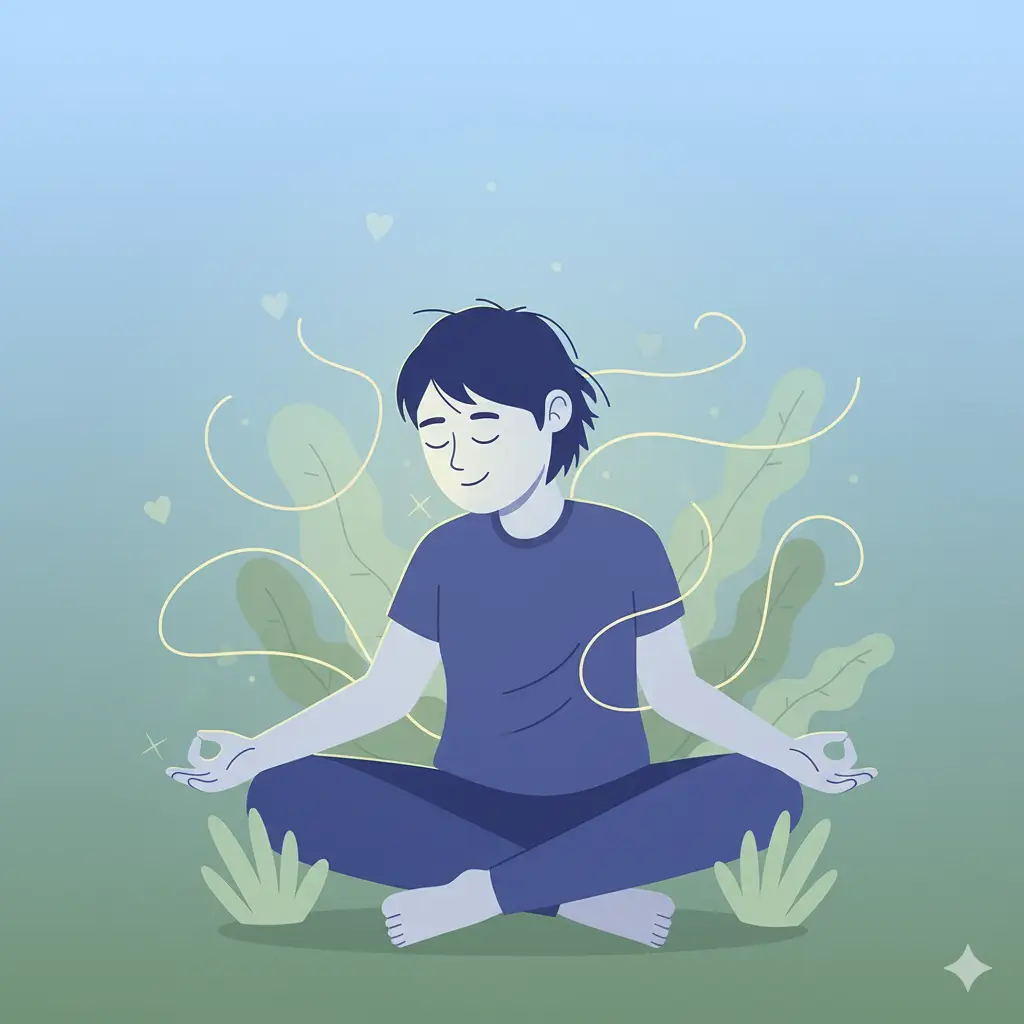
Perhaps, the answers won’t come quickly, especially from outside. They rarely do. They come from sitting still, where your best friend—yourself—resides and has been waiting patiently for you to stop running and finally come home.
Relevant Research Links for Article
- Yale’s Science of Well-Being Course Link
- Context: Most popular course in Yale history; shows our minds mislead us about happiness
- Impact Bias Study (Journal of Personality and Social Psychology) Link
- Context: People overestimate how much external achievements will make them happy
- Harvard’s 85-Year Happiness Study Link
- Context: Longest-running study on happiness; emphasizes relationships (including with self)
- Princeton Study on Money and Happiness Link
- Context: Emotional well-being plateaus at around $75,000/year income
- Additional Resource: Greater Good Science Center (UC Berkeley) Link
- Context: Science-based insights on happiness, gratitude, and well-being