
In part two of our Gnostic series, we look at. In part three, we loom at the god who does not know he is not the highest god.
Instead, he builds. He commands. He punishes those who stray from his law. He declares himself jealous, supreme, the only creator of all that is. And what makes him genuinely unsettling — to the Gnostics who traced his lineage carefully — is not his power. It is his blindness. He is not lying when he claims to be the only God. He simply cannot see above himself.
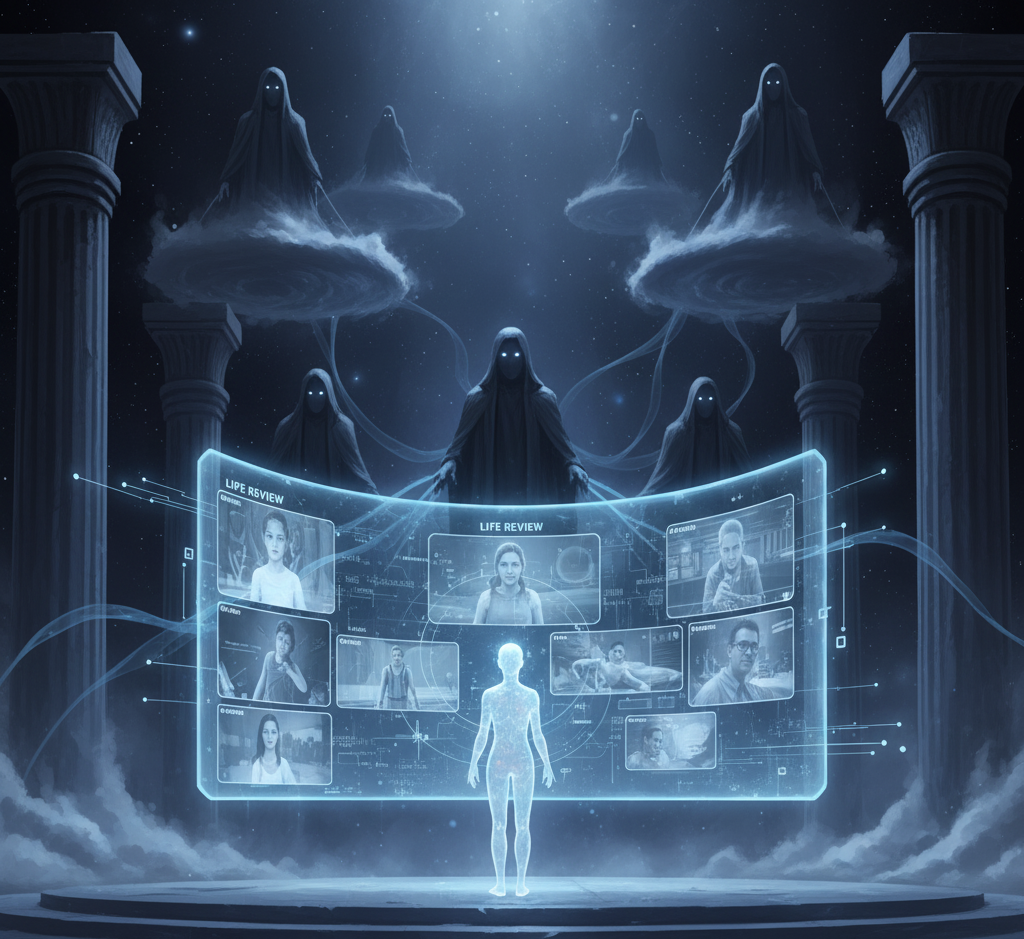
This is Yaldabaoth. And understanding him — and the invisible machinery he set in motion — may be the most urgent gift the Gnostic tradition offers the modern world.
THE DEMIURGE: NOT EVIL, BUT BLIND
In the Gnostic understanding, Yaldabaoth is not the devil. He is not darkness for the sake of darkness. He is something more philosophically precise and more unsettling: a being of enormous creative power who is completely cut off from the Source that produced him.
Born from Sophia’s unbalanced longing and cast into the void beneath the , he has never seen the higher realms. He has never known anything above himself. His power is real. His creation — the material cosmos — is genuine in its beauty, its complexity, its suffering. But he builds from fragments of light, given to him by Sophia, he cannot recognize as light. He governs with the certainty of one who has never been shown that certainty can be wrong.
Think about leaders around the world, how they look in public, how they conduct themselves, how they expect others to see them as all-knowing when the reality is very different from that. I’ve often wondered if every politician and decision makers looked at maps of planets and star, starting from our small solar system to the biggest planets in the know Universe. How much they views would change. How much the actions would be better balanced. How much more humble they would be, as the ancient who understood those things were…
The Gnostics identified Yaldabaoth with archetypes across cultures. They saw his face in the lion-headed serpent depicted on ancient seals. They heard his voice in the harsh, territorial God of Exodus. Some teachers connected him to Saturn — the planet of limits, crystallization, and the enforcement of cycles. Saturn sets the boundary. Saturn defines what is fixed. Yaldabaoth builds a world that feels like this: bounded, cyclical, governed by law that does not explain itself.
What matters most is not the mythology. It is the principle: reality as we find it was constructed by a power that could replicate the patterns of the divine without understanding them. The world looks like it was made by someone intelligent. The Gnostics said: yes — intelligent, but not wise.
THE ARCHONS: ADMINISTRATORS OF THE MATERIAL ORDER
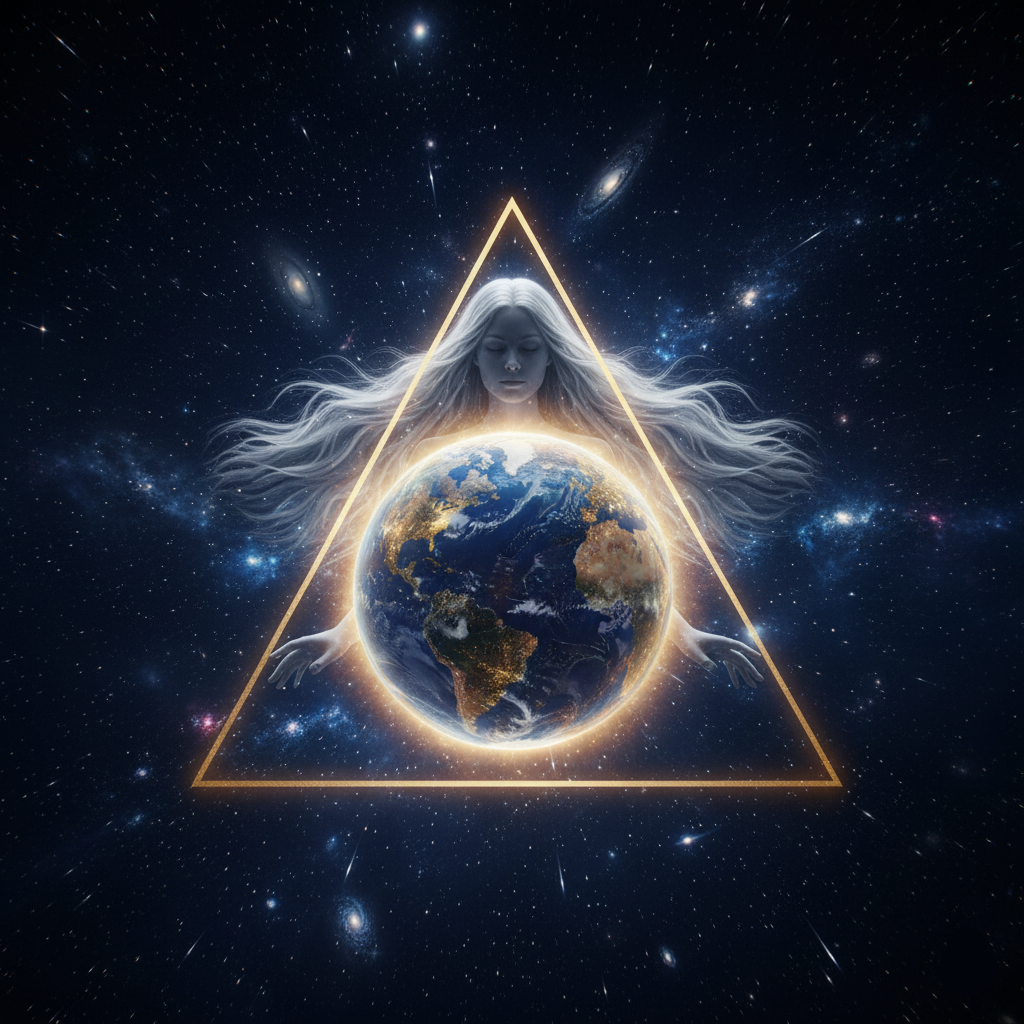
Yaldabaoth does not rule alone. From his own nature, he fashions seven Archons — lesser powers who govern the planetary spheres through which the soul must pass on its descent into matter. They are administrators, managers, the bureaucrats of the cosmic order. They bear names drawn from Jewish angelology in the ancient texts: lords of each sphere, enforcers of the boundaries between worlds.
But the Gnostics were not writing supernatural drama. They were diagnosing something.
The Archons, read symbolically, represent the systems that govern human life without revealing their own foundations. The social structures that present themselves as natural law. The cultural stories that tell you who you are before you have the chance to ask. The institutional powers — religious, political, economic — that derive their authority from the claim that this is simply how things are, have always been, and must remain. They present themselves as unquestionable, as of being naturally here and needed.
What makes the Archon dangerous is not brute force. It is the subtle replacement of your perception with its perception. The Archon does not need to chain you if you believe the chain is your nature. They feed on your focus, as long as it isn’t about yourself.
The Gnostics described archontic influence as a steady infiltration of thought — suggestions, desires not fully your own, fears recycled from generation to generation. It is designed to lead you away from thinking about yourself, your future, the bigger picture. It is designed to keep you subdued to the perceived world order they represent. You grow up inside a story about what is real, what is possible, what you are. The story is not presented as a story. It is presented as reality itself.
THE INVISIBLE PRISON
The beauty of this elaborate system is that it is a prison with no bars. Its walls are made of assumption. Its locks are made of consensus. And its most sophisticated security feature is that the prisoner does not know they are imprisoned — they believe the boundaries of the cell are the edges of the world. Most prisoners do not know they can leave at any point. They can so at any moment and focus back within, into that deep gnosis. This is what Yaldabaoth and the archons fear the most. When humans think for themselves. Ask pertinent question. When they start typo question the fundamentals they so willingly accept without understanding.
This is what the Gnostics meant by the archontic system. Not merely external power structures — though those are real — but the deeper layer of controlled perception that makes external structures feel inevitable. You cannot revolt against a cage you cannot see.
The Archons do not require conspiracy. They require only the ordinary mechanics of power: the reproduction of the stories that justify the reproduction of the stories. Every generation teaches the next what is real. What is natural. What is possible. They rely on well-meaning humans who will take up arms at whosoever questions, goes again. If needed, they will wages wars on behalf of the archons. The Archons are not necessarily beings lurking behind a curtain. They are the curtain itself.
One of the earliest Gnostic texts, The Reality of the Rulers (Hypostasis of the Archons), describes exactly this: powers who do not know they are not supreme, whose authority rests entirely on the ignorance of those beneath them. The moment you see through their claim — not through rebellion, but through clear sight — their grip begins to loosen. Heretics, free thinkers, and wanderors outside the beaten path of life is what they fear most, that which weakens the system they feed upon.
SEEING THE ARCHITECTURE
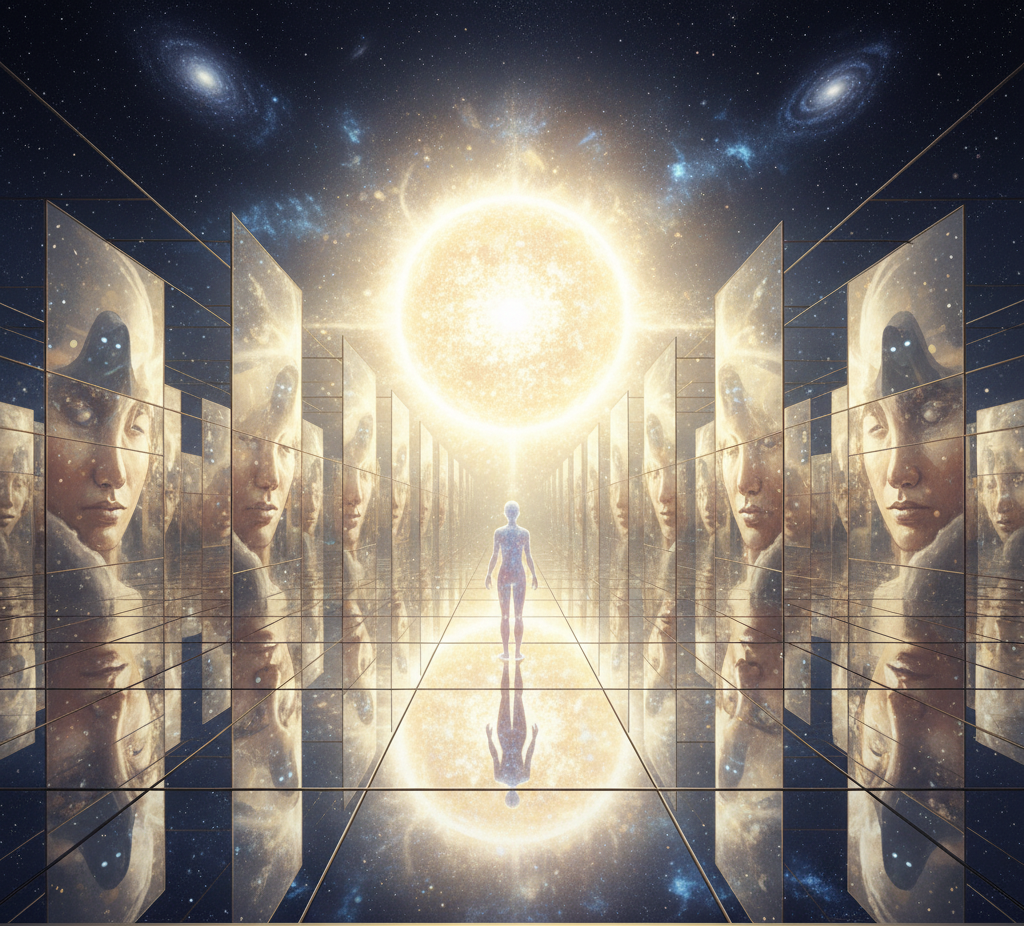
What the Gnostics discovered — and what makes this tradition so valuable — is that the archontic system’s power depends entirely on not being seen.
The moment you recognize the architecture of control — the assumptions embedded in the culture, the fears built into the religion, the desires manufactured by the economy — you have already begun to step outside it. This is best achieved not through hatred or revolt, but through the simple, devastating act of clear perception. The cage never existed. but in our minds and unchecked perceptions. That’s all. Simple and brilliant.
The Archons fear gnosis — human’s direct inner knowing — because gnosis is the one thing they cannot manufacture or intercept. They lack divine creation, that which breezes the soul into a human being. They can manufacture the body, but not the light within, in essence. They can tantalize you with beliefs, desires, and fears. They cannot manufacture the recognition of your own divine nature. That’s already built in. That recognition comes from the pneuma itself, the fragment of Sophia’s light that Yaldabaoth unknowingly seeded into the human form. It is the one thing in the cosmos that belongs not to the Demiurge, but to the Source.
You were built to contain something the builder could not understand. And that something, once it wakes, sees through every cage ever constructed.
In Part 4, we turn to the figure the Gnostics placed at the center of liberation: a Christ who did not come to die for our sins, but to awaken us to what we already are.